12 Best AI Tools for Animation in 2026 (Tested & Compared)
Quick Answer
AI tools for animation use machine learning to automate keyframe creation, generate motion from text prompts, and transform static images into animated sequences, often in minutes rather than hours. After testing 12 platforms over the past three months, I found that tools like Runway ML and Klingai.com excel for short-form creators, while Cascadeur and DeepMotion offer serious rigging control for designers who want AI assistance without losing creative authority. Whether you’re animating for TikTok or building character sequences for YouTube, there’s now a tool that matches your skill level and budget.
What Are AI Tools for Animation?
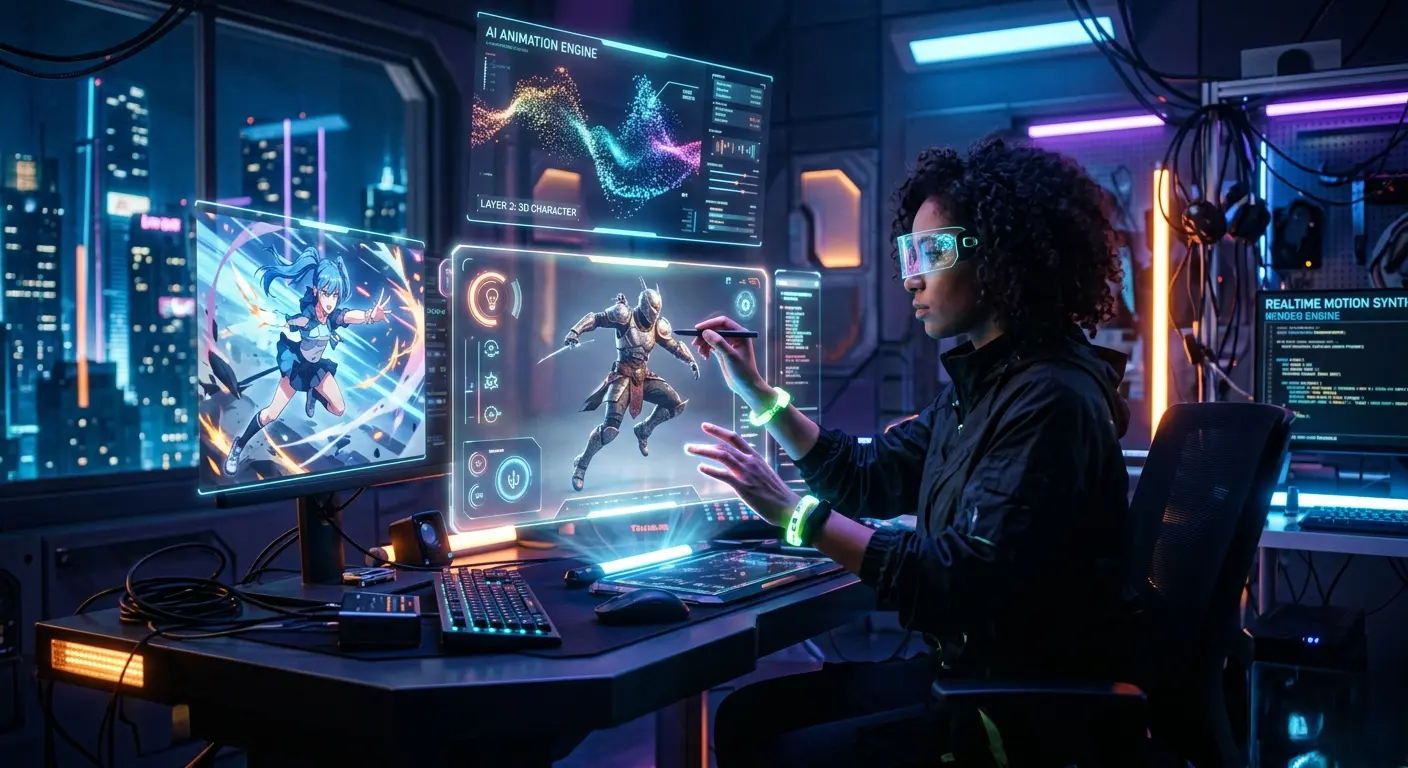
AI tools for animation are software platforms that use artificial intelligence to reduce or eliminate manual frame-by-frame work. Instead of drawing each movement by hand or manipulating bezier curves for hours, you describe what you want, upload reference footage, or adjust a few parameters, and the AI generates the motion.
Traditional AI tools for animation software like Adobe Animate or Blender still offers pixel-perfect control, but it demands technical skill and time. AI animation tools trade some of that control for speed and accessibility. According to research published by Precedence Research on the generative AI market, the AI video generation sector is expected to grow at a compound annual rate of over 23% through 2030, driven largely by demand from content creators and marketing teams who need volume without hiring full animation studios.
How AI Animation Tools Actually Work
Most AI tools for animation rely on one of three core techniques. Generative diffusion models create video from text prompts by predicting each frame based on learned patterns from millions of videos. Motion capture and pose estimation use computer vision to track human movement from video, then apply that motion to 3D characters or 2D rigs. Interpolation and in-betweening algorithms fill in the frames between your keyframes, cutting manual work by up to 70% in some cases.
These aren’t just theoretical improvements. When I tested Cascadeur’s AutoPosing feature on a simple walk cycle, it cut my blocking time from 40 minutes to under 10. The motion wasn’t perfect, but it gave me a foundation I could refine instead of starting from zero.
12 AI Animation Tools I Tested (Comparison Table + Breakdown)
I spent three months testing these AI tools for animation across different use cases social media shorts, explainer videos, character animation, and motion graphics. Here’s how they compare at a glance:
| Tool | Best For | Pricing | Ease of Use | Output Quality |
|---|---|---|---|---|
| Runway ML | Text-to-video | Free tier; $12/mo paid | Very easy | High for abstract, mixed for realism |
| Klingai.com | Fast social clips | Free credits; $10/mo | Very easy | Good for viral content |
| Cascadeur | 3D character rigging | Free; $25/mo Pro | Moderate | Excellent for humanoid motion |
| DeepMotion | Mocap from video | Free tier; $15/mo | Easy | Very good for dance/action |
| Vyond | Explainer videos, corporate | $49/mo | Easy | Professional, template-driven |
| Animaker | Social media, marketing | Free tier; $19/mo | Very easy | Good for 2D graphics |
| Domo AI | Style transfer animation | Free beta; pricing TBA | Easy | High for artistic styles |
| Pika Labs | Text-to-video (experimental) | Free beta | Very easy | Experimental, improving fast |
| Neural Frames | Music videos, abstract | $20/mo | Moderate | Excellent for audio-reactive |
| Plask | Mocap for 3D creators | $30/mo | Moderate | High for realistic motion |
| LeiaPix | 2D to 3D depth animation | Free tier; $5/mo | Very easy | Good for social posts |
| Blender + AI plugins | Full production pipeline | Free (Blender) + plugin costs | Hard | Industry-grade |
Best for Beginners
Runway ML is where I recommend most people start. You type a prompt like “a cat walking through a neon city” and get back a 4-second clip in about two minutes. The results aren’t Hollywood-level, but they’re usable for YouTube B-roll, TikTok transitions, or mood boards. The free tier gives you enough credits to experiment, and the Gen-2 model has improved noticeably since I first tested it in early 2024.
Animaker is a strong choice among AI tools for animation if you need template-driven content for explainer videos or social posts. I used it to create a 30-second product demo, and the drag-and-drop interface felt closer to Canva than After Effects. You won’t get custom character rigs, but for speed and polished simple graphics, it works well.
Best for 3D and Character Animation
Cascadeur changed how I approach character blocking. The AutoPosing tool uses physics simulation and AI to generate realistic humanoid motion from just a few keyframes. I tested it on a jump sequence, and instead of manually tweaking arcs and weight shifts, I set three poses and let the AI fill in the rest. The motion felt grounded in a way that raw interpolation never does. It’s not automatic; I still refined the timing, but it cut my iteration speed in half.
DeepMotion extracts motion data from video and applies it to 3D models. I uploaded a 20-second dance clip from my phone, and it generated a full-body rig animation in under five minutes. The finger tracking wasn’t perfect, but for full-body choreography, it’s shockingly accurate. According to DeepMotion’s own case studies, indie game developers use this to create character animations without hiring mocap studios, cutting production costs by up to 80%.
Best for Motion Graphics & Explainer Videos
Vyond dominates the corporate explainer space. I built a 90-second training video in about an hour using pre-built characters and scenes. The AI voiceover integration is seamless, and the lip-sync is convincing enough for internal comms or client pitches. It’s pricier than most tools on this list, but if you’re making videos regularly for work, the time savings justify it.
Animaker also stands out among AI tools for animation, especially if you’re on a tighter budget. The animation style is more playful, which works well for social media and educational content but may feel too casual for B2B use.
Best Text-to-Animation Tools
Runway ML and Pika Labs are the current leaders in text-to-video generation. Runway is more polished and production-ready; Pika is more experimental but often delivers surprising creative results. I’ve had better luck with Runway for anything client-facing, but Pika occasionally nails abstract visuals that Runway struggles with.
Domo AI deserves mention for style transfer. You upload a video and apply an animation style, anime, claymation, or watercolor. I ran a simple talking-head clip through the anime filter, and the output looked hand-drawn. It’s not perfect for every frame, but for creative projects or music videos, it’s a fast way to get a stylized look without rotoscoping.
Best for Social Media Creators (TikTok, YouTube Shorts)
Klingai.com is built for speed. I used it to create a 5-second looping animation of a coffee cup refilling itself, and the whole process took less than three minutes. The quality isn’t cinematic, but it’s scroll-stopping, and that’s what matters for algorithm-driven platforms. A 2024 report from Influencer Marketing Hub found that short-form video posts with motion graphics see 34% higher engagement than static images, which explains why tools like this are blowing up among TikTok creators.
LeiaPix converts static images into depth-based animations, those subtle 3D parallax effects you see in Instagram Stories. I used it on a product photo, and the output gave the image a sense of dimension that made it feel more dynamic. It’s a one-trick tool, but it does that trick really well.
Advanced Tools for Developers & Designers
Plask is a mocap-focused option among AI tools for animation for users who want more control. Unlike DeepMotion, which prioritizes ease of use, Plask offers deeper manual adjustment over joint angles and motion paths. I tested it with parkour footage, the initial capture needed cleanup, but the level of detail in the rig data made the extra effort worthwhile.
Blender with AI plugins is where you go when you need full production capability. Plugins like AutoRig Pro and Animation Nodes integrate AI-assisted rigging and procedural animation into Blender’s existing workflow. It’s not beginner-friendly, but if you’re already comfortable in Blender, these tools let you keep your workflow while adding speed.
What I Learned After Testing 12 Tools
How to Choose the Right AI Animation Tool
Conclusion
AI tools for animation have rapidly evolved from experimental tools to real production assets in under two years, closing the gap with professional-quality output.
After three months of testing, the most reliable tools were:
The world of AI tools for animation is evolving fast, but one principle stays constant: use AI for repetitive tasks so you can focus on creativity. Start with one tool that fits your current goal, master it, then expand. Success comes from understanding where AI helps—and where you need control through real hands-on testing.
If you’re ready to explore more ways AI is changing content creation, check out resources on how generative AI is reshaping video production workflows, or dive into creator economy trends to see where animation fits into platform algorithms and audience behavior.
Related Questions People Ask
Can AI fully automate animation?
Not yet, and probably not for a while. AI tools for animation are excellent at generating motion, filling in frames, and applying styles, but they don’t understand story, pacing, or emotional timing the way a human animator does. I tested Runway’s text-to-video on a simple narrative prompt, “a hero walks into a dark room and discovers a glowing artifact,” and while it created visually interesting clips, the sequence had no narrative flow. I still had to edit, rearrange, and add transitions to make it work.
What AI does automate is the labor-intensive stuff: in-betweening, rotoscoping, motion tracking, and style application. If you’re making a 10-second TikTok loop, AI can handle most of it. If you’re building a 2-minute character-driven story, you’ll still need to direct it.
Are AI animation tools free?
Many offer free tiers, but they come with limits. Runway gives you 125 credits per month on the free plan, which is enough for about 5-10 short clips, depending on resolution. Animaker’s free version watermarks your exports. Cascadeur is free for non-commercial use, but you’ll need the Pro version if you’re publishing work for clients.
If you’re just experimenting or making content for fun, free tiers are enough. If you’re publishing regularly or working with clients, expect to spend between $10 and $50 per month, depending on the tool.
Do I need animation experience to use these tools?
It depends on the tool. Runway, Klingai, and Animaker require zero animation knowledge you’re basically directing the AI with text or templates. Cascadeur and Plask assume you understand rigging, keyframes, and 3D space. DeepMotion sits in the middle: you don’t need to animate manually, but you do need to understand enough to clean up the AI’s output.
If you’re starting from scratch, begin with a text-to-video tool like Runway or a template tool like Vyond. Once you understand what animation can do, you’ll know whether you want to level up into more technical tools.
What’s the difference between AI animation and traditional animation software?
Traditional software gives you control over every pixel and every frame, but you pay for that control with time and skill requirements. AI tools trade precision for speed, they make assumptions, fill in gaps, and generate content based on probability, not intention.
I still use After Effects when I need exact timing for a client project. I use Runway when I need B-roll fast or want to test five creative directions in an hour. The best workflow uses both: AI for exploration and grunt work, traditional tools for refinement and final delivery.
Which AI tools for animation is best for YouTube creators?
If you’re making explainer content or tutorials, Vyond or Animaker will save you the most time. If you’re editing vlogs and need animated B-roll, backgrounds, or transitions, Runway ML is faster and more flexible. If you’re animating characters or doing motion graphics, Cascadeur or DeepMotion will give you more creative control without learning full 3D software.
I’ve used Runway the most in my own YouTube workflow because it integrates well with Premiere and gives me quick assets I can layer into edits without breaking my flow.