Best AI Basics Course Online (Free & With Certificate) – Learn AI Step by Step
Learning artificial intelligence can feel like trying to read a book in a language that hasn’t been invented yet. Fortunately, it’s not nearly that dramatic. With dozens of beginner-friendly AI basics courses online, many free, some with certificates, and plenty designed for people who don’t know a single line of code, getting started is easier (and cheaper) than most people expect.
Whether you’re here for career growth, curiosity, or simply to sound smarter at tech meetups, this guide walks you through the best courses, YouTube learning paths, free certification options, and a 30-day roadmap to kickstart your AI journey.
What Is an AI Basics Course?
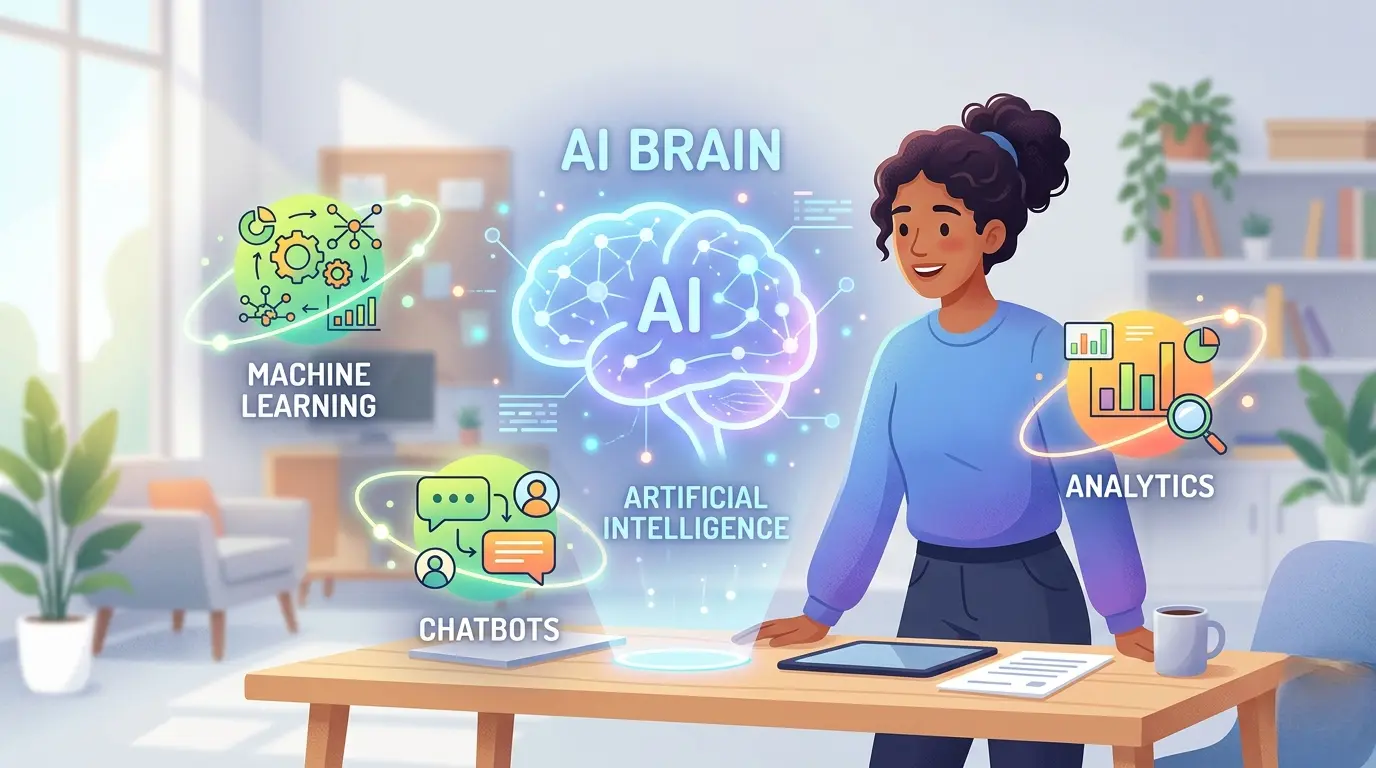
A Simple Definition (Without Tech Headaches). An AI basics course is a beginner-level introduction to artificial intelligence, how it works, what it can do, and why it matters. No jargon storm. No 300-page math textbook. No need for a physics degree. It covers the core ideas behind:
Special Note:- Learning a AI basics course online is a gentle way to start without feeling overwhelmed.
What You’ll Learn Inside an AI Basics Course?
A good AI basics course teaches:
Core AI concepts – what AI actually is and what it definitely isn’t
AI is simply a machine for recognizing patterns, making predictions, or understanding a language that mimics certain kinds of human thinking. It’s not magic, as some people say; it gives a unique or genuine idea that has never existed, nor is it a robot plotting against humanity. Think of AI as very fast, and it still needs human instructions, guidelines, and data to learn from.
Neural networks – a system of tiny digital “brain cells” working together
Neural networks are inspired by the human brain, but way simpler; they are basically layers of tiny “nodes” that pass information to each other. Each node makes a decision, and together they build a big, smart outcome. If even a single node fails to make a decision or can`t understand the command, you`ll probably have to refresh it and guide it properly. Also, this is the tech behind things like voice recognition, image classification, and chatbots.
Data basics – training, testing, cleaning, labeling
Data is the fuel that powers AI. We hear some people saying AI works better with short prompts, but the reality is the exact opposite of this. Why? Before a model can learn, the data needs to be organized, cleaned, well-described, and split into training sets ( what AI mostly learns from ) and testing sets ( that check if it learned correctly ). So, in a short line, good data leads to Smart AI, messy data leads to unpredictable results.
Responsible AI & ethics – bias, fairness, and why AI sometimes needs supervision
Responsible AI focuses on making sure AI systems are fair, transparent, and safe because AI learn from human data, which can contain social and institutional ideologies. Like a human, biases can affect the outcome of an algorithm. That`s why ethical guidelines, audits, and human oversight ensure that the model behaves properly and responsibly instead of reinforcing the unfair patterns.
Real-world applications – healthcare, finance, automation, marketing, and more
AI quietly powers everyday life, from diagnosing medical images to detecting fraud in banking. Businesses are using it to automate tasks, improve customer service, predict trends, and personalize experiences. Whether you interact with chatbots, navigation apps, or recommendation systems. You`re already using AI without even realizing it.
Who Should Take an AI Basics Course?
Not everyone needs an AI basics course, but some of them who are looking for these courses could be beneficial and ideal for:
Students exploring tech
Why? Because they can use an AI basics course to figure out whether AI, machine learning, or data science is anything they want to pursue long-term. It gives them an early heads-up on concepts that universities and future employers take seriously. Plus, it’s a great way to stand out in academic projects or internships.
Career switchers moving toward data or AI
If you are planning a career shift, an AI basics course gives you a strong foundation without overwhelming you. It helps you understand how AI fits into real jobs and, more importantly, it proves your interest and commitment to recruiters before you even apply, and what skills you’ll need next.
Entrepreneurs automating tasks
Business owners can use AI basics Course to spot opportunities to automate repetitive tasks, improve customer experiences, and analyze data more effectively. It helps them understand what AI can do realistically and what it can’t, so they make smarter and more efficient business decisions.
Freelancers wanting new skills
Freelancers can learn from AI basics course for knowledge to their toolkit to offer higher-value services, whether that’s content creation, automation, analytics, or AI-assisted workflows. AI basics course helps them stay competitive and expand into new niches that clients already care about.
Anyone curious about how AI magic really works
Curious learners get a fun, accessible introduction to the technology shaping the world around them. An AI basics course breaks down complex ideas into simple concepts so you can finally understand what’s happening behind chatbots, recommendations, and everyday smart tools. It’s learning for learning’s sake, no pressure attached.
Do You Need Coding or Math?
Short answer: No. Slightly longer answer: Coding is helpful for future learning, but not required for AI fundamentals. You don’t need calculus, linear algebra, or a secret math gene. If the course needs coding, it will tell you upfront.
Best AI Basics Courses Online (Free & Paid)
Course-by-Course Breakdown
| Course | Platform | Price | Duration | Certificate | Format | Why It’s Great | Pros | Cons | Best For / Ideal Learners |
|---|---|---|---|---|---|---|---|---|---|
| AI for Everyone | Coursera | Free (audit) / Paid cert | 7-12 hrs | Yes | Video | Very beginner-friendly. No coding. Clear explanations by Andrew Ng. | Simple, practical, understandable | No hands-on projects | Total beginners, managers, anyone intimidated by tech |
| IBM AI Engineering Basics | IBM SkillsBuild | Free | 10-20 hrs | Yes | Video + Labs | Structured and career-oriented pathway with quizzes and hands-on elements | Free certificate, job-focused modules | Slightly more technical | Career changers aiming for future AI/ML engineering roles |
| Google AI Learning Path | Free | Self-paced | Yes | Text + Video | Self-paced lessons, exercises, and badges from Google’s ecosystem | Recognized globally, well-organized | Can feel text-heavy | Curious learners who enjoy structured written content | |
| Intro to AI | Udemy | $10–$40 | 4-8 hrs | Yes | Video | Clear videos, practical examples, and lifetime access | Affordable during sales, beginner-friendly | Certificate isn’t as recognized professionally | Structured learners who prefer step-by-step video walkthroughs |
AI for Everyone – Coursera
| Attribute | Details |
|---|---|
| Price + Duration | Free (audit) / Paid certificate • 7 to 12 hrs |
| Format | Video |
| Highlights | Beginner-friendly, no coding, Andrew Ng teaching. |
| Pros | Simple, practical, clear. |
| Cons | No hands-on projects. |
| Best for | Total beginners, managers, non-technical learners. |
IBM AI Engineering Basics – IBM SkillsBuild
| Attribute | Details |
|---|---|
| Price + Duration | Free • 10 to 20 hrs |
| Format | Video + Labs |
| Highlights | Career-focused, includes quizzes and hands-on labs. |
| Pros | Free certificate, job-oriented modules. |
| Cons | Slightly more technical. |
| Best for | Career changers aiming for AI/ML roles. |
Google AI Learning Path – Google
| Attribute | Details |
|---|---|
| Price + Duration | Free • Self-paced |
| Format | Text + Video |
| Highlights | Google badges, strong structure, exercises included. |
| Pros | Globally recognized, well-organized. |
| Cons | Text-heavy for some learners. |
| Best for | Curious learners who like written content. |
Intro to AI – Udemy
| Attribute | Details |
|---|---|
| Price + Duration | $10 – $40 • 4 to 8 hrs |
| Format | Video |
| Highlights | Clear videos, practical examples, lifetime access. |
| Pros | Affordable, beginner-friendly. |
| Cons | Certificate not highly recognized. |
| Best for | Learners who prefer step-by-step video walkthroughs. |
Are Paid AI Basics Course Worth It for Beginners?
Many people just follow the trend and just for getting a certificate they buy courses that are not even relevant to their niche so lets discuss about these paid courses are worth it only if:
You want structured content
If you crave a clean, step-by-step roadmap instead of a chaotic “learn as you go,” a paid course gives you a neatly packaged learning journey. No guessing, no confusion, just a clear path that makes you feel like you’re finally learning the right way.
You like guided learning
Paid courses feel like having a mentor walk you through everything, gently steering you away from mistakes. It’s perfect if you want someone to hold your hand (professionally, of course) instead of wandering through random YouTube videos.
You need a certificate from a reputable platform
If you want that shiny certificate to proudly flash on LinkedIn or send to your boss, paid courses deliver the kind that actually gets attention. It says, “Yes, I learned this on purpose and no, it wasn’t from a questionable website.”
You prefer higher-quality production and support
Paid courses usually look and feel premium, with smooth videos, clean visuals, helpful instructors, and real support when you’re stuck. It’s like the difference between watching a shaky phone tutorial and enjoying a Netflix-quality learning experience.
Special Note:- Free courses are perfect if you’re still exploring AI or don’t care much about certificates.
Best AI Basics Course on YouTube (Free)
Top Channels for Beginners
| Platform / Channel | What You Get | Best For / Learning Style | Certificate Available | Free / Paid |
|---|---|---|---|---|
| freeCodeCamp | A complete, 6-hour foundational AI Basics course. Perfect for weekend learners. | Structured learners who like a full bootcamp experience | No | Free |
| Simplilearn | Short, simple, and high-quality explainer videos. | Visual learners who enjoy graphical explanations | Yes (some courses) | Free & Paid |
| Tech With Tim | Small Python-based demos and practical AI examples. | Fast learners who prefer bite-sized, hands-on lessons | No | Free |
| Multiple Channels | Project-style videos exploring different AI applications. | Hobbyists who love exploring and experimenting on their own | Varies by channel | Free |
freeCodeCamp
| Attribute | Details |
|---|---|
| Platform / Channel | freeCodeCamp |
| What You Get | A complete, 6-hour foundational AI course. Perfect for weekend learners. |
| Best For / Learning Style | Structured learners who like a full bootcamp experience |
| Certificate Available | No |
| Free / Paid | Free |
Simplilearn
| Attribute | Details |
|---|---|
| Platform / Channel | Simplilearn |
| What You Get | Short, simple, and high-quality explainer videos. |
| Best For / Learning Style | Visual learners who enjoy graphical explanations |
| Certificate Available | Yes (some courses) |
| Free / Paid | Free & Paid |
Tech With Tim
| Attribute | Details |
|---|---|
| Platform / Channel | Tech With Tim |
| What You Get | Small Python-based demos and practical AI examples. |
| Best For / Learning Style | Fast learners who prefer bite-sized, hands-on lessons |
| Certificate Available | No |
| Free / Paid | Free |
Multiple Channels
| Attribute | Details |
|---|---|
| Platform / Channel | Multiple Channels |
| What You Get | Project-style videos exploring different AI applications. |
| Best For / Learning Style | Hobbyists who love exploring and experimenting on their own |
| Certificate Available | Varies by channel |
| Free / Paid | Free |
Pros & Cons of YouTube Learning
|
Pros: |
|---|
|
✅ Free |
|
✅ Unlimited choice |
|
✅ Visual & engaging |
|
Cons: |
|---|
|
❌ No certificates |
|
❌ Lack of structure |
|
❌ Hard to track progress |
How to Identify High-Quality AI Basics Course Content on YouTube
Free AI Basics Course With Certificate
AI Basics Courses That Give Free Certificates (Really Free)
✅ Google AI Learning
A free, self-paced learning path packed with beginner-friendly lessons and exercises. Great for anyone who wants trusted, up-to-date AI basics backed by Google’s expertise.
✅ IBM SkillsBuild AI Training
IBM offers structured, hands-on AI modules with quizzes and digital badges you can actually show off. Ideal for learners who want real career value without paying a penny.
✅ FutureLearn (select free runs)
Short, well-designed courses from universities and industry experts. Many runs are free to join, making it a solid option for curious beginners who want quality without commitment.
AI Basics Courses With Free Learning + Paid Certificate
✅ Coursera
Coursera lets you learn AI basics for free through audit mode, with the option to buy a polished, employer-recognized certificate. Great for beginners who want flexible learning plus credibility.
✅ edX
edX offers university-level AI Basics course from places like Harvard and MIT, with free learning and optional paid certificates. Perfect if you prefer academic-style content without the student loans.
✅ Udacity (some trial programs)
Udacity’s beginner AI lessons are high-quality and project-driven, and some introductory modules are free to try. Ideal for learners who want hands-on practice before committing to a paid nano-degree.
Which Certificates Actually Matter for Employers and Why?
By searching and learning from different resources it has been verified that these have the highest recognition:
✅ Google Certificates
Google certificates carry strong industry credibility because they’re backed by one of the biggest tech companies in the world. Recruiters recognize them instantly, and they signal that you’ve learned AI skills using modern tools and standards that companies actually rely on.
✅ Coursera Certificates
Andrew Ng’s courses are considered the gold standard for AI beginners; many professionals start their careers with his content. A Coursera certificate shows structured learning, real assessments, and commitment, making it a solid addition to your LinkedIn or resume.
✅ IBM Digital Badges
IBM’s badges are popular because they are skill-specific, employer-recognized, and issued after quizzes or hands-on tasks. They prove you’ve completed real training, not just passive watching, and they carry weight in industries that value practical AI knowledge.
PDF-only certificates from unknown sites? Nice for motivation, less nice for LinkedIn.
How to Add AI Certificates to Your Resume
When adding AI certificates to your resume, keep it clean, relevant, and easy for recruiters to skim. Always list the certificate title, the platform (Coursera, Google, IBM, etc.), and the key skills you gained from the course. Showing skills is crucial; employers want to know what you can actually do, not just what you completed.
Place certificates in a “Certifications” or “Professional Development” section, and keep the descriptions short but meaningful. If the course involved projects, assessments, or practical tasks, feel free to highlight those too. The goal is to show that you haven’t just collected certificates, you’ve gained real, applicable knowledge.
Common Mistakes to Avoid (and Their Consequences)
How to Choose the Right AI Basics Course
Choosing the right AI basics course starts with understanding your goals. If you’re planning a career shift into AI or data, you’ll benefit from a structured pathway like IBM SkillsBuild, which includes assessments and career-oriented modules. If you’re simply curious and want to understand how AI works without getting too technical, Coursera’s AI for Everyone is a perfect starter.
Entrepreneurs and tech-savvy business owners who want to automate tasks or explore AI tools should lean toward Google AI Learning for its practical, tool-focused lessons. And if you’re a student just starting out, mixing YouTube tutorials with Coursera’s beginner courses gives you the best blend of free, flexible, and foundational learning. The right course is simply the one that aligns with where you want to go, not where everyone else is going.
Based on Your Goals
Based on Time Availability
| Time Available | Recommended Course | Why It’s Ideal |
|---|---|---|
| 1 Day | freeCodeCamp Crash Course | A full, structured 6-hour beginner-friendly bootcamp you can finish in one sitting. Great for quick learners who want a solid foundation fast without jumping between videos. |
| 1 Week | Coursera – AI for Everyone | Easy to complete in short daily sessions, with clear explanations and zero coding. Ideal for busy people who want understanding, not overwhelm. |
| 1 Month | Google AI Learning + IBM SkillsBuild | A deeper, more comprehensive learning path combining theory, real-world examples, and hands-on practice. Perfect for learners aiming for strong fundamentals and career-oriented skills. |
Red Flags to Avoid
Beginner-Friendly AI Tools to Try While Learning
No-Code Tools
| Tool | What to Try / Productive Exercise |
|---|---|
| ChatGPT | Experiment with prompt engineering: ask it to summarize articles, brainstorm ideas, or generate creative content. |
| Google Gemini | Explore AI-powered search and recommendations, and test it by asking for insights on topics you’re learning. |
| Teachable Machine | Build a simple image, audio, or pose recognition model, see AI “learn” without coding. |
Starter ML Platforms
| Tool | What to Try / Productive Exercise |
|---|---|
| Google Colab | Run Python AI notebooks online, try a basic classification or regression project. |
| Kaggle Learn | Complete beginner-friendly ML exercises and mini-competitions to apply theory in practice. |
Tools for Creative Learners
| Tool | What to Try / Productive Exercise |
|---|---|
| Canva | Create designs, presentations, or social media posts, and practice combining with creativity. |
| Runway ML | Generate AI videos or animations, experiment with simple effects for fun and learning. |
| Image Generators | Create custom images from prompts, practice descriptive writing, and iterative design. |
AI Beginner Project Ideas
No-Code Projects
| Project Idea | Tips / Productive Exercise |
|---|---|
| Build a chatbot using drag-and-drop tools | Focus on solving a simple real-world problem, like a Q&A bot for a website. |
| Train an image classifier with Teachable Machine | Use 3-5 categories, label data clearly, test accuracy, and share screenshots in your portfolio. |
Low-Code Projects
| Project Idea | Tips / Productive Exercise |
|---|---|
| Spam detector using Python | Try a small dataset, experiment with simple ML libraries like scikit-learn, and track predictions. |
| Movie recommendation script | Start with a list of movies and user ratings, and implement basic similarity-based recommendations. |
Portfolio Tips
| Project Idea | Tips / Productive Exercise |
|---|---|
| Keep projects short and focused | Highlight results and learning, not just code complexity. Include screenshots, outputs, or short demos. |
| Add project descriptions | Explain the problem, approach, and results, making it easier for recruiters or peers to understand. |
| Show results, not complexity | Showcase how the AI works in action; visuals and outputs speak louder than technical jargon. |
Final Thoughts
Starting your AI journey doesn’t require coding, math wizardry, or sleepless nights. Passion for learning and trying things that don’t actually work, or trying something that others feel scared to do. To learn from this new AI technology, we must be creative enough to think outside the box, like what it can do and how we can expand the horizon
With free AI basics course, YouTube tutorials, and certification options, anyone can confidently learn AI basics at their own pace. Learn first, then explore, experiment, and enjo,y as this is the new AI Era that will changethe future of many generations. Your future AI-enhanced self will thank you.