Exciting Insights: What Are the Key Trends in AI for 2026
As we step into 2026, the world is no longer asking if AI will reshape industries; it’s asking how fast. From smarter automation to agent-driven workflows and self-learning systems, the landscape is evolving at a pace businesses can’t ignore. If you’re wondering what are the key trends in AI for 2026? the answer lies in understanding the technologies shaping the next wave of innovation.
Let`s break down the top future AI trends to watch from 2024 → 2026 and beyond, helping you stay ahead of the curve, prepare smarter, and adapt to the changes that will define the next decade. You can also get to know about the top ai trends for 2026.
What Are the Key Trends in AI for 2026?
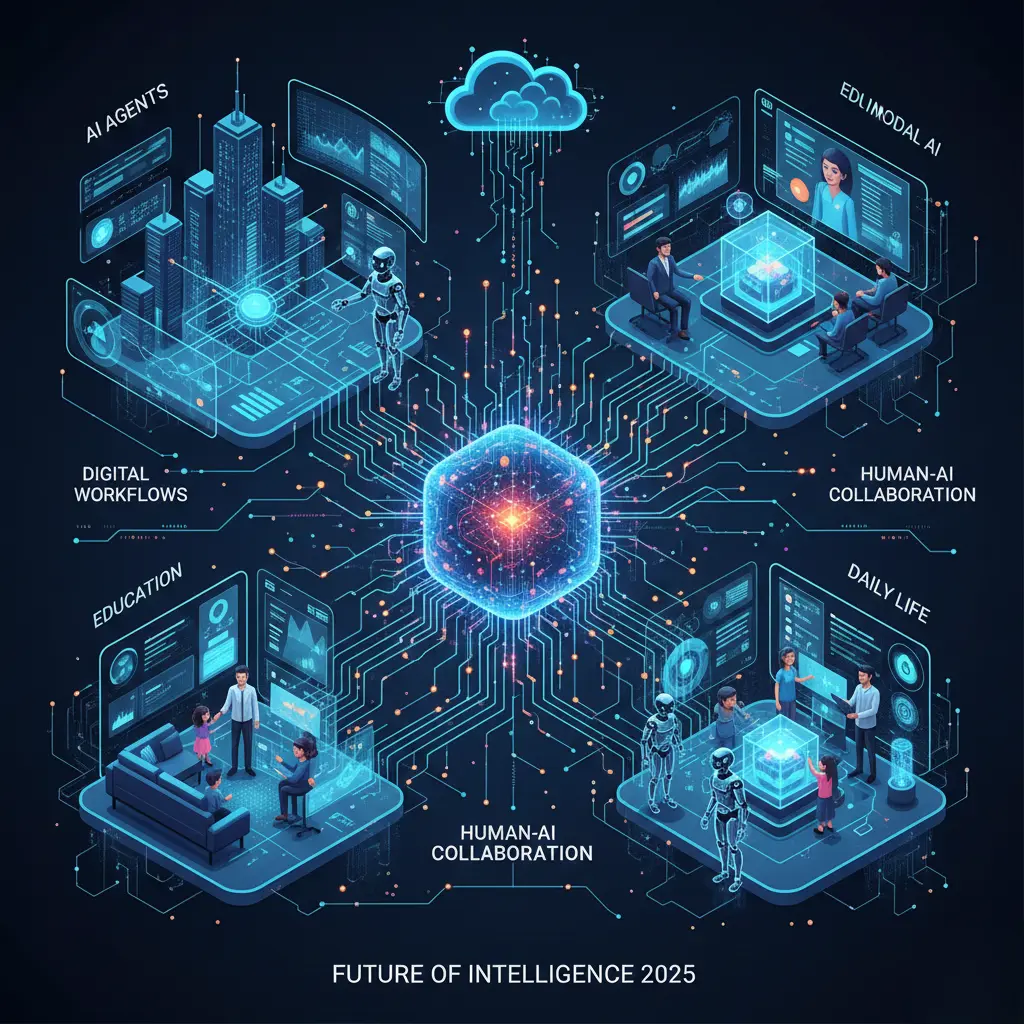
AI in 2026 is entering a phase where systems don’t just assist, they act, decide, and optimize in real time. The headline trend is the rise of autonomous AI agents, capable of running multi-step operations such as campaign execution, inventory balancing, or customer resolutions without human follow-ups. These agents use self-check loops and strategic reasoning, making them far more reliable than the prompt-driven tools of 2024.
2026 will also accelerate industry-trained foundation models. Instead of using one-size-fits-all LLMs, companies are training precision-grade models on financial ledgers, manufacturing telemetry, legal archives, and genomic datasets. These “vertical supermodels” deliver higher accuracy while meeting strict regulatory standards and since what are the key trends in AI for 2026 increasingly revolve around trust and governance, AI trust layers, traceability logs, encrypted inference, and audit-ready pipelines are becoming mandatory as global regulations tighten.
Why AI Trends in 2026 Matter More Than Ever
2026 is the year when AI adoption shifts from optional to unavoidable. The growth curve is now compounding, meaning companies behind in 2024 are falling exponentially further back. Autonomous systems and vertical models are already cutting operational costs by up to 70%, creating a competitive divide that can’t be closed through manual processes. This matters because industries are being rebuilt, not upgraded.
Logistics networks auto-optimize routes, financial firms run real-time compliance through model layers, and creative teams rely on adaptive AI co-workers. The transformation is structural for individuals, the urgency is the same: skill cycles, tools, and workflows are changing every 4-6 months. As what are the key trends in AI for 2026 continue to reshape entire industries, 2026 is no longer about “using AI” – it’s about adapting to an AI-shaped economy before the gap becomes permanent.
How 2026 Trends Build on 2024 Breakthroughs
2024 gave us multimodal models and early agent tooling, but these systems depended heavily on instructions. In 2026, the leap is the shift to self-correcting, self-improving AI. Models now evaluate their output, detect inconsistencies, refine strategies, and retry tasks without human guidance.
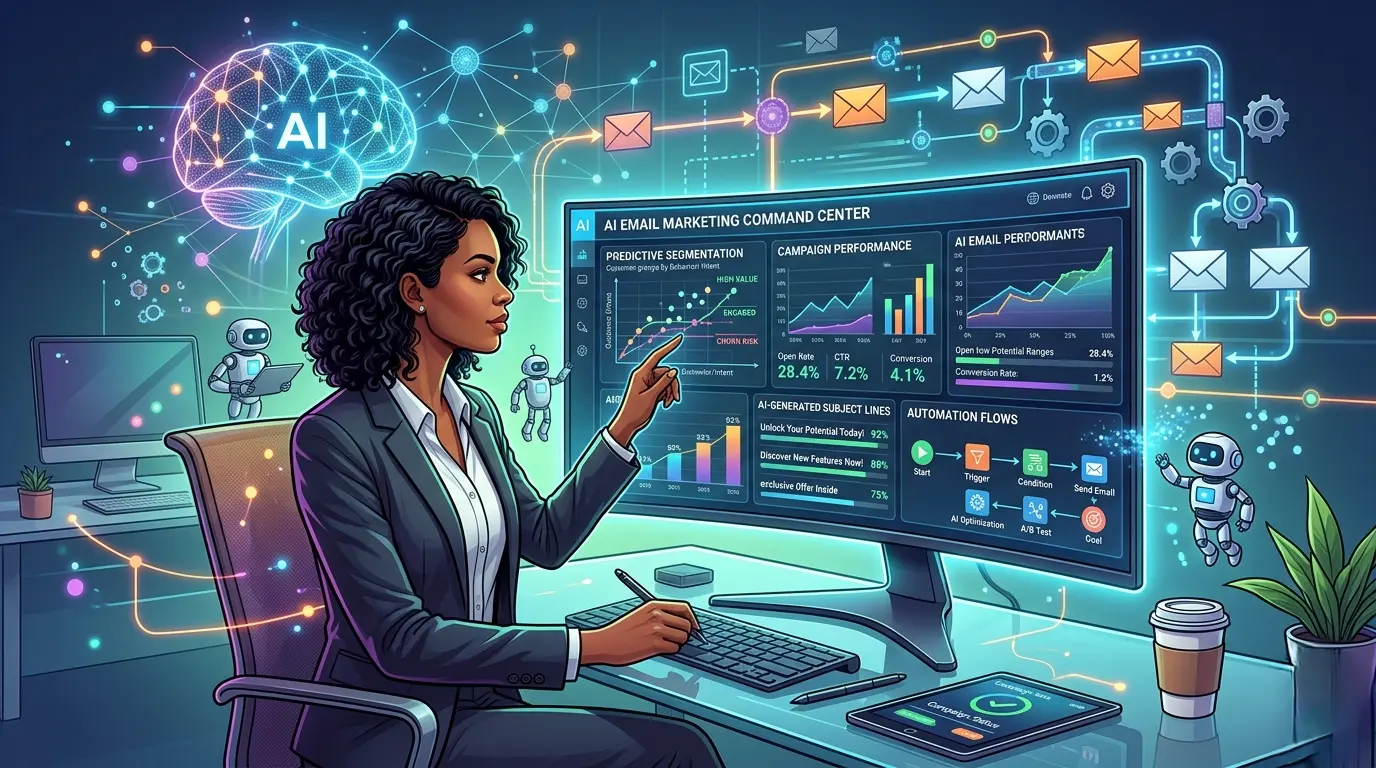
Where a 2024 agent could create email drafts, a 2026 agent designs complete outreach ecosystems – testing variations, analyzing conversion patterns, adjusting targeting, and producing final reports. And because what are the key trends in AI for 2026 center on deeper contextual understanding, 2026 multimodal systems don’t just process image + text anymore; they merge audio, motion, sensor data, behavior analytics, environment, and historical patterns into a unified predictive engine.
Note:- The difference is simple but massive: AI has moved from being prompt-dependent to being a continuous decision engine, marking the real transition from “smart tool” to “autonomous operator.”
Emerging Future AI Trends You Should Watch Next
Self-governing AI ecosystems are on the rise, agents and micro-agents that solve problems before you even wake up. They’ll run supply chains, spark autonomous R&D, and outpace human teams with zero hesitation. And if you’re tracking what are the key trends in AI for 2026, lifelong learning models are the quiet disruptors, predicting markets, health shifts, and operations before anyone sees them coming.
Another trend is neural-symbolic intelligence, an emerging architecture that blends reasoning with learning. Unlike traditional LLMs, these models understand logic, constraints, and rules, allowing them to perform tasks that require precision, legal interpretation, scientific modelling, or governance automation. These emerging technologies form the backbone of the next wave of AI, where autonomous intelligence becomes integrated into everyday decision-making.
Early-Stage Technologies Gaining Momentum
Several early-stage technologies are showing rapid acceleration and are likely to become mainstream by 2026. Agentic AI is leading the pack, complex agents that not only follow instructions but plan, revise, collaborate, and self-correct. These agents connect to internal tools, APIs, and operational systems, enabling near-autonomous business processes. Multimodal reasoning is also gaining traction.
New models now treat text, audio, images, and data as one smart signal, boosting accuracy across diagnostics, security, and robotics. Autonomous workflow engines are also emerging, tools that study your habits and finish routine tasks before you even think about them and if you’re watching what are the key trends in AI for 2026, this shift shows AI is quickly becoming a digital teammate, not just software.
Industries Expected to Change the Fastest
Some industries are positioned for immediate transformation due to rising automation, data richness, and agent-level workflows. Healthcare will move first, driven by contextual diagnostic models, AI-assisted triage, and personalised treatment engines capable of predicting patient outcomes with unprecedented accuracy.
These industries change fastest because they combine large datasets, high-stakes decision-making, and workflows well-suited to autonomous intelligence. If you want to know, can ai predict stock market trends then you can get you answers from this blog.
Key Trends in AI Adoption for 2026 (Businesses & Enterprises)
AI adoption in 2026 is moving from “let’s test it” to “plug it into everything.” Budgets are climbing fast, with companies pouring 25–40% more into AI infrastructure and agentic automation and as what are the key trends in AI for 2026 make clear, the new priority is AI that removes bottlenecks, powering operation centers where agents run forecasting, routing, analytics, monitoring, and compliance on their own.
Enterprises are also adopting retrieval-enhanced systems that merge internal knowledge bases with real-time reasoning, reducing decision latency and improving accuracy. Finally, adoption is accelerating because companies now trust governed AI pipelines, models with traceability, audit trails, and secured inference layers. The result: 2026 marks the first year in which AI transitions from an efficiency booster to a core enterprise engine embedded in daily operations.
Adoption Challenges Companies Must Prepare For
Data privacy and governance remain top concerns, especially as models access internal communication logs, customer histories, and proprietary documents. Companies must establish clear permission layers and audit frameworks before scaling. Another challenge is workforce adaptation. Employees need training in prompt engineering, agent supervision, and AI-assisted decision-making.
Without it, AI output becomes unreliable and misaligned with business goals. Costs and scaling add pressure too, high-performance inference, integration pipelines, and retraining cycles can drain budgets if not managed well and as what are the key trends in AI for 2026 highlight, using too many disconnected tools only creates workflow chaos. Real success comes from a unified, interoperable AI architecture, not a pile of scattered systems.
Case Studies: How Leading Brands Are Adopting AI
1. Nexora Logistics (Fictional, Supply Chain)
Nexora deployed autonomous routing agents connected to warehouse sensors and real-time weather feeds. Within three months, delivery accuracy increased 22%, and fuel waste dropped significantly. Their AI system now adjusts routes without dispatcher involvement.
2. HelixCare Medical Network (Fictional, Healthcare)
HelixCare integrated contextual diagnostic AI across clinics. The model analyzes patient history, symptoms, and sensor readings to provide triage recommendations. Doctors report a 30% reduction in diagnostic delays, especially in rural branches.
3. Marvio Retail Group (Fictional, E-commerce)
Marvio adopted AI-led merchandising, agents forecast demand, adjust pricing, and generate personalized product pages. Seasonal sales cycles that once required weeks of planning are now completed autonomously within hours.
Lessons From 2024: What Is One of the Key AI Trends for 2024?
One of the defining AI trends of 2024 was the shift toward multimodal intelligence, models capable of understanding text, images, audio, video, and operational data within a single reasoning cycle. This was the year AI stopped being “text-first” and became context-first, allowing systems to interpret reality more holistically. The introduction of multimodal LLMs reshaped productivity tools, medical imaging workflows, content creation, and enterprise analytics.
But the real impact wasn’t the feature itself, it was the infrastructure around it. Companies reorganized data pipelines to support multimodal queries, embedding sensors, transcripts, logs, and visuals into unified datasets and as what are the key trends in AI for 2026 show, this gave enterprises their first taste of contextual decision intelligence, where AI doesn’t just answer prompts but interprets situations and acts independently.
How 2024 Paved the Way for 2026 Innovations
2024 introduced the essential building blocks: multimodal inputs, early agent frameworks, retrieval-augmented reasoning, and safer model governance. These systems were powerful but still dependent on human prompts and rigid task structures. 2024 didn’t solve every challenge, but it created the conditions that made 2026’s breakthroughs inevitable.
By early 2026, the same technologies evolved into autonomous reasoning loops, letting AI plan, evaluate, correct, and optimize without step-by-step instructions. Multimodal data became the fuel for context-sensitive decision engines, while retrieval tools matured into memory systems that let AI retain long-term context.
The result is a clear timeline:
What Stayed the Same & What Evolved
Several pillars from 2024 remain essential: multimodal processing, retrieval-augmented generation, and human-in-the-loop oversight. These foundations continue to support accuracy, safety, and enterprise reliability in 2026. What evolved is how these systems operate.
AI moved from reacting to prompts to initiating actions, predicting needs, and managing workflows independently. Agent frameworks that were experimental in 2024 have become stable, scalable, and deeply integrated into business infrastructures. In short:
How to Stay Ahead of AI Trends in 2026 (For Students, Bloggers, Entrepreneurs)
Staying ahead of AI in 2026 means building skills, adopting the right tools, and experimenting consistently. Students should learn how AI works, its data, reasoning, and limitations, to apply it confidently in studies and early careers. Bloggers need to weave AI into content workflows for research, SEO, repurposing, and audience insights. And keeping an eye on what are the key trends in AI for 2026 ensures everyone stays ahead of the curve.
Entrepreneurs must shift from using AI as a side tool to embedding it into operations: lead generation, product development, automation, and customer experience. Adapting early means you’re not waiting for AI to replace tasks; instead, you’re guiding AI to enhance and extend your capabilities. In a year where tech cycles refresh every 3–4 months, proactive learners will stay far ahead of the curve.
Skills You Should Build Now
Start with AI literacy, understanding how models think, what they can’t do, and how to give structured inputs. Prompt engineering is shifting toward “task design,” meaning you learn how to define goals, constraints, formats, and logic sequences so AI produces consistent output. Next, build data and analytics literacy.
Whether you study, blog, or run a business, understanding data patterns helps you use AI insights effectively. Learning agent workflows, automation triggers, and API tools will be key. And staying aware of what are the key trends in AI for 2026 ensures you practice critical thinking and creativity, skills AI can boost but never replace.
Tools That Will Help You Adapt Faster
For Students: Use tools like Notion AI for study automation, Quizlet for AI-driven memorization, and Perplexity for research validation. These platforms turn hours of reading into structured, digestible insights.
For Bloggers: Tools like Surfer AI for SEO optimization, Jasper or Copy.ai for content ideation, and OpusClip for video repurposing can dramatically reduce content-production time. Agent-based editors also help convert long articles into social-ready formats instantly.
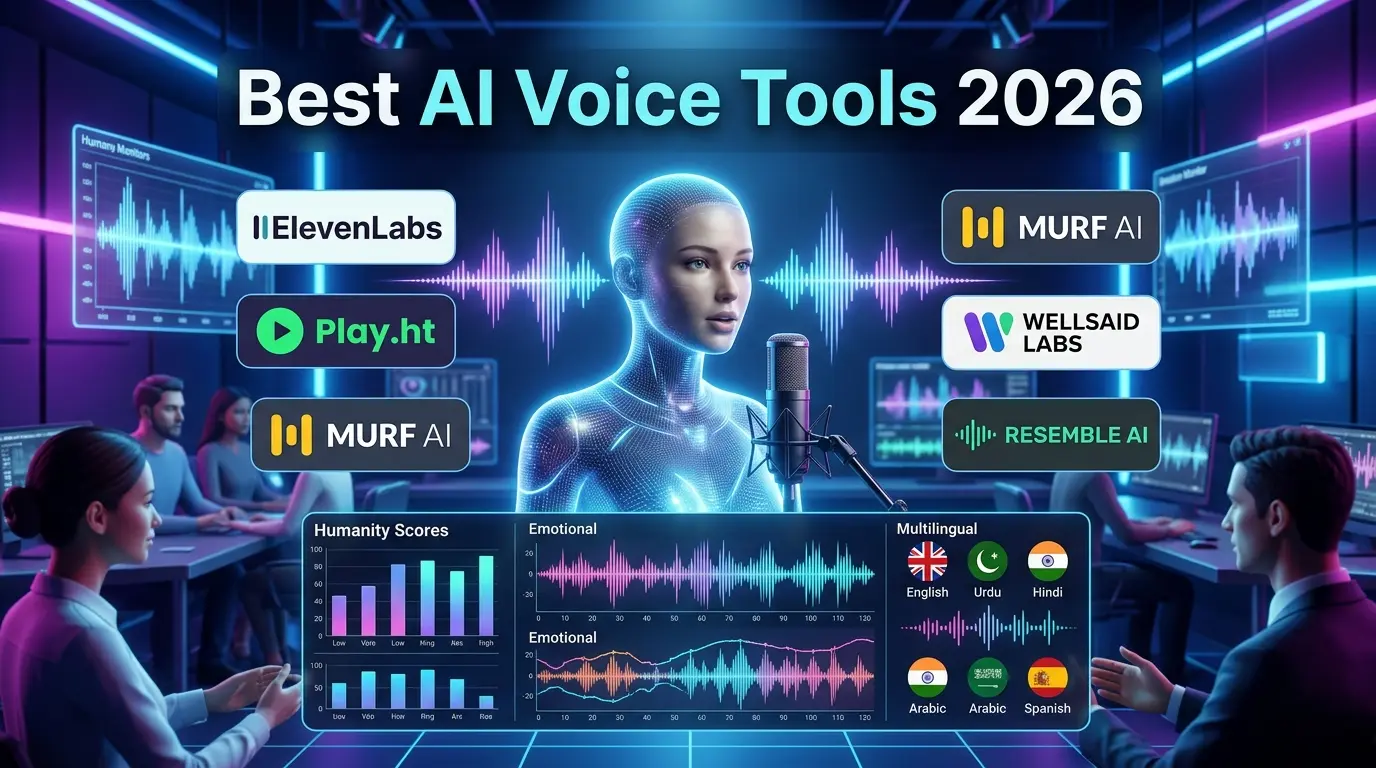
For Entrepreneurs: Platforms like HubSpot AI, Durable AI (website builder), and ElevenLabs (voice automation) enhance branding, customer handling, and growth. Workflow-oriented tools such as Make.com or Zapier automate operations, while agentic dashboards manage repetitive business tasks.
Conclusion: Why Understanding AI Trends Helps You Future-Proof Yourself
The people who succeed in 2026 and beyond anticipate change instead of reacting to it. By keeping up with what are the key trends in AI for 2026, autonomous agents, multimodal reasoning, and intelligent workflows, you can stay ahead in your studies, career, or business. AI isn’t replacing humans; it’s redefining what we can achieve.
Students who learn AI literacy will enter the job market with an advantage. Bloggers who adopt AI-driven research and content systems will outpace their competitors. Entrepreneurs who integrate automation into daily operations will scale faster with fewer resources. The real value lies in becoming adaptable.
Note:- You future-proof yourself by making AI work for you, not against you, turning every shift in the tech landscape into an opportunity to grow, innovate, and lead.