Exciting Innovations: Latest Trends in AI for Education 2026
Imagine a classroom where every student receives personalized attention, assignments grade themselves, and learning adapts to individual needs in real-time. Artificial Intelligence is revolutionizing education at an unprecedented pace. This is not science fiction anymore, but what exactly is driving this transformation? What are the latest trends in AI for education that educators, students, and institutions must understand today?
According to recent studies, the global AI in education market reached $3.68 billion in 2023 and is projected to exceed $30 billion by 2032. This explosive growth indicates a fundamental shift in how we approach teaching and learning. From personalized learning platforms to emotional AI systems, we will cover everything you need to know about AI’s impact on education.
Let`s explore both the latest trends in AI for education, currently reshaping classrooms, and the future trends in AI for education that promise even more revolutionary changes. Whether you are a teacher, administrator, student, or parent, understanding these trends is essential for navigating the evolving educational landscape.
Understanding AI in Education
What is AI in Education?
Artificial Intelligence in education refers to the use of computer systems and algorithms that can perform tasks typically requiring human intelligence. These tasks include learning, problem-solving, decision-making, and understanding natural language.
In educational settings, AI manifests through various tools and platforms designed to enhance the teaching and learning experience. These systems analyze vast amounts of data to provide personalized recommendations, automate administrative tasks, and create adaptive learning environments
Brief History and Evolution
The journey of AI in education began in the 1970s with simple computer-assisted instruction programs. However, significant advancements occurred only in the last decade:
| Era | AI Development in Education |
|---|---|
| 1970s-1990s | Basic computer-assisted learning |
| 2000s | Early learning management systems |
| 2010-2015 | Adaptive learning platforms emerge |
| 2016-2020 | Machine learning integration |
| 2021-Present | Generative AI revolution (ChatGPT era) |
Current Market Statistics
The numbers paint a compelling picture of AI’s educational impact:
These statistics demonstrate why understanding the latest trends in AI for education has become crucial for everyone involved in the learning process.
What Are the Latest Trends in AI for Education?
The educational technology landscape is evolving rapidly. Here are the most significant latest trends in AI for education that are currently transforming classrooms globally.
1. Personalized Learning Platforms
Personalized learning represents one of the most impactful trends in AI for education today. These platforms analyze individual student performance, learning styles, and preferences to create customized educational experiences.
How It Works:
Real-World Examples:
| Platform | AI Feature | Users |
|---|---|---|
| Khan Academy (Khanmigo) | AI tutor conversations | 150+ million |
| Duolingo | Adaptive lesson difficulty | 74+ million |
| DreamBox | Real-time math adaptation | 6+ million |
Students using personalized AI platforms show 62% better retention rates compared to traditional learning methods.
2. AI-Powered Tutoring Systems
Intelligent tutoring systems represent another revolutionary trend. These virtual tutors provide one-on-one support to students anytime, anywhere, breaking the limitations of traditional classroom settings.
Key Features:
Popular AI Tutoring Tools:
Research indicates that students using AI tutors improve their grades by an average of 30% within one semester.
3. Automated Grading and Assessment
Teachers spend approximately 10-15 hours weekly on grading tasks. AI-powered automated grading systems are transforming this reality, representing one of the most practical trends in AI for education.
What AI Can Grade:
Benefits for Educators:
Leading Platforms:
4. Intelligent Content Creation
AI is revolutionizing how educational content is created and delivered. This trend enables educators to generate high-quality materials in minutes rather than hours.
AI Content Creation Capabilities:
| Content Type | AI Tool | Time Saved |
|---|---|---|
| Lesson plans | MagicSchool AI | 80% |
| Quizzes | Quizlet AI | 75% |
| Presentations | Gamma AI | 70% |
| Study guides | NotebookLM | 85% |
| Video summaries | Pictory AI | 90% |
Applications Include:
The latest trends in AI for education democratizes quality by enabling resource-limited schools to access premium content creation capabilities.
5. Natural Language Processing (NLP) Tools
Natural Language Processing has become fundamental to the latest trends in AI for education. NLP enables machines to understand, interpret, and respond to human language naturally.
Educational Applications:
Language Learning:
Writing Assistance
Accessibility Features:
Studies show NLP tools improve student writing quality by 45% over one academic year.
6. Predictive Analytics for Student Performance
Predictive analytics represents one of the most powerful & latest trends in AI for education. These systems analyze student data to predict future performance and identify at-risk students before they fail.
What Predictive AI Analyzes:
Early Warning Capabilities:
RED FLAG INDICATORS:
AI RESPONSE:
Universities that use predictive analytics report a 15-20% improvement in student retention rates.
What Are the Future Trends in AI for Education?
While current trends are impressive, the future trends in AI for education promise even more revolutionary changes. Here is what experts predict for the coming years.
1. Immersive VR/AR Learning Environments
Virtual and Augmented Reality, combined with AI, will create unprecedented learning experiences. This represents one of the most exciting future trends in AI for education.
Expected Developments (2025-2030):
| Technology | Application | Timeline |
|---|---|---|
| VR Classrooms | Virtual campus experiences | 2025 |
| AR Textbooks | Interactive 3D content | 2025 |
| Holographic Teachers | AI instructor holograms | 2027 |
| Virtual Labs | Safe science experiments | 2026 |
| Historical Simulations | Time-travel learning | 2028 |
Benefits of Immersive Learning:
Meta and Apple are investing billions in educational VR/AR applications, signaling mainstream adoption within five years.
2. AI-Driven Curriculum Design
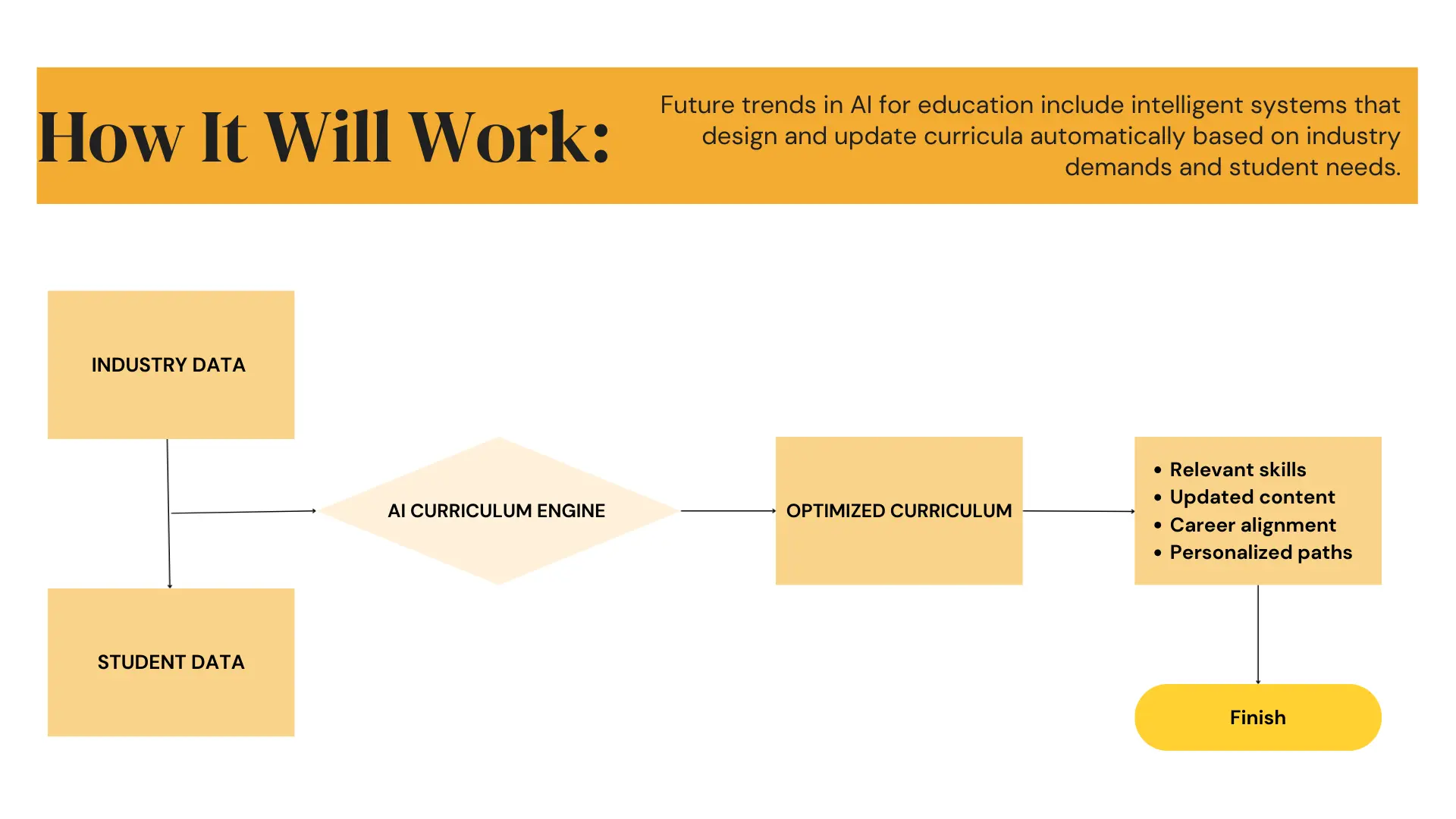
Predicted Capabilities:
By 2028, experts predict 60% of institutions will use AI-assisted curriculum design.
3. Emotional AI and Sentiment Analysis
Emotional AI represents one of the most human-centered future trends in AI for education. These systems will detect and respond to student emotions in real-time.
Emotional AI Features:
| Capability | Technology | Purpose |
|---|---|---|
| Facial expression analysis | Computer vision | Detect confusion/boredom |
| Voice tone analysis | Audio processing | Identify frustration |
| Typing pattern analysis | Behavioral AI | Recognize stress |
| Engagement tracking | Eye movement | Measure attention |
Applications:
Mental Health Integration:
Future AI systems will identify early signs of anxiety, depression, and burnout, connecting students with support resources proactively.
4. Blockchain Plus AI Credentials
The combination of blockchain and AI will revolutionize educational credentials. This future trend promises tamper-proof, globally recognized certifications.
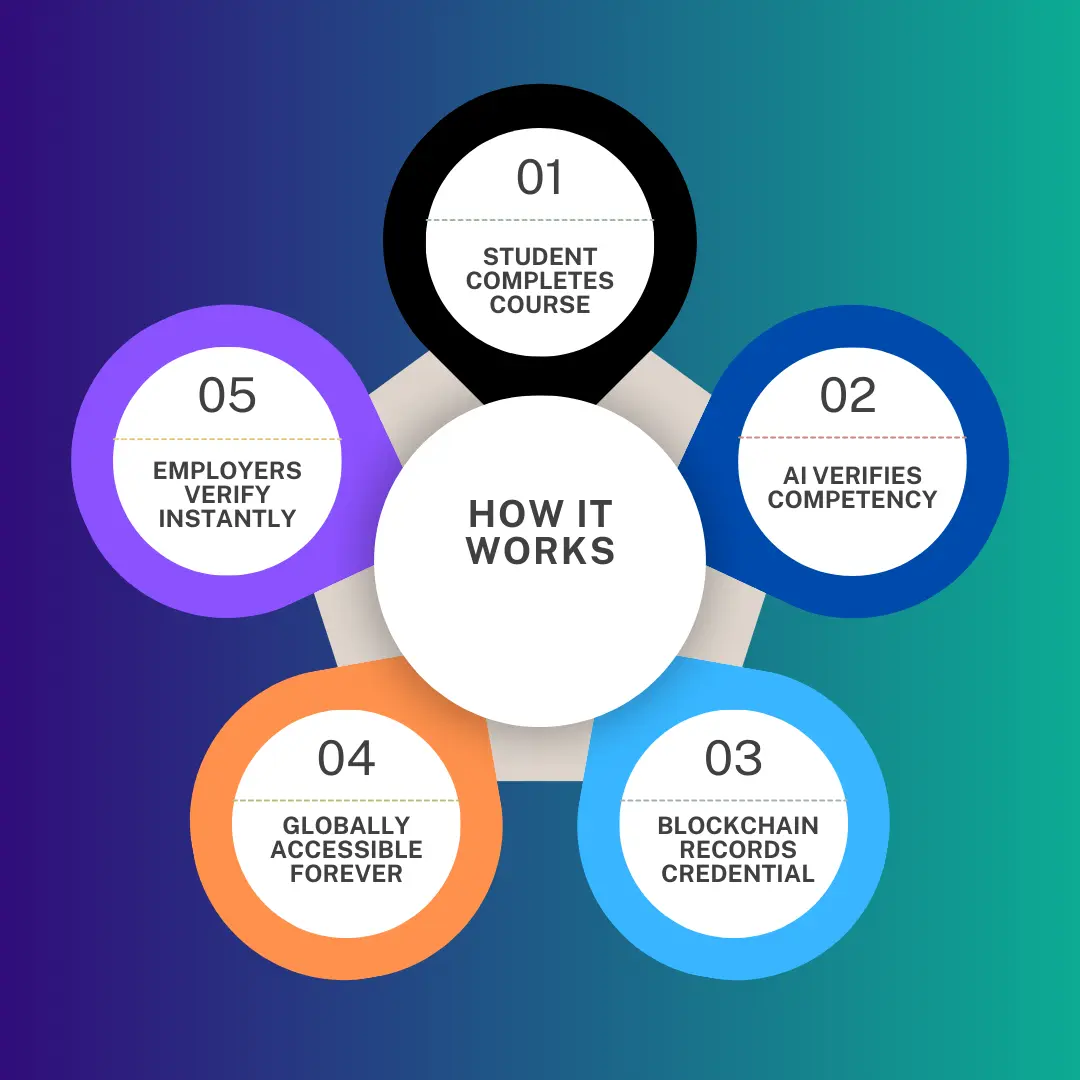
Benefits:
Major universities, including MIT and Oxford, are already piloting blockchain credentials.
5. Autonomous Learning Companions
Future trends in AI for education include AI-powered robots and virtual companions that continuously support learning.
Expected Features:
| Companion Type | Function | Availability |
|---|---|---|
| Physical robots | Classroom assistance | 2026 |
| Virtual avatars | 24/7 study support | 2025 |
| AR companions | Augmented tutoring | 2027 |
| Holographic assistants | Interactive teaching | 2029 |
Capabilities:
Japan and South Korea are leading the development of educational companion robots, with several already deployed in pilot programs.
6. Brain-Computer Interface Learning
The most futuristic among future trends in AI for education involves direct brain-computer interfaces for learning acceleration.
Current Research Areas:
Predicted Timeline:
While still largely experimental, early research shows promising results in accelerating language learning and improving memory retention through neural interfaces.
Key Benefits of latest trends in AI for Education
The latest trends in AI for education offer transformative benefits across all stakeholders.
For Students
For Teachers
For Institutions
For Society
Challenges in Implementing latest trends in AI for Education
Despite exciting advancements, significant challenges remain in implementing these AI trends.
Data Privacy Concerns
Student data is extremely sensitive. AI systems require vast amounts of personal information, raising serious privacy questions:
Digital Divide Issues
Not all students have equal access to AI-powered education:
| Region | Internet Access | AI Tool Access |
|---|---|---|
| North America | 93% | High |
| Europe | 89% | High |
| Asia (urban) | 75% | Medium |
| Africa | 36% | Low |
| Rural areas globally | 45% | Very Low |
Teacher Resistance and Training
Many educators feel threatened or unprepared:
Ethical Considerations
What Experts Say About AI in Education
Industry leaders and researchers share compelling insights about both the latest trends in AI for education and future predictions.
AI will not replace teachers, but teachers who use AI will replace those who do not ~ Sal Khan, Founder of Khan Academy.
We are at an inflection point where AI can finally deliver on the promise of personalized education at scale ~ Daphne Koller, Co-founder of Coursera.
Market Predictions (2024-2030)
| Year | AI Education Market Size | Growth Rate |
|---|---|---|
| 2024 | $4.5 billion | 22% |
| 2026 | $8.2 billion | 35% |
| 2028 | $15.7 billion | 40% |
| 2030 | $30+ billion | 38% |
Key Research Findings
How to use AI properly in Education?
Using AI properly in education requires thoughtful implementation and clear guidelines. Here are the essential best practices:
For Teachers:
For Students:
For Institutions:
Understanding the latest trends in AI for education helps stakeholders implement these technologies responsibly while maximizing educational benefits. Learn more about top ai trends in 2026 to stay ahead of competitors.
Conclusion
The educational landscape is rapidly transforming through Artificial Intelligence. Latest Trends in AI for Education, including personalized learning, AI tutors, predictive analytics, and automated grading, are already reshaping how students learn. Future developments like VR/AR classrooms, emotional AI, and autonomous learning tools promise even more immersive experiences.
However, challenges such as data privacy, ethical use, and teacher readiness remain vital. Ultimately, AI will not replace educators but enhance their impact, with success lying in balancing advanced technology and human-centered teaching. This aligns well with our latest trends in ai technology and development .
What are the best examples of AI in education?
ChatGPT and AI chatbots for 24/7 student support, Duolingo for personalized language learning, Khan Academy’s Khanmigo for AI tutoring, Gradescope for automated grading, Century Tech for adaptive learning, Coursera for course recommendations, and Google’s Socratic for homework help.
What is the dark side of AI in education?
Data privacy risks, increased academic cheating, unequal access to AI tools, over-reliance on technology, biased assessments, reduced human interaction, and screen addiction. Addressing these issues is essential for the ethical and responsible use of AI in education.
Can a teacher be replaced by AI?
No. Latest Trends in AI for Education show that AI supports grading and personalization but cannot replace teachers. Human insight, emotional intelligence, and mentorship remain irreplaceable, with AI handling routine tasks so educators can focus on students.