AI Tools for Branding in 2026: I Tested the Best Options to Build a Brand from Scratch
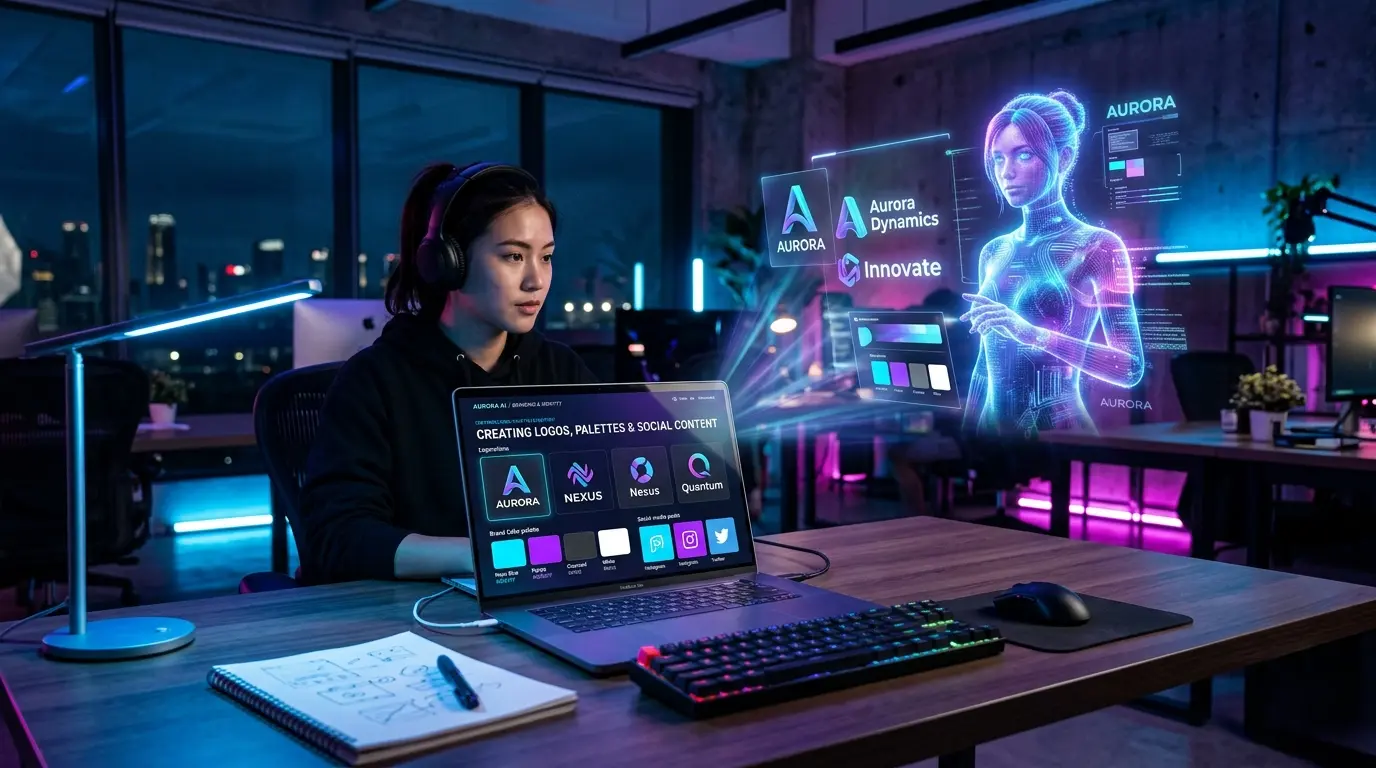
The best AI tools for branding in 2026 let you create a logo, define your brand voice, generate content, design visuals, and launch ads, all without hiring a designer or agency. After testing over a dozen platforms, I found that tools like Looka, Jasper, Canva AI, and AdCreative.ai can take you from zero to a polished brand identity in under an hour. Whether you’re a freelancer, startup founder, or marketer on a budget, AI branding has matured enough to be your first, and sometimes only, step.
Why AI Tools for Branding Matter More Than Ever in 2026
A few years ago, using AI tools for branding felt experimental. You’d get a generic logo, some clunky copy, and visuals that screamed: “a robot made this.” That era is over.
In 2026, AI branding tools have crossed a critical threshold. They’re no longer just fast, they’re genuinely good. As Forbes reported in its analysis of AI brand identity creation, AI-powered branding has shifted from a novelty shortcut to a necessity for lean teams that need to compete with well-funded competitors. The tools understand context, style preferences, and industry nuances in ways that would have seemed impossible just two years ago.
This matters if you’re:
I spent the last few months testing the most popular AI tools for branding across five categories: logos, brand voice, content creation, visual identity, and ads. This guide is built on that hands-on experience, not spec sheets and feature lists.
Let’s get into it.
Best AI Tools for Branding in 2026: The Quick Overview
Before we dive deep, here’s a snapshot of every tool covered in this guide:
| Category | Tool | Best For | Pricing Tier |
|---|---|---|---|
| Logo Design | Looka | Complete logo + brand kit | Free ($96 one-time for full kit) |
| Logo Design | Brandmark | Fast, minimalist logos | Paid ($25-$175) |
| Logo Design | Logo.ai | Simple, icon-based logos | Free ($29+ per download) |
| Brand Voice | Jasper | Tone-calibrated brand copy | Paid ($49/mo+) |
| Brand Voice | Copy.ai | Quick short-form copy | Free |
| Brand Voice | Writesonic | Budget brand messaging | Free |
| Content Creation | Jasper | Long-form brand content | Paid ($49/mo+) |
| Content Creation | ChatGPT | Versatile content drafting | Free ($20/mo for Plus) |
| Content Creation | Notion AI | Integrated content workflows | Add-on ($10/mo) |
| Visual Identity | Canva AI (Magic Design) | Social templates + brand kits | Free ($13/mo for Pro) |
| Visual Identity | Midjourney | Custom, artistic brand imagery | Paid ($10/mo+) |
| Visual Identity | Adobe Firefly | Enterprise-grade AI visuals | Free (included in CC) |
| Ads & Social | AdCreative.ai | Performance-focused ad designs | Paid ($21/mo+) |
| Ads & Social | Predis.ai | AI-generated social posts | Free |
| Ads & Social | Lately AI | Repurposing long content to social | Paid (custom pricing) |
Now let’s break down each category with real observations from testing.
AI Tools for Logo Design
Your logo is the first thing people see. It doesn’t need to be a masterpiece, but it needs to feel intentional. Here’s how the top AI logo tools performed.
Looka
Looka remains the most complete AI logo tool in 2026. You answer a few questions, including industry, style preferences, colors, and icons, and it generates dozens of logo concepts in seconds. What impressed me is the brand kit it builds around your chosen logo: business cards, social media headers, email signatures, and brand guidelines.
What worked well: I got 20+ usable concepts within 5 minutes. The style options felt modern and relevant, not clip-art-level.
Where it fell short: Limited customization for complex, multi-element brand marks. If you want an intricate hand-drawn-style logo, Looka won’t get you there.
Brandmark
Brandmark takes a more minimalist approach. The output tends to be cleaner and bolder, which works well for tech startups and modern service businesses. It also generates color palettes and font pairings alongside the logo.
What worked well: The typography options are stronger than Looka’s. Great for wordmark-style logos.
Where it fell short: Fewer icon-based options. The AI sometimes repeats similar concepts with only slight variations.
Logo.ai
Logo.ai is the simplest option of the three. It’s fast and affordable, but the output quality is noticeably a step behind Looka and Brandmark.
What worked well: If you need something decent in under 2 minutes, it delivers.
Where it fell short: Designs feel more templated. Not ideal if you want something that stands out.
AI Tools for Brand Voice
A logo gets attention, a brand voice keeps it. These tools help you define how your brand sounds and then generate copy that stays consistent.
Jasper
Jasper is the most capable AI tools for branding when it comes to voice and copy. Its Brand Voice feature lets you feed in sample content, describe your tone, and the AI calibrates itself to match. According to Jasper’s 2026 content marketing benchmark data, AI-generated brand messaging now achieves 85% parity with human-written copy in engagement metrics, clicks, time on page, and conversions.
What worked well: I set the tone to “confident, casual, slightly witty,” and Jasper nailed it after just two prompt adjustments. Taglines, product descriptions, and website headers all felt cohesive.
Where it fell short: The $49/month starting price is a barrier for solo freelancers. You’re paying for power you might not fully use at the beginning.
Copy.ai
Copy.ai is a solid free alternative for generating short-form brand copy, taglines, social bios, and product descriptions. The free tier is generous enough for early-stage branding.
What worked well: Fast output for brainstorming. Good for generating 10 tagline options and picking your favorite.
Where it fell short: Copy.ai struggled with industry-specific jargon for niche brands. When I tested it for a fitness brand, the output leaned generic, “Unleash your potential” type lines.
Writesonic
Writesonic sits between Jasper and Copy.ai in terms of capability and price. It handles brand messaging well enough for startups that need volume.
What worked well: The Brand Voice feature (added in late 2025) is improving quickly. Decent long-form capability.
Where it fell short: Output quality is inconsistent. Some generations are excellent; others need heavy editing.
AI Tools for Content Creation
Once your brand identity exists, you need content, blog posts, website copy, email sequences, and social captions. These tools help you produce it at scale.
Jasper (Again)
Jasper doubles as a content creation engine. Its long-form editor, combined with Brand Voice, makes it the most natural choice if you’re already using it for brand messaging. You can go from brand guidelines to a 2,000-word blog post without switching platforms.
ChatGPT
ChatGPT remains the most versatile AI tools in branding 2026. It won’t auto-apply a brand voice unless you configure custom instructions, but its flexibility is unmatched. I used it for drafting website copy, brainstorming content calendars, and even writing product launch emails.
Pro tip: Create a custom GPT with your brand guidelines, tone description, and sample content baked in. It transforms ChatGPT from a generic assistant into a brand-aware content partner.
Notion AI
Notion AI is ideal if your team already lives in Notion. It’s not the most powerful standalone writing tool, but its integration into project management workflows makes it perfect for brands that want content creation and planning in one place. If you’re building out a full content strategy alongside your brand, check out our guide to AI content marketing tools for a deeper comparison.
AI Tools for Visual Identity and Design
Your brand’s visual identity, colors, typography, imagery style, and templates need to feel cohesive across every touchpoint. These AI-powered design platforms make that achievable without a graphic designer.
Canva AI (Magic Design)
Canva’s Magic Design feature is the standout tool for non-designers in 2026. You input your brand colors, fonts, and logo, and it generates templates for social media posts, presentations, flyers, and more, all on-brand. According to Canva’s Visual Economy Report, small businesses using AI-powered design platforms have cut visual asset creation time by 60% compared to traditional design workflows.
What worked well: The Brand Kit feature combined with Magic Design meant I could generate 15 Instagram post templates in under 10 minutes, all visually consistent.
Where it fell short: Creative ceiling. If you want truly unique, editorial-quality visuals, Canva AI keeps things safe and template-driven.
Midjourney
Midjourney is for brands that want a distinctive, artistic visual style. It excels at creating custom imagery, hero images, conceptual brand photos, and abstract backgrounds that you won’t find in any stock library.
What worked well: The aesthetic quality is leagues ahead of other AI image generators. For brands that want to look premium, Midjourney delivers.
Where it fell short: Steep learning curve with prompt crafting. No direct brand kit integration, you’re generating individual images, not templated systems.
Adobe Firefly
Adobe Firefly is the enterprise-grade option. Integrated into Photoshop, Illustrator, and Express, it lets you generate and edit AI tools for branding within professional design tools. If your brand needs commercial-safe imagery (trained on licensed content), Firefly is the safest bet.
What worked well: Seamless workflow if you already use Adobe Creative Cloud. Text-to-image quality improved dramatically in early 2026.
Where it fell short: Overkill for beginners. The learning curve of Adobe’s ecosystem is the real barrier, not Firefly itself.
AI Tools for Ads and Social Media
Creating ads and social content is where branding meets revenue. These AI tools for branding help you generate scroll-stopping creatives at scale.
AdCreative.ai
AdCreative.ai is purpose-built for performance marketing. You feed in your brand assets, and it generates ad creatives optimized for click-through rates. It even scores each creative with a predicted performance rating.
What worked well: The AI-scored creatives are genuinely useful. I generated 20 Facebook ad variations in 10 minutes, and the top-scored designs aligned with what I’d intuitively pick as strongest.
Where it fell short: The designs lean heavily toward direct-response advertising aesthetics. Not ideal for awareness-focused or editorial brand campaigns.
Predis.ai
Predis.ai generates ready-to-post social media content, images, captions, and hashtags from a single text prompt. It’s the fastest path from idea to published post.
What worked well: Great for solopreneurs who need daily social content but don’t have time to design each post.
Where it fell short: Creative variety is limited. After a week of daily use, the outputs start feeling repetitive.
Lately AI
Lately takes a different approach among ai tools for branding by focusing on distribution instead of creation. It turns long-form content like blogs, podcasts, and webinars into multiple social media posts, helping brands stay consistent and scale their content across platforms easily.
What worked well: If you already produce long-form content, Lately is a force multiplier. One blog post became 30+ social snippets.
Where it fell short: Custom pricing makes it hard to evaluate for small teams. The AI occasionally pulls awkward sentence fragments that need manual cleanup.
Mini Case Study: I Built a Gym Brand in 30 Minutes Using AI
To put these AI tools for branding to a real test, I created a fictional fitness brand called “IronPulse Fitness” from scratch, logo, voice, content, and ads, using only AI. Here’s exactly what I did:
Step 1: Logo → Looka (8 minutes)
I entered “IronPulse Fitness,” selected the fitness industry, chose bold/modern style preferences, picked dark red and black as primary colors, and selected a dumbbell icon. Looka generated 30+ concepts. I picked my favorite and downloaded the brand kit, logo files, color codes, font pairings, and social media templates.
Step 2: Brand Voice → Jasper (7 minutes)
I opened Jasper’s Brand Voice tool, described the tone as “motivational but not cheesy, direct, slightly aggressive energy,” and fed in two sample paragraphs of the style I wanted. Then I generated:
All three outputs matched the tone I described. Minimal editing needed.
Step 3: Social Content → Canva AI (10 minutes)
I uploaded the IronPulse logo and brand colors into Canva’s Brand Kit, then used Magic Design to generate Instagram post templates. I created:
Everything looked cohesive. A non-designer could absolutely do this.
Step 4: Ad Creatives → AdCreative.ai (5 minutes)
I connected the IronPulse brand assets and typed a simple brief: “Promote a free 7-day trial for a new gym.” AdCreative.ai generated 15 ad variations with performance scores. The top three designs were genuinely good, bold, clear CTA, and professional layout.
The Result
Using ai tools for branding, you can build a complete brand in about 30 minutes for under $50 by combining free tools with a one-time purchase like Looka. While a professional designer may deliver higher-quality results, ai tools for branding are more than enough for startups that need a fast, credible brand to launch quickly.
Can AI Really Create a Professional Brand in 2026?
Yes, with caveats.
AI tools for branding have reached a point where the output is genuinely usable for real businesses. Logos look professional. Brand copy sounds human. Visuals are cohesive. For 80% of small businesses, freelancers, and startups, AI-generated branding is sufficient to launch, grow, and even scale.
But “sufficient” isn’t “perfect.” Here’s where AI still struggles:
The sweet spot in 2026: use AI to build your brand’s foundation, then refine with human judgment. Start fast, iterate smart.
Best Free AI Tools for Branding for Startups and Freelancers
Budget matters. Here are the AI tools for branding that offer meaningful free tiers:
| Tool | Free Features | Key Limitation |
|---|---|---|
| Looka | Generate logos (pay to download) | Must pay $96+ for usable files |
| Copy.ai | 2,000 words/month, brand copy templates | Limited long-form capability |
| Canva AI | Magic Design, basic Brand Kit | Pro features locked behind $13/mo |
| ChatGPT (Free) | Content drafting, brainstorming | No built-in brand voice memory |
| Predis.ai | 15 posts/month | Limited customization |
| Writesonic | 10,000 words/month (free tier) | Output quality varies |
My recommendation for a $0 budget: Use Looka to design your logo (screenshots work for mockups early on), Copy.ai for brand messaging, Canva Free for visuals, and ChatGPT Free for content. You can build a surprisingly professional brand without spending a dollar upfront.
How Much Does It Cost to Brand a Business with AI?
Let’s compare the two paths:
| Approach | Estimated Cost | Timeline |
|---|---|---|
| Traditional branding agency | $5,000 – $50,000+ | 4-12 weeks |
| Freelance designer + copywriter | $1,500 – $5,000 | 2-6 weeks |
| AI tool stack (premium tiers) | $100 – $300/month | 1-3 days |
| AI tool stack (free tiers only) | $0 – $50 | 1 day |
For most people reading this guide, the AI tool stack at $100-$300/month gives you 90% of what an agency delivers at 2% of the cost. The trade-off is that you invest your own time instead of someone else’s expertise.
Pros and Cons of Using AI Tools for Branding (Real, Not Generic)
I’m not going to list “easy to use” and “saves time” as pros. Here’s what actually matters based on testing:
|
Pros |
|
Looka generated 20+ usable logo concepts in under 5 minutes. The sheer volume of options accelerates decision-making |
|
Jasper nailed a casual brand tone after just two prompt adjustments. Brand Voice calibration actually works |
|
Canva AI’s Brand Kit ensures visual consistency across dozens of assets; this used to require a designer to maintain a style guide |
|
AdCreative.ai’s performance scoring removes guesswork from ad design. You’re not just generating creatives, you’re prioritizing them |
|
Total brand creation cost dropped below $50; a legitimately professional-looking brand is now accessible to anyone |
|
Cons |
|---|
|
Limited customization for complex, multi-element brand marks, Looka and Brandmark struggle with intricate logo concepts |
|
Copy.ai struggled with industry-specific jargon for niche brands. The more specialized your business, the more editing you’ll do |
|
Midjourney’s prompt learning curve is steep for beginners, expect 30-60 minutes of experimentation before useful output |
|
AI-generated brands can look similar to each other if everyone uses the same tools with similar inputs; differentiation suffers |
|
No AI tools for branding replaces strategy; tools execute, but they don’t think about positioning, audience, or competitive gaps |
Conclusion
AI tools for branding in 2026 are now powerful enough to launch a real business, with the quality gap between AI-generated and human-designed brands shrinking dramatically. The most effective approach is a layered workflow: use one tool for logos, another for brand voice, another for visuals, and a separate one for ads, since no single platform excels at everything. It’s smart to start with free plans and upgrade only when necessary, as most tools offer enough features for early-stage branding. At the same time, AI helps you build the foundation quickly and maintain consistency; the true impact comes from adding your own human touch, your brand’s story, values, and positioning.
At the same time, how you present your brand online matters just as much as its appearance. Structuring your content for AI search visibility is crucial, as research shows that well-structured, expert-driven content is far more likely to appear in AI-driven search results and overviews. Whether you’re a freelancer building a personal brand or a startup founder trying to move fast, AI tools give you a genuine head start. Today, the biggest barrier to professional branding is no longer budget or skill; it’s simply knowing which tools to use and in what order. Now, you know both.
FAQs
Can Chatgpt help in marketing
Yes, ChatGPT can help in marketing by creating content, generating ideas, and automating tasks. When combined with ai tools for branding, it becomes even more powerful for building a consistent brand voice, writing ad copy, planning campaigns, and improving audience engagement quickly.
AI brand identity generator
An AI brand identity generator uses ai tools for branding to create logos, color palettes, fonts, and brand voice in minutes. Tools like Looka and Brandmark help businesses build a complete, professional brand identity without needing design skills.
Best ai tools for branding reddit
The best ai tools for branding (Reddit opinion) include ChatGPT for strategy, Canva for design, and Looka/Brandmark for brand identity. Reddit users recommend combining multiple ai tools for branding to cover messaging, visuals, and consistency instead of relying on just one tool.