AI Fundamentals IBM Skills: Where you`ll learn exciting new tools in 2026
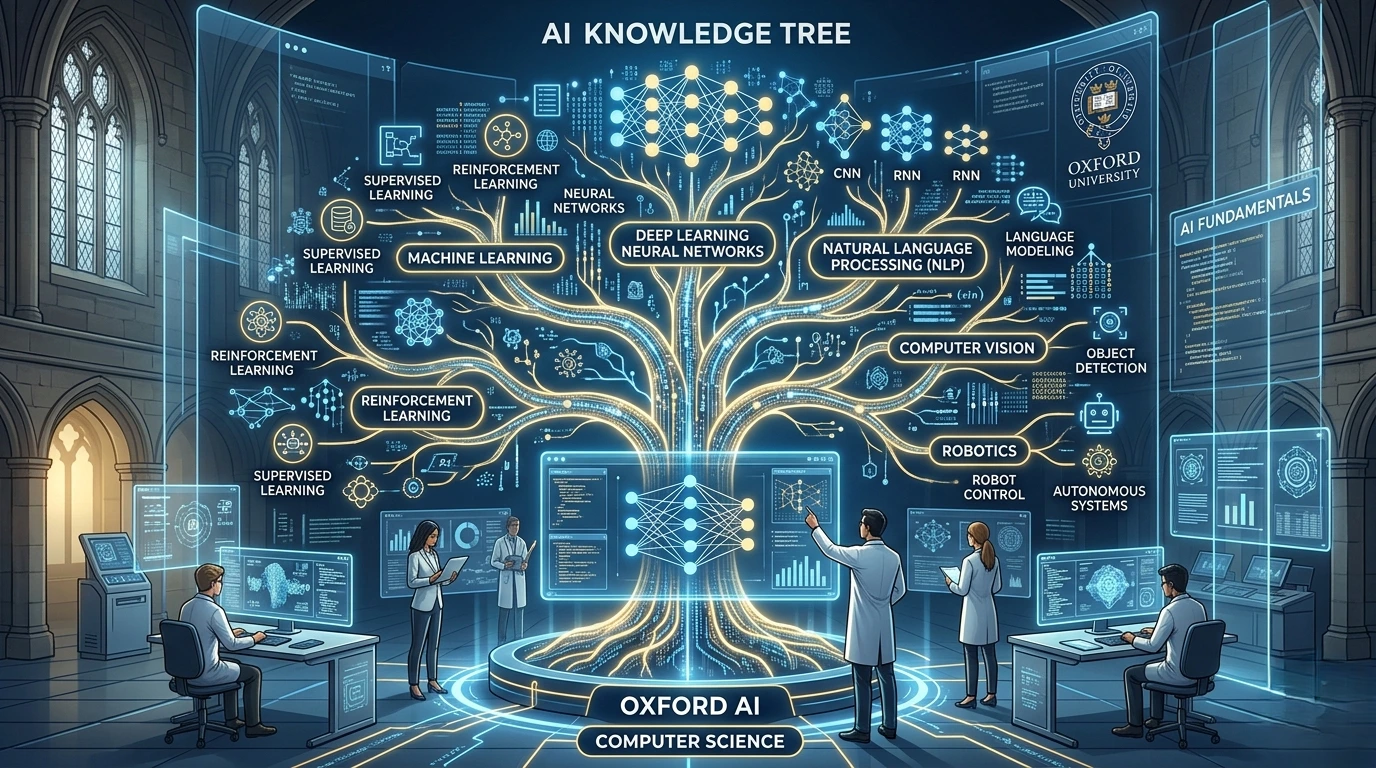
AI fundamentals IBM curriculum, whether taken as a standalone course or as the foundational module inside its professional certificate tracks on Coursera, teaches a structured map of AI competencies: machine learning, deep learning, natural language processing, computer vision, generative AI, prompt engineering, and AI ethics.
But for professionals preparing for enterprise roles, understanding what these skills are is only half the value. The other half is knowing exactly where each concept lives inside IBM’s production toolchain, and where the theory quietly breaks down under real deployment conditions.
Direct Answer: What Are the Skills of AI Fundamentals IBM?
The AI Fundamentals IBM curriculum builds six core competency areas: understanding machine learning and deep learning architectures, applying natural language processing to business workflows, working with computer vision systems, using generative AI and foundation models, practicing prompt engineering techniques, and navigating AI ethics and governance frameworks.
These are not abstract disciplines. Each one is operationalized inside IBM’s WatsonX platform, a three-component AI and data system that includes WatsonX.ai for model development, watsonx. data for governed data management, and watsonx. governance for lifecycle compliance. For anyone pursuing IBM or Coursera certifications in this space, the skill map is best understood not as a reading list, but as a navigation guide to how enterprise AI systems are actually assembled.
The AI Fundamentals IBM: Skill Stack Decoded
Machine Learning: Pattern Recognition Is Not the End Goal
Every AI fundamentals IBM course teaches you that machine learning allows systems to find patterns in data without being explicitly programmed. That definition is accurate. It is also the least useful thing a working professional can know about it.
Machine learning becomes commercially meaningful only when it is connected to a decision, a prediction about customer churn, a risk score on a loan application, or a failure probability in a supply chain component. The pattern is not the product. The operationalized decision is. This is why IBM integrates machine learning not as a standalone analysis feature but as a component embedded inside MLOps pipelines within Watson Studio and watsonx.ai.
Inside Enterprise AI: In production, a data science team building a predictive maintenance model does not simply train a classifier and call the project done. They build it inside watsonx.ai, which provides collaborative notebooks in Python or R, automated machine learning capabilities, and critical model monitoring that watches for performance drift after deployment. The course teaches supervised learning, unsupervised learning, and reinforcement learning as categories. The production system forces you to also manage versioning, retraining schedules, and bias detection.
When beginners misunderstand this: A common mistake at the start of an AI learning journey is conflating model training accuracy with deployment readiness. A model can score 94% on a validation set and still produce systematically wrong predictions in a live environment because the training data did not reflect the real distribution of incoming inputs. IBM’s watsonx.ai addresses this through its model monitoring and automated retraining workflows, but the course rarely teaches you that this infrastructure exists, let alone that you will need it.
Deep Learning and Neural Networks: When Rules Cannot Be Written
The AI fundamentals IBM curriculum describes deep learning as a subset of machine learning that uses multi-layered neural networks to process high-dimensional data, images, audio, and long text sequences, where traditional feature engineering would fail. This is an honest definition. The subtext, which most courses avoid, is that deep learning is expensive, data-hungry, and fragile in ways that standard regression models are not.
Neural networks learn through a process called backpropagation: the model makes a prediction, measures the error, and adjusts millions of parameters in the direction that reduces that error. Repeat this millions of times across a large labeled dataset, and the network learns to generalize. This is why IBM’s visual recognition capabilities, now embedded inside watsonx.ai, can inspect a photograph of a manufactured component and flag a defect without a human annotating every defect type in advance, provided the training data is rich enough to have encountered that defect type before.
Inside Enterprise AI: In manufacturing contexts, deep learning models trained on imagery from IBM Watson Visual Recognition have been deployed to identify surface defects on production lines at speeds no human quality inspector could match. In healthcare, similar architectures process radiology images to flag anomalies for physician review. The course teaches you the architecture. The production reality is that these systems require thousands of labeled training examples, dedicated GPU infrastructure, and ongoing monitoring to detect model decay as real-world conditions shift.
Where theory fails in production: Deep learning models trained on lab-clean image datasets frequently fail when deployed against the actual variability of real environments, inconsistent lighting, camera angle changes, dust, and occlusion on industrial floors. IBM’s Granite model families attempt to address this through efficient fine-tuning methods, including a technique called LiGO that recycles smaller models to build larger ones at 40 to 70 percent lower training cost. The course teaches you the theory of neural networks.
Natural Language Processing: Language Understanding Is Not Enough
Natural language processing becomes commercially meaningful only when language understanding is attached to retrieval, intent detection, and response automation, exactly why IBM integrates NLP with assistant orchestration rather than treating it as a standalone language model feature. This distinction is the conceptual pivot that separates a beginner’s understanding of NLP from a practitioner’s.
The AI fundamentals IBM curriculum teaches NLP as the discipline that enables machines to interpret, generate, and respond to human language. Tokenization, sentiment analysis, entity extraction, and text classification are the standard topics. These are legitimate foundations. But in enterprise deployments, no organization purchases an NLP model to classify text in a vacuum. They purchase it because they want to automate a customer service queue, route support tickets, extract structured information from contracts, or detect regulatory risk inside compliance documents.
Inside Enterprise AI: IBM addresses this gap architecturally. Within watsonx.ai, Slate models, an encoder-only architecture optimized for enterprise NLP tasks, are used specifically for complaint analysis, entity extraction on financial documents, and sentiment classification. These models are not deployed as general-purpose language systems. They are fine-tuned on domain-specific labeled data and integrated into workflow pipelines. Meanwhile, Watsonx Assistant and watsonx Orchestrate IBM’s core digital labor products use NLP foundation models to power customer-facing conversational agents and employee productivity tools. The NLP is the engine. The orchestration layer is what makes it useful to a business.
When beginners misunderstand this: Most learners completing an NLP module believe they now understand conversational AI. They understand the component that handles language. The system that handles conversation is different: it includes intent classification, context management across turns, fallback logic, escalation routing, and integration with backend systems like CRM or ticketing platforms. IBM’s Watsonx Assistant was rebuilt on foundation model NLP specifically to close this gap, but understanding why requires knowing that the old keyword-matching approach to chatbots failed for years before NLP architectures made intent detection reliable.
Computer Vision: Teaching Machines to Inspect
Computer vision is the AI fundamentals IBM skill that tends to surprise non-technical professionals the most. The idea that a machine can look at an image and extract structured information, a label, a defect, a geographic pattern, without being told what to look for, seems more like science fiction than enterprise software. It is neither. It is a well-established engineering discipline with a specific and narrow range of things it does well.
The AI fundamentals IBM course covers computer vision as the field concerned with enabling machines to interpret visual data: image classification, object detection, image segmentation, and visual search. The practical surface area is narrower than the theoretical one. Computer vision works reliably when the images are consistent, the classes are well-defined, and the training data is representative. It works poorly, sometimes catastrophically, when any of those conditions are violated.
Inside Enterprise AI: IBM’s most striking production example of computer vision at enterprise scale is the collaboration between IBM Research and NASA, where AI foundation models analyze satellite imagery to detect changes in land cover, vegetation density, and environmental anomalies. These models were already helping Kenya design reforestation strategies for 15 billion trees and enabling the UK to track harmful algae blooms, tasks that would take human analysts years to complete manually on global datasets. At the factory floor level, IBM Watson Visual Recognition capabilities embedded within watsonx.ai allow manufacturers to run automated defect detection without writing detection rules for each defect category. The model learns from examples.
Where the theory fails: Computer vision models behave like unusually literal observers. They have seen what they have been trained to see, and nothing else registers as meaningful. A model trained to classify components as defective or non-defective on a well-lit, controlled inspection line will produce unreliable results the moment lighting conditions change, the camera angle shifts, or a new defect type appears that was not in the training set. The production response to this limitation is not just better models, it is data management infrastructure, continuous retraining pipelines, and anomaly monitoring. All of which are capabilities inside the WatsonX platform but outside the scope of most introductory computer vision modules.
Generative AI and Foundation Models: The Architecture Has Changed
The AI fundamentals IBM curriculum’s treatment of generative AI reflects how quickly the discipline has shifted. Older course iterations covered generative AI as a curiosity, GANs, image synthesis, and text generation as a novelty. The current curriculum, aligned with IBM’s WatsonX launch and subsequent updates, treats generative AI and foundation models as a fundamental shift in how AI systems are built and deployed.
The architectural change matters: Traditional machine learning trains narrow models on specific tasks: this model predicts churn, that model classifies documents. Foundation models are trained on enormous datasets and can be adapted to many tasks through a technique called prompt tuning or fine-tuning rather than being rebuilt from scratch. IBM’s watsonx.ai offers a family of foundation models with geology-themed names, Granite, Sandstone, Obsidian, and Slate, each optimized for different architectural requirements. Granite models use a decoder-only architecture suited for generative tasks. Slate models use an encoder-only architecture better suited for classification and extraction. Sandstone uses an encoder-decoder design that is interchangeable with T5-family models for fine-tuning on specific tasks.
Inside Enterprise AI: The Prompt Lab inside watsonx.ai is where practitioners interact directly with these models using zero-shot, one-shot, and few-shot prompting techniques, exactly the prompt engineering skills the AI fundamentals IBM course now formally covers. This is not academic. A business analyst using watsonx.ai’s Prompt Lab can adapt a foundation model to summarize legal contracts, generate draft responses to customer inquiries, or extract structured data from unstructured reports, without retraining the model from scratch and without writing code. IBM’s Watsonx Code Assistant takes this further, using generative AI to allow developers to automatically generate infrastructure code from natural language commands.
Where theory fails in production: Foundation models hallucinate. They generate plausible-sounding but incorrect information with the same fluency they use for accurate responses. In a production environment where a foundation model is summarizing financial documents or generating customer-facing communications, a hallucinated fact is not an inconvenience, it is a liability. IBM’s approach to this is architectural: watsonx.governance builds guardrails into the AI lifecycle, and IBM states explicitly that it indemnifies clients against third-party IP claims for IBM-developed models used inside the platform. The course teaches you how foundation models work. The production environment forces you to understand why governance infrastructure exists alongside them.
AI Ethics and Governance: The Skill That Decides Whether Everything Else Works
The AI fundamentals IBM curriculum positions AI ethics not as a values discussion but as an engineering requirement. This framing is deliberate and practically important. The AI fundamentals IBM coverage of responsible AI, bias in training data, transparency, explainability, and the principles behind ethical AI system design. These are necessary foundations. But the point at which they become operationally real is the point where an organization deploys AI into a regulated industry, banking, healthcare, insurance, government, and discovers that “responsible AI” is not a policy position but a compliance architecture.
Inside Enterprise AI: watsonx. Governance is IBM’s technical response to this problem. It is an automated data and model lifecycle solution that creates policies, assigns decision rights, and ensures organizational accountability across AI deployments. In banking contexts, IBM’s WatsonX has been used in fraud detection and anti-money laundering systems where every model decision must be explainable to regulators. The governance layer is what makes that explainability auditable. Samsung SDS America, Eviden (an Atos business), and Citi’s internal audit division have each noted that governance and security, not just model capability, are primary criteria in their WatsonX adoption decisions.
Where beginners misunderstand this: The AI Fundamentals IBM Ethics Module teaches principles. Production AI governance requires a process. The difference is the difference between knowing that bias in training data is problematic and having a systematic pipeline that detects bias, flags affected model outputs, routes them for human review, and logs the remediation. IBM’s position, stated explicitly in their product documentation, is that “AI governance should never be an afterthought.” The practical implication is that you should not think of the ethics module as a soft skill appendix to the technical curriculum. In enterprise AI, governance is infrastructure.
Is AI Fundamentals IBM Worth It for Working Professionals?
When evaluating AI fundamentals IBM training, the honest answer depends on what you are trying to accomplish. If you are a data scientist or software engineer looking to extend your machine learning skills, the AI fundamentals IBM course is a starting point, not a destination. The IBM AI Engineering Professional Certificate or the IBM Generative AI Engineering track are better targets. If you are a business analyst, product manager, operations professional, or any cross-functional leader who needs to understand, evaluate, or collaborate on AI initiatives, the IBM AI Foundations for Everyone specialization and the IBM AI Foundations for Business specialization are precisely calibrated for that purpose.
The IBM AI Foundations for Business specialization is particularly well-suited to professionals in strategic roles because it introduces the AI Ladder framework, IBM’s proprietary model for understanding the sequential work required to deploy AI at enterprise scale successfully. The ladder has four rungs: Collect (ensuring data accessibility), Organize (creating a trusted analytics foundation), Analyze (building and scaling AI), and Infuse (operationalizing AI across the enterprise). This framework does not appear in most AI tutorials, and it explains why so many enterprise AI projects stall before they deliver business value: organizations often attempt to build AI models before their data infrastructure is well enough organized to support them.
The IBM digital badge issued upon completion carries real credibility in enterprise hiring contexts, particularly for roles adjacent to IBM technology stacks. It signals demonstrated familiarity with the vocabulary, tools, and governance philosophy of the IBM ecosystem, which matters if you are working with clients or employers who use WatsonX, IBM Cloud, or IBM Consulting services.
What Is the Difference Between AI Foundations for Everyone and AI Foundations for Business?
Both programs cover the same core AI fundamentals: machine learning, deep learning, NLP, computer vision, and generative AI. The difference is depth of technical exposure, audience framing, and terminal skill application. AI Foundations for Everyone is designed to require zero coding background and terminates in a hands-on project, building and deploying an AI-powered customer service chatbot using IBM Watson services, without writing code. It is the right entry point for professionals whose primary goal is to understand and use AI tools rather than build them.
AI Foundations for Business requires no prior technical background, either, but it frames every concept through strategic and organizational lenses. The AI Ladder framework, covered across three of its courses, teaches professionals how to assess their organization’s AI readiness and build the data architecture necessary before AI model development begins. This specialization is designed for decision-makers, people who are evaluating AI vendors, approving AI budgets, or leading AI transformation programs. The tool exposure is lighter, but the strategic framing is deeper.
Does AI Fundamentals IBM Cover Prompt Engineering?
Yes, and with more practical depth than most comparable certifications. The AI fundamentals IBM curriculum now formally covers prompt engineering as both a conceptual discipline and a hands-on practice. The conceptual layer teaches the mechanics: how foundation models interpret prompts, why zero-shot prompting works for some tasks but requires examples for others, and how prompt structure affects output quality and consistency. The practical layer is tied directly to IBM’s watsonx.ai Prompt Lab, where learners interact with foundation models using structured, freeform, and chat prompt modes to accomplish NLP tasks, including summarization, classification, content generation, and question answering.
Prompt engineering is no longer an advanced topic reserved for AI researchers. It is a practitioner skill that directly affects how productively a business analyst, developer, or operations professional can use tools like watsonx.ai, watsonx Assistant, and watsonx Code Assistant in daily workflows. The IBM curriculum reflects this shift.
What IBM Tools Will You Actually Use After This Course?
The tool exposure built into AI fundamentals IBM curriculum is designed to create direct pathways into the watsonx ecosystem. After completing foundational coursework, practitioners are prepared to work in three primary environments. Watsonx.ai is the primary development studio, where models are trained, prompted, fine-tuned, and deployed, using either IBM foundation models, open-source models from Hugging Face, or third-party models, including Llama and Mixtral. watsonx.Data provides the governed data infrastructure that feeds those models, using an open lakehouse architecture designed for hybrid and multicloud environments. watsonx.governance wraps the entire lifecycle with policy enforcement, bias detection, model monitoring, and regulatory compliance tooling.
For learners without a coding background, completing the AI Foundations for Everyone track, the immediate hands-on tool is IBM Watson, specifically the no-code Watson Assistant interface used to build, test, and deploy conversational AI on a website. For technically oriented learners progressing into the IBM AI Engineering or IBM AI Developer tracks, the tools deepen into Watson Studio, Jupyter Notebook environments, Python and R libraries, and the full watsonx.ai API stack.
Expert Insight: What Enterprise AI Deployment Actually Looks Like
The most significant gap between AI fundamentals training and enterprise AI reality is not conceptual; it is operational. The concepts the IBM curriculum teaches are accurate. What the curriculum cannot fully prepare you for is the organizational friction of deploying AI inside a real company, where data governance disputes, model ownership questions, regulatory constraints, and cross-functional resistance slow every project that a textbook would complete in a week.
IBM’s AI Ladder framework is the most practical antidote to this gap available at the fundamentals level. It exists precisely because IBM discovered, across thousands of enterprise AI engagements with organizations, including 47 of the Fortune 50 companies, that AI projects fail most frequently not because the model is wrong but because the data infrastructure underneath it was never ready. The collect and organize rungs of the ladder, ensuring data is accessible, governed, and trusted, routinely take longer than the analyze and infuse rungs where the actual AI models are built.
The governance story is similarly underappreciated at the entry level. Watsonx. governance was designed with the understanding that as AI embeds itself more deeply into daily business workflows, pricing decisions, credit approvals, medical screening, and content moderation, the tolerance for unexplained or unauditable model behavior drops toward zero. Enterprises deploying AI inside Wimbledon’s fan-facing app, Citi’s internal audit systems, or IBM’s own AIOps infrastructure are not asking whether governance is important. They are asking how to operationalize it at scale. The AI fundamentals IBM curriculum gives you the vocabulary and principles to engage in that conversation. The production experience teaches you why it is never fully solved.
Conclusion
The skills taught inside AI fundamentals IBM curriculum are not decorative credentials. They are entry points into an ecosystem that is actively reshaping how enterprises build, govern, and deploy intelligent systems. Machine learning, deep learning, NLP, computer vision, generative AI, and AI governance are not separate subjects; inside the WatsonX platform, they are integrated layers of a single production architecture.
What the IBM curriculum uniquely offers, compared to vendor-neutral AI courses, is a frame of reference that maps theoretical concepts directly to the tools that operationalize them at enterprise scale. Professionals who complete this training with that translation in mind, asking not just what machine learning is but where it runs, how it is governed, and where it breaks, will engage their certification material at a depth that generic AI literacy programs cannot replicate. The theory is the starting point. The tool is the translation. The production failure is the education.
FAQS
Is an IBM AI certificate worth it?
Yes, AI Fundamentals IBM is worth it for beginners because it offers a structured, beginner-friendly path into machine learning, NLP, deep learning, and AI ethics while also introducing practical IBM platforms like Watson Studio. With hundreds of thousands of enrollments across IBM’s foundational AI programs, its biggest advantage is trusted enterprise credibility though the certificate works best when paired with your own hands-on projects, not as a standalone job guarantee.
What does AI Fundamentals IBM teach you?
AI Fundamentals IBM teaches the core building blocks of artificial intelligence, including machine learning, neural networks, natural language processing, computer vision, generative AI, and AI ethics. IBM’s learning path is designed to help beginners understand not just the theory of AI, but how these concepts are applied in practical enterprise tools and real business workflows.
Is AI Fundamentals IBM good for beginners with no coding experience?
Yes, AI Fundamentals IBM is considered beginner-friendly because it explains artificial intelligence concepts in simple business and real-world examples rather than deep programming language. IBM specifically structures its foundational AI learning content for students, non-technical professionals, and first-time learners who want to build confidence before moving into advanced machine learning or data science topics.