Canva AI: Features, Tools, Pricing & How to Use It in 2026
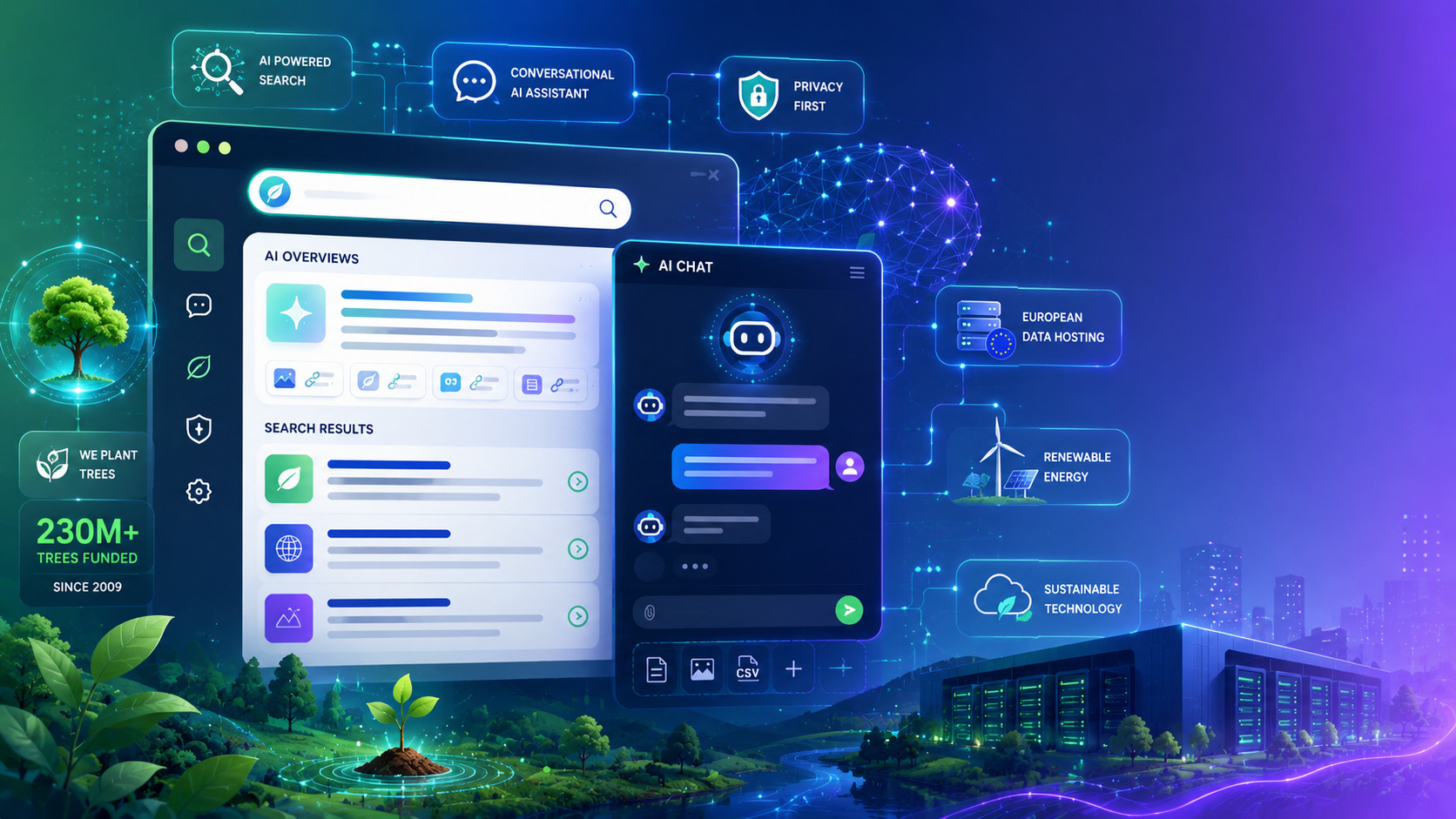
Canva AI is Canva’s collection of artificial intelligence tools for creating designs, images, documents, videos, written content, presentations, interactive experiences, and other visual content.
In 2026, Canva expanded this concept significantly with Canva AI 2.0, which the company describes as a conversational and increasingly agentic creative platform.
Instead of opening a separate tool for writing, another for images, and another for layouts, Canva is trying to put those tasks inside one connected workspace.
That can be useful for freelancers, marketers, small businesses, students, creators, and teams that want to move from an idea to an editable design without learning several different creative applications.
Canva says its new Canva AI 2.0 system is powered by the Canva Design Model, a foundation model designed to understand design structure, hierarchy, and editable visual elements. The company introduced the system as a research preview in 2026.
This guide explains what Canva AI does, which tools are available, how pricing and usage limits work, where it can save time, and which limitations still require human judgment.
What Is Canva AI?
Canva AI is not one single feature.
It is a collection of AI-powered capabilities built across Canva’s design platform.
Depending on the feature and plan, users can generate or edit:
- Graphic designs
- Social media posts
- Presentations
- Documents
- Images
- Video
- Written copy
- Interactive experiences
- Spreadsheet content
- Marketing assets
- Branded content
Canva originally grouped many of its generative AI features under Magic Studio.
That suite includes tools such as Magic Write, AI-powered image generation, design generation, editing tools, translation, resizing, and other assisted creative features.
Canva AI has since evolved into a more conversational interface where users can describe what they want and then refine the result through additional instructions.
What Is Canva AI 2.0?
Canva AI 2.0 is Canva’s newer generation of AI-assisted creation.
According to Canva, the system can generate fully layered and editable designs from prompts rather than simply returning a flat image.
That distinction matters.
A generated image may look attractive, but editing individual text boxes, shapes, backgrounds, and layout elements afterward can be difficult.
A layered design is more practical because you can continue working with the result inside Canva.
Canva says AI 2.0 includes several newer workflow capabilities:
- Conversational design
- Iterative AI editing
- Layered object intelligence
- Memory
- Connectors
- Scheduling
- Web research
- Brand intelligence
- AI features inside Canva Sheets
- Canva Code 2.0
The product was introduced as a research preview, which means some capabilities may change as Canva develops the system further.
Main Canva AI Features
1. Design for Me
Canva AI can create editable visual designs from a written description.
You might enter a prompt such as:
Create a clean LinkedIn post about five productivity tips for freelancers using a blue and white professional style.
The system can generate a starting design that you can then modify.
This is particularly useful when you know the message you want to communicate but do not know how to structure the layout.
The output should still be reviewed for:
- Correct text
- Brand consistency
- Readability
- Spacing
- Image relevance
- Factual accuracy
AI can shorten the blank-page stage, but it does not understand your brand as well as someone actively managing that brand.
2. Canva AI Image Generation
Canva AI can generate images from text prompts.
Canva currently offers image generation directly inside its AI environment, including options that let users choose different quality levels depending on their plan and available AI allowance.
A useful prompt normally describes:
- Subject
- Setting
- Visual style
- Lighting
- Composition
- Aspect ratio
- Mood
- Important exclusions
For example:
A modern freelancer working at a laptop in a bright home office, realistic photography, natural daylight, clean background, 16:9 composition.
Specific prompts usually provide better direction than requests such as:
Make a good business image.
The AI still may misunderstand text, hands, logos, complex layouts, or small details, so generated images should be inspected before publishing.
3. Magic Write
Magic Write is Canva’s AI writing assistant.
It can help with:
- First drafts
- Brainstorming
- Rewriting
- Summaries
- Headlines
- Captions
- Email copy
- Presentation text
- Social media ideas
- Proofreading
Canva says Magic Write can generate drafts and refine existing text, and it works across different Canva design types rather than being limited to documents.
This makes it useful when written copy and design need to be created together.
For example, a marketer could ask for:
- Five campaign ideas.
- A headline.
- Short supporting copy.
- A corresponding visual layout.
That workflow can reduce the constant switching between writing and design tools.
Important limitation
Magic Write can still generate inaccurate information.
If your content includes facts, statistics, product features, medical claims, financial information, or current events, verify those statements through reliable sources before publishing.
4. Canva Code
Canva Code allows users to create interactive experiences using natural-language instructions.
Canva positions it as a way to build interactive content without manually writing the underlying code.
Possible uses include:
- Calculators
- Quizzes
- Interactive learning activities
- Simple web experiences
- Product selectors
- Visual tools
Canva expanded this capability further with Canva Code 2.0 as part of Canva AI 2.0.
This does not make traditional software development unnecessary.
Complex applications still require proper engineering, testing, security, accessibility, and maintenance.
Canva Code is better viewed as a way to make simpler interactive experiences more accessible to non-developers.
5. Canva Sheets AI
Canva has also added artificial intelligence to Canva Sheets.
The broader idea is to connect data with visual content.
For example, teams can potentially take information stored in a spreadsheet and use it to help create:
- Product graphics
- Campaign assets
- Personalized designs
- Reports
- Charts
- Marketing materials
Canva says Magic Studio at scale can apply tools such as Magic Write, Translate, Resize, and other creative actions across larger content workflows instead of editing each design individually.
For businesses producing large amounts of repetitive visual content, this can be more important than generating one impressive image.
Automation becomes useful when it removes repeated work.
6. Canva AI for Video
Canva includes AI-assisted video features as well.
In 2026, Canva announced an Image to Video feature that can turn a still image into a short video clip with motion.
Depending on the available features and plan, AI can assist with tasks such as:
- Generating video elements
- Animating designs
- Converting images into motion
- Producing visual assets
- Adding sound or music
- Creating social video content
These tools are particularly useful for short-form marketing content where speed matters more than advanced cinematic control.
Professional video editors may still prefer dedicated software for complex timelines, color work, audio mixing, or precise animation.
7. Magic Animate
Magic Animate can automatically apply animations and transitions to a Canva design.
Instead of manually choosing animation settings for every part of a presentation or video, Canva can recommend and apply an overall motion style.
Canva says the feature also manages timing so the different animated elements work together.
This can help with:
- Presentations
- Social posts
- Marketing videos
- Animated graphics
It is useful as a starting point.
You should still check that the movement supports the content rather than distracting from it.
8. Brand Intelligence
Canva AI 2.0 includes what Canva calls brand intelligence.
The goal is to help AI-generated work follow the brand information already available in Canva.
That becomes important for teams.
Generating one attractive visual is relatively easy.
Generating 100 visuals that consistently follow the same:
- Fonts
- Colors
- Tone
- Logo usage
- Layout standards
- Messaging
is much harder.
AI becomes more useful for organizations when it supports repeatability rather than random creativity.
9. Canva AI Connectors
Canva AI 2.0 also introduced connectors.
These are intended to help Canva work with information from other services and workflows.
The idea is to reduce the amount of copying, downloading, uploading, and switching between platforms.
Connector availability may vary, so users should check Canva’s current interface and plan documentation before assuming a particular integration is supported.
10. Web Research
Canva also lists web research among the newer Canva AI 2.0 workflows.
This potentially makes Canva more useful during the planning stage of content creation.
A workflow might involve:
- Researching a subject.
- Organizing information.
- Drafting copy.
- Generating visuals.
- Creating a presentation.
- Publishing or sharing it.
However, AI-assisted web research should not replace source verification.
An AI summary can omit context or misunderstand a source.
For important factual content, always inspect the original source.
Canva AI vs Magic Studio
These terms can be confusing because Canva has introduced several overlapping AI brands.
A simple way to understand them is:
Magic Studio: Canva’s collection of AI-powered creative tools.
Canva AI: The conversational AI experience that connects multiple creative capabilities.
Canva AI 2.0: The newer 2026 generation of Canva’s AI platform, designed to support more conversational, agentic, layered, and connected workflows.
You may still see individual Magic tools inside the wider Canva AI experience.
The names are evolving because Canva is gradually combining separate features into a more unified workflow.
Technology companies apparently discovered that naming one product once was far too peaceful.
Is Canva AI Free?
Canva offers some AI access on its free plan.
However, usage limits depend on the specific feature and subscription.
Canva’s current pricing page says the Free plan includes up to 20 Standard or Premium AI uses, while higher plans receive larger allowances.
The current page describes Canva Pro as providing approximately 10 times more Premium AI usage than Canva Free, while Canva Business provides approximately 20 times more, depending on the feature being used.
Canva also separates AI features into categories such as:
- Standard AI
- Premium AI
- Ultra AI
Some tools on paid plans can be used more freely, while advanced AI generation draws from a shared monthly allowance.
Because Canva regularly changes its plans, limits, and regional pricing, check the live pricing page before buying a subscription.
Canva AI Pricing
Canva currently offers several plans, including:
- Canva Free
- Canva Pro
- Canva Business
- Enterprise options
- Education-related plans
The exact cost can vary by country, billing cycle, taxes, and plan availability.
Canva’s current U.S. pricing page lists annual pricing for individual Pro and Business plans, but regional pricing should be checked directly before purchase.
The most important factor is not simply the subscription price.
Consider how much AI usage you actually need.
If you generate only a few designs per month, Canva Free may be enough.
If AI is part of a daily client or marketing workflow, a paid plan may be more practical.
How to Use Canva AI
The exact interface can change, but the basic workflow is straightforward.
Step 1: Open Canva AI
Sign in to Canva and open the Canva AI experience or an AI-enabled design tool.
Step 2: Describe the outcome
Do not begin with a vague instruction.
Instead of:
Make a social post.
Try:
Create a 1080 x 1080 LinkedIn graphic for SEO agency owners explaining three benefits of personalized blogger outreach. Use a clean professional layout with short text.
This gives Canva much more context.
Step 3: Generate a starting point
Let the AI create the initial design, image, text, or layout.
Treat it as a first draft.
Step 4: Review each element
Check:
- Spelling
- Numbers
- Brand colors
- Fonts
- Visual accuracy
- Image quality
- Alignment
- Factual statements
- Logo placement
Step 5: Edit manually
One of Canva’s main strengths is that AI-generated designs can often be edited inside the same workspace.
Use manual editing to fix weaknesses rather than endlessly regenerating the entire design.
Step 6: Export or publish
Once the content is checked, download or publish it in the appropriate format.
Practical Canva AI Workflow for Social Media
A freelancer could use Canva AI like this:
1. Brainstorm
Ask Magic Write for five LinkedIn post ideas related to the freelancer’s niche.
2. Draft
Choose one idea and create a short post.
3. Design
Ask Canva AI to produce a matching visual.
4. Brand
Apply the correct colors, fonts, and logo.
5. Review
Check the AI-generated copy and image.
6. Resize
Create versions for other social networks where appropriate.
7. Schedule
Use Canva’s available publishing or scheduling tools.
Aiera readers who want a broader workflow can also read our guide to AI tools for social media.
Canva AI for Small Businesses
Canva AI can be particularly useful for small businesses that do not have a full creative department.
Possible uses include:
- Flyers
- Social posts
- Presentations
- Advertisements
- Promotional graphics
- Menus
- Product visuals
- Email graphics
- Internal documents
- Sales materials
The benefit is speed.
A small business owner may not need to hire a designer for every simple promotional asset.
However, that does not mean professional design becomes unnecessary.
Important branding projects, packaging, major advertising campaigns, complex websites, and high-value creative work can still benefit substantially from experienced designers.
AI is strongest when the task is repetitive or when the user needs a quick first draft.
Canva AI for Freelancers
Freelancers can use Canva AI for tasks such as:
- Client proposals
- Portfolio graphics
- LinkedIn visuals
- Instagram posts
- Presentation slides
- Lead magnets
- Simple infographics
- Blog images
- Promotional videos
For someone selling marketing or content services, Canva AI can reduce the amount of time spent on routine design.
That saved time only matters if the output remains good.
Producing five weak graphics in ten minutes is not necessarily more productive than producing one strong graphic in thirty.
Canva AI for Marketing
Marketing teams can use Canva AI during multiple parts of a campaign.
For example:
Planning: brainstorm campaign ideas.
Writing: draft headlines and captions.
Design: create initial layouts.
Images: generate custom visual concepts.
Branding: apply brand standards.
Scaling: create multiple content variations.
Publishing: prepare assets for different channels.
The ability to connect these stages inside one platform is arguably more useful than any single AI generator.
If you are comparing broader options, Aiera also has a guide to the best free AI tools.
Canva AI Limitations
Canva AI is useful, but it still has important limitations.
AI Can Produce Incorrect Text
Generated designs can contain:
- Spelling mistakes
- Incorrect names
- Wrong figures
- Strange labels
- Fabricated information
Never publish factual content without checking it.
Generated Designs Can Look Generic
AI often follows common patterns.
If everyone asks for:
Modern minimalist business design
many outputs will start looking suspiciously similar.
Strong branding still requires deliberate decisions.
Generated Images May Contain Errors
AI-generated images may struggle with:
- Hands
- Fine text
- Logos
- Product details
- Complex diagrams
- Precise anatomy
- Specific real-world objects
Check the final image carefully.
AI Usage Is Limited
Some features draw from Canva’s monthly AI allowance.
Users who generate large numbers of images, videos, designs, or advanced AI content can reach their plan limits.
Copyright and Commercial Use Require Care
AI-generated content can raise questions about intellectual property, trademarks, recognizable people, and copyrighted styles.
Businesses should avoid assuming that anything an AI can generate is automatically appropriate for commercial publication.
Canva’s terms and licensing information should be reviewed for the particular content being created.
Is Canva AI Good for Beginners?
Canva AI is generally accessible to beginners because it combines AI generation with Canva’s existing visual editor.
You do not need to understand layers, typography systems, or professional design software before producing a basic result.
But learning a few design principles still improves the final output.
Beginners should pay attention to:
- Contrast
- Alignment
- White space
- Font consistency
- Visual hierarchy
- Image quality
- Text length
AI can generate a layout.
It cannot guarantee that the layout communicates effectively.
Canva AI vs Dedicated AI Tools
Canva AI’s biggest advantage is integration.
A dedicated image generator may offer deeper image controls.
A dedicated writing tool may provide more advanced text workflows.
A professional video editor may offer more precise editing.
But Canva can combine many common creative tasks in one environment.
That makes it particularly attractive when convenience and speed matter more than maximum control.
Choose based on the job.
For a simple social media campaign, Canva may provide everything you need.
For a complex professional production, specialized tools may still be the better choice.
Frequently Asked Questions About Canva AI
What is Canva AI?
Canva AI is Canva’s collection of AI-powered tools for generating and editing designs, text, images, videos, documents, interactive experiences, and other creative content.
What is Canva AI 2.0?
Canva AI 2.0 is Canva’s newer conversational creative platform introduced in 2026. Canva says it uses the Canva Design Model and supports layered design generation, iterative editing, connectors, scheduling, web research, brand intelligence, Sheets AI, and Canva Code 2.0.
Is Canva AI free?
Canva Free currently includes limited AI usage. More AI access is available through paid plans, although allowances depend on the tool and plan.
Can Canva AI generate images?
Yes. Canva AI supports image generation, including AI image creation tools available under its current AI usage system.
Can Canva AI write content?
Yes. Magic Write can generate drafts, rewrite existing text, summarize content, proofread, and assist with brainstorming.
Can Canva AI create videos?
Canva includes AI-assisted video features, including image-to-video and other video generation or editing tools, depending on the user’s plan and available features.
Is Canva AI suitable for professional work?
It can be useful for professional workflows, especially routine marketing, social media, presentations, and content production. Important client or brand work should still receive human review.
Final Thoughts
Canva AI has evolved from a collection of convenient AI features into a much broader creative platform.
The important change is not simply that Canva can generate images or write captions.
Many tools can already do those things.
The more interesting development is Canva’s attempt to connect research, writing, design, data, interactive content, branding, editing, and publishing inside one AI-assisted workflow.
For freelancers and small businesses, that can reduce the number of separate tools needed for everyday creative work.
For marketing teams, features such as brand intelligence, Canva Sheets, bulk workflows, and editable AI-generated designs may provide even more value.
But Canva AI should still be treated as an assistant.
Generated information can be wrong.
Generated designs can be generic.
Generated images can contain visual errors.
And AI does not automatically understand your audience, brand, or business goals.
The best Canva AI workflow is therefore simple:
Use AI to create the first draft faster, then use human judgment to make the final result worth publishing.
Sources Consulted
- Canva: Introducing Canva AI 2.0 — official information about the Canva Design Model, conversational design, layered editing, connectors, scheduling, research, brand intelligence, Sheets AI, and Canva Code 2.0.
- Canva: AI launches and Visual Suite updates — official overview of Canva AI, Canva Code, Canva Sheets, Magic Studio at scale, and integrated creative workflows.
- Canva Help Center: Understanding AI usage — current information about Standard, Premium, and Ultra AI allowances.
- Canva Pricing — current Free, Pro, Business, and AI usage information.
- Canva Magic Studio — official background on Magic Write, Magic Animate, and other Magic Studio features.
- Canva AI Writing Assistant — current Magic Write capabilities.
- Canva February 2026 product update — information about image-to-video and other newer creative features.
Editorial Transparency Note
Claims requiring future verification: Canva AI models, plan limits, pricing, AI allowances, and individual features change frequently. The article reflects Canva’s official information available in September 2026.
Expert review: No specialist review is required for this general technology guide.