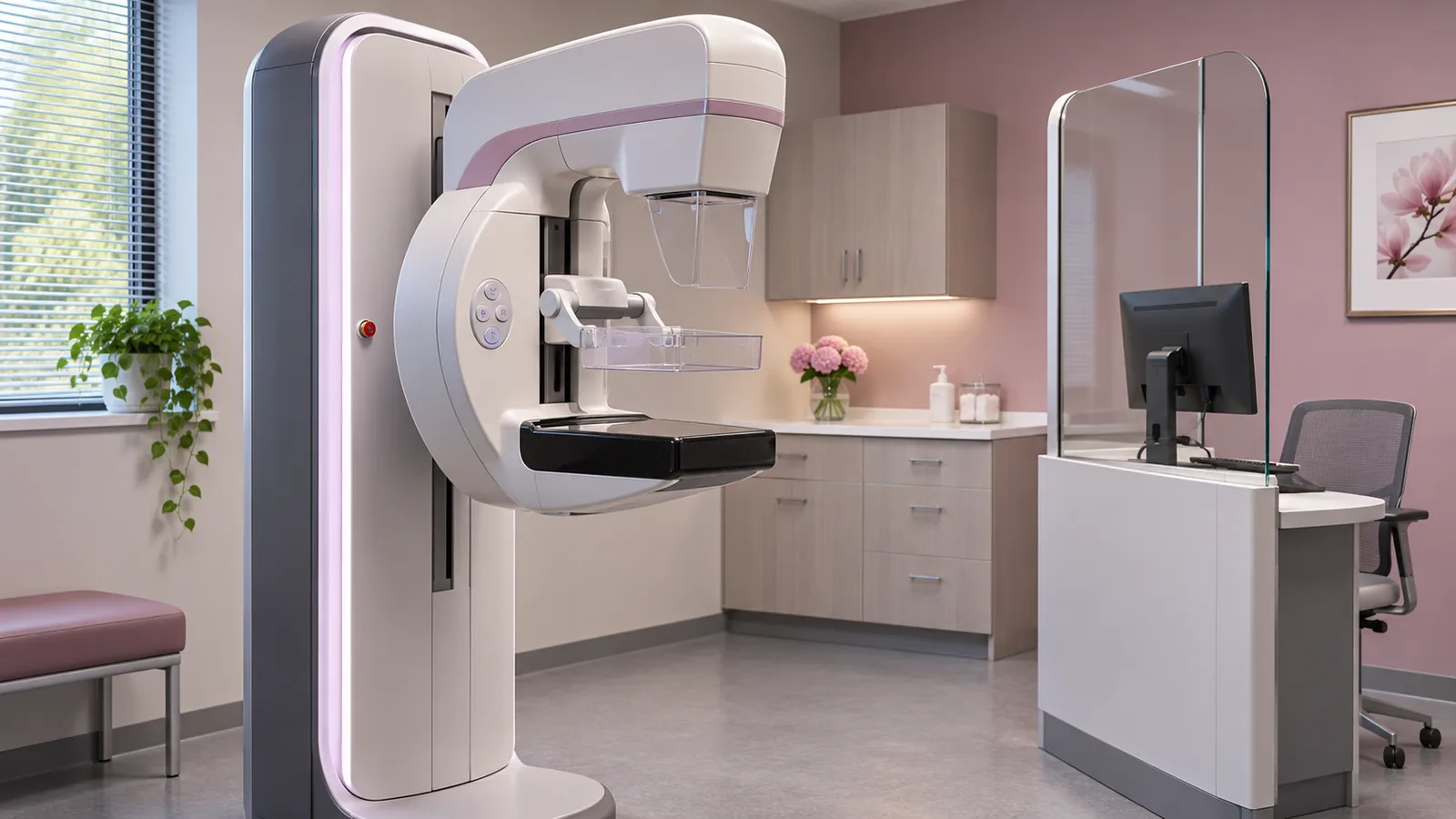
NHS Launches EDITH: The World’s Largest AI Breast-Cancer Screening Trial
Key Takeaways
- On Monday 23 November 2026, the NHS launched EDITH, the largest trial in the world testing an AI-assisted tool in breast cancer screening, with recruitment starting at Cambridge University Hospitals.
- Nearly 700,000 women are expected to take part over three years, at 30 breast screening sites across the UK.
- The trial is funded with £10 million from the National Institute for Health and Care Research (NIHR), and is led by the University of Warwick, the University of Cambridge and Cambridge University Hospitals NHS Foundation Trust, working with NHS England.
- The trial is co-led by Professor Fiona Gilbert of the University of Cambridge and Professor Sian Taylor-Phillips of the University of Warwick.
- EDITH tests whether an AI-assisted mammogram-reading tool can help specialists detect cancers earlier, and whether most mammograms can safely be checked by one specialist instead of two.
- Women taking part are randomly allocated to one of three groups: standard screening by two specialists, AI checking after a specialist, or AI assessing the images first to decide whether one or two specialists are needed.
- Every mammogram in the trial is still reviewed by at least one human specialist, and the screening appointment itself does not change.
- Women aged 50 to 71 are invited for NHS breast screening every three years, and details of the trial, including how to opt out, are included in the invitation letter.
- Health Secretary Yvette Cooper visited the Breast Unit at Addenbrooke's Hospital in Cambridge to mark the launch.
- No EDITH findings exist yet. Claims that the AI tool will improve detection, shorten waiting times or save lives are unproven until the trial reports.
What EDITH Is
The NHS has begun the world's largest trial of artificial intelligence in breast cancer screening. The study, called EDITH — Early Detection using Information Technology in Health — was launched on Monday 23 November 2026, with recruitment starting at Cambridge University Hospitals, the first of 30 breast screening sites across the UK where the trial will run. Nearly 700,000 women are expected to take part over the next three years.
The trial is funded with £10 million from the National Institute for Health and Care Research (NIHR), and is supported by the NIHR Biomedical Research Centre in Cambridge. It is led by the University of Warwick, the University of Cambridge and Cambridge University Hospitals NHS Foundation Trust, working with NHS England. The co-leads are Professor Fiona Gilbert, from the University of Cambridge and Addenbrooke's Hospital, and Professor Sian Taylor-Phillips, NIHR Research Professor and Professor of Population Health at the University of Warwick.
To mark the opening of the trial, the Secretary of State for Health and Social Care, Yvette Cooper, visited the Breast Unit at Addenbrooke's Hospital, where she met the trial leaders and Shirley, a 70-year-old woman from Cambridgeshire whose early-stage breast cancer was diagnosed in October 2025 after a routine screening appointment. Following surgery and radiotherapy, Shirley is now doing well. She is not part of the trial, but her story was shared at the launch because it shows what screening is for: she had no symptoms and no idea anything was wrong when she received her invitation. "I feel so lucky my cancer was detected early," she said. "When I received the invitation to attend, I had no symptoms and no clue anything was wrong. My routine mammogram saved my life, so anything that helps other people get diagnosed earlier is crucial. That's why this trial is so important."
Speaking on her visit, Yvette Cooper said: "This is the biggest AI breast cancer trial in the world, backed by £10 million of government investment to speed up diagnosis and potentially deliver life-saving improvements." She added: "If successful, this technology could help women get a breast cancer diagnosis and start treatment much more quickly, giving them the best possible chance of recovery." She also sounded a note of caution that runs through the whole trial: "AI has huge potential, but we also need proper safeguards in place to make sure we're using it safely and effectively to improve treatment and research."
EDITH is not a new screening programme or a new scanner. It is a test of a way of reading the images screening already produces, inside the existing NHS Breast Screening Programme. The trial was first announced in February 2025; what changed on 23 November 2026 is that recruitment actually began, and it will expand to the other sites over time.
How the AI Tool Works in Screening
To understand what EDITH is testing, it helps to understand how NHS breast screening works today. Women aged 50 to 71 are invited for screening every three years. Around 2.1 million women in the UK have breast screening each year, and the NIHR Biomedical Research Centre in Cambridge notes that screening helps prevent around 1,300 deaths. At the appointment, a mammogram — an X-ray of the breast — is taken at a local clinic, GP practice, hospital or mobile screening van, and the images are then reviewed by specialists, called readers, who look for signs of cancer.
Currently, each mammogram is reviewed by two specialist radiologists, working independently. That double-reading is the standard the NHS has used for years, and it exists for a good reason: reading mammograms is difficult, and a second pair of eyes catches things the first reader may have missed. But it is also time intensive. Fewer than 1% of mammograms show signs of cancer, which means specialists spend a large share of their time carefully reviewing images that turn out to be normal. Professor Gilbert put it plainly at the launch: "Millions of women have a mammogram each year, and fewer than one in 100 will be diagnosed with cancer."
The AI-assisted tool in EDITH has been trained on large numbers of breast X-rays so that it can find cancer in a mammogram. According to the trial's participant information, published by the University of Warwick, the AI has been tested and found to be accurate at finding cancer in a mammogram. But accuracy in testing is not the same as safety and benefit in a live screening service, and that is exactly what EDITH is designed to find out. The tool is being used to assist a human expert, not to replace one. Every mammogram in the trial will still be reviewed by at least one human radiologist, and final decisions about cancer detection are made through the standard human arbitration process.
The Three Groups
Women taking part in EDITH are randomly allocated to one of three groups, and they will not know which group they are in. The three groups are the heart of the trial design, because they let the researchers compare the current way of working with two different ways of using AI.
In group one, women receive standard breast screening: two NHS experts look at the breast images for signs of cancer, exactly as they do today. This group is the comparison group. Without it, there would be no way to know whether AI-assisted reading is better, worse or the same as current practice.
In group two, women receive AI-assisted screening in which the AI checks the images after an NHS expert has looked at them. The AI acts as a safety net, looking for cancers the expert might have missed. If the AI flags something, the images go through the usual process for further review. This way of using AI adds a check without removing any human reading.
In group three, the AI is used first. Before the NHS experts look at the mammogram, the AI assesses whether there is a high or low likelihood of cancer, and that information is then used by the experts. If the likelihood is low, one NHS expert checks the images. If the likelihood is high, two experts check the images before a decision is made about whether to recall the woman for further tests. This is the group that tests the efficiency question most directly: whether AI triage can safely reduce the number of images that need two human readers, freeing specialists to spend more time on diagnosis and on caring for women with cancer.
The researchers will look at the results from all three groups to see how well human experts combined with AI assistance work compared with human readers alone, and what the costs and benefits are. The outcomes they will measure include how many cancers are detected, how often women are called back for further tests, and whether AI-assisted reading changes either of those in a way that matters to women.
What the AI Actually Does — and Does Not Do
It is worth being precise about what the AI tool does in this trial, because the language around AI in healthcare is often looser than the reality. The tool looks at mammogram images and highlights areas where cancer might be present, or gives an assessment of the likelihood of cancer. It does not take the mammogram, it does not meet the patient, it does not make a diagnosis on its own, and it does not decide treatment. A human specialist remains responsible for the reading, and for every decision that follows from it. AI systems that can spot hidden signals in medical images are already being studied in other parts of medicine — for example, AI that can detect a hidden heart signal linked to sudden death shows how the same kind of pattern-recognition can surface risks that are invisible to the human eye. EDITH is different in an important way, though: it is a randomised trial inside a national screening programme, rather than a laboratory study, which means its results, when they come, will describe what happens in real clinics, with real patients, under real working conditions.
That distinction matters for two reasons. First, it is the safeguard that makes a trial of this size ethically possible: no woman's screening result depends on software alone. Second, it shapes what success would look like. If EDITH succeeds, the result will not be "AI replaces radiologists". It will be something more modest and more useful: specialists working with AI find cancers at least as reliably as specialists working without it, while spending less of their time on images that need only one reader.
Why the Trial Is So Large
Nearly 700,000 women is an enormous number for a clinical trial, and the size is deliberate. The reason is simple arithmetic: breast cancer is rare in any single screening round. Fewer than one in 100 mammograms shows signs of cancer, so a trial that enrolled only a few thousand women would find too few cancers to say anything reliable about whether AI-assisted reading detects more of them, or misses any. To measure a difference in cancer detection — and, just as importantly, to show that AI-assisted reading does not miss cancers that double-reading would have caught — the trial needs hundreds of thousands of participants. (The trial's own documents plan for 660,000 women from about 30 centres; the launch announcement rounds this to nearly 700,000.)
Size also matters for a second reason: safety. A screening programme that misses cancers, or that calls back large numbers of healthy women for unnecessary further tests, causes real harm — anxiety, biopsies, and treatment for abnormalities that would never have caused problems. A trial of this size can measure recall rates and false alarms precisely enough to tell whether AI-assisted reading changes them. Small studies can suggest that an AI tool looks accurate; only a study this large can show whether using it in a national programme is safe.
There is a third reason for the scale, which is about fairness. Breast screening serves women from every background, in every part of the UK, and an AI tool trained mostly on images from one place or one group of women might not work as well for others. A trial at 30 sites is far more likely to reveal whether the tool works equally well for different women than a study at a single hospital would be. Professor Lucy Chappell, chief executive of the NIHR and Chief Scientific Adviser to the Department of Health and Social Care, made that point at the launch: "Bringing together researchers, NHS staff and hundreds of thousands of women from all walks of life, EDITH will generate vital evidence on whether this technology could transform how cancer is detected and diagnosed."
Who Takes Part and How
Taking part in EDITH does not require a separate visit, a separate test, or any extra procedure. Women who are due for routine breast screening at a participating centre are included in the trial as part of their normal appointment, unless they choose to opt out. The trial will not change what happens during a woman's breast screening appointment: the mammogram is taken in the standard way, at the usual place. The only thing that changes is how the collected images may be reviewed afterwards — by two specialists, or by a specialist with AI assistance, depending on the group the woman is randomly allocated to.
Details of the trial are included in the letter sent to eligible women when they are invited for screening, along with details of how to opt out. Women who prefer that their images are not looked at with the help of AI can opt out of the study. Women in the trial will not know which of the three groups they are in, because knowing could change how the images are read or how women behave, and that would weaken the comparison the trial is trying to make.
Recruitment began in Cambridgeshire, at Cambridge University Hospitals, and will expand to the other sites over time. The trial is expected to run for around three years, and women will be followed up until their screening episode is closed, and then for a further four years through the screening programme and cancer registries, to find out whether they develop a cancer in the future. That long follow-up is important, because some cancers are only found after screening, and a fair test of AI-assisted reading has to count those too — not just the cancers found on the day.
What It Could Change for the NHS
If EDITH shows that AI-assisted reading is as safe and effective as the current two-reader standard, the change for the NHS could be substantial.
The most direct change would be to radiologists' time. If most mammograms can safely be checked by one specialist with AI assistance, rather than two specialists, then a large amount of specialist time is freed for diagnosis and for caring for women with cancer. The NIHR Biomedical Research Centre in Cambridge describes it this way: the AI-assisted tool "could mean many mammograms would only need to be reviewed by one radiologist and would free-up radiologists to spend more time on diagnosis and caring for women with cancer." In a service where specialist time is scarce, that is a meaningful gain — but only if the trial proves it can be done without missing cancers.
A second possible change is earlier detection. The AI tool is designed to look for cancers that are too small to see or feel, and Professor Taylor-Phillips said at the launch that "AI-assisted technology could support staff by flagging areas of a mammogram where cancer might be missed to improve early cancer detection." Earlier diagnosis gives people the best chance of successful treatment, and if AI helps specialists find cancers sooner, women could start treatment more quickly. But this is a possibility the trial is testing, not a result it has produced. Until EDITH reports, nobody knows whether the AI tool will find cancers that specialists would have missed, or how often.
A third possible change is to the infrastructure of screening itself. As the trial progresses, it will be supported by an AI research screening platform called AIR-SP, built by NHS England with nearly £6 million of government funding. The platform is designed to make it easier for NHS trusts to join AI screening trials, which means EDITH could leave behind not just evidence, but a practical route for future trials to run more easily.
The trial also aligns with the NHS 10 Year Health Plan and the aims of the National Cancer Plan, which the government has presented as a shift towards earlier diagnosis and prevention. Kanishka Narayan, the UK Minister for Artificial Intelligence, described the launch in those terms: "Finding cancer earlier can make all the difference to patients and their families, including saving lives. Through this landmark trial, we're putting AI to work alongside our expert radiologists to test whether it can help spot warning signs sooner and free specialists to spend more time on direct patient care."
It is worth setting EDITH in the wider context of AI in healthcare. AI agents are already being used to help build biotech startups, which shows how quickly AI is moving into the business of medicine — but a national screening programme is a different kind of test, with higher stakes and slower, more careful evidence standards. EDITH is an example of those standards being applied properly: a large randomised trial, run inside the service it aims to change, before any change is made.
The Honest Limits: No Results Yet
The most important thing to say about EDITH is also the simplest: the trial has only just started, and there are no findings yet. Nothing in this article, and nothing in the launch announcements, is evidence that AI-assisted mammogram reading works better than the current system. It is evidence that the question is being asked properly, at the right scale, with the right safeguards. Those are different things, and confusing them would be a mistake.
The Royal College of Radiologists, responding to the launch on 23 November 2026, made the same point in its own way, describing the trial as having "real potential but not a quick fix". An NHS expert will still review every mammogram, the College noted, and the trial aims to generate evidence on the tool's safety and efficacy at spotting cancer, working alongside a radiologist. That is the right framing: potential, not proof.
First, the AI tool could miss cancers. The trial's own design accepts this possibility: that is why one group uses AI as a safety net after a human reader, and why every image is still read by at least one human. The participant information says the AI has been tested and found to be accurate at finding cancer in a mammogram, but testing accuracy and real-world safety are different things, and the trial will measure whether the tool misses cancers in practice — including cancers that only become apparent during the four-year follow-up.
Second, the AI tool could cause more false alarms. If the tool flags areas that turn out not to be cancer, more women could be recalled for further tests, with the anxiety, time and procedures that involves. The trial will measure recall rates across the three groups, and a rise in recalls without a matching rise in cancers found would count against AI-assisted reading.
Third, the efficiency gain could be smaller than hoped. The idea that most images will need only one reader depends on the AI's triage being reliable: if the tool rates too many images as high likelihood, then two readers will still be needed for most of them, and the time saved will be small. The trial will measure this directly, by comparing how the three groups actually work in practice.
Fourth, the tool might not work equally well for all women. AI systems trained on particular sets of images can perform worse on images from women whose breasts, age, ethnicity or screening history differ from the training data. A trial of this size, across 30 sites, is designed to detect such differences — but detecting them is not the same as solving them.
Fifth, there is the question of what happens after the trial. Even if EDITH shows that AI-assisted reading is safe and effective, rolling it out across the NHS would require investment, training, quality assurance and ongoing monitoring. The NHS has said it will only change how screening works if the evidence shows the new approach is as safe and effective as the care women receive now. That is the right condition, and it means the trial's findings, when they come, will be the beginning of a decision, not the end of one.
Finally, there is a limit that applies to every trial of this kind: the results will take years. Recruitment runs for around three years, and follow-up continues for four years after that. Full results are therefore a long way off, and interim claims about what EDITH "shows" should be treated with caution until the trial reports properly. Anyone claiming, in the meantime, that the trial has proved AI finds cancers earlier or saves lives is getting ahead of the evidence.
What Happens Next
For women invited for screening in Cambridgeshire, the trial is already part of their invitation letter. For the rest of the country, recruitment will expand to the other 29 sites over time, and women at those sites will receive the same information with their invitations, including how to opt out. For the NHS, the next steps are practical: getting the remaining sites ready, making sure the AI tools work reliably in each centre's systems, and keeping the trial running smoothly alongside routine screening. The AIR-SP platform is part of that work, and its success or failure will matter for future AI trials as much as for this one.
What We Could Not Verify
- The exact number of AI systems being tested. One report of the launch said four AI systems had been rigorously tested for accuracy, while a Scottish screening research listing said five competing AI platforms are being tested. The NHS and NIHR announcements we checked did not name a number, so we have not stated one in this article.
- The precise funding figure. The NIHR Biomedical Research Centre in Cambridge, NHS England and the Health Secretary all describe the trial as £10 million. Some secondary reports and a research listing describe it as £11 million, which may reflect a different counting of the same funding. We have used the £10 million figure from the official launch announcements.
- The exact participant total. The launch announcement says nearly 700,000 women over three years; the trial's participant information and research summaries plan for 660,000 women from approximately 30 centres. We have reported both figures and noted that they describe the same plan.
- The names of the AI tool vendors. The launch announcements do not name the companies supplying the AI-assisted tools, and we have not named any.
- When full results will be published. The trial runs for around three years with four years of follow-up, but we found no published date for the full results, so we have not given one.
- Whether AI-assisted reading will detect more cancers, reduce recalls, or save lives. No EDITH findings exist yet, so none of these claims can be verified. They are the questions the trial is designed to answer.