Gemini Mass Spec Skills Let AI Identify Molecules From Their Fragments
Key Takeaways
- Google DeepMind released Mass Spec Skills for its Antigravity AI platform on 25 November 2026: tools that let Gemini interpret tandem mass spectrometry data.
- In DeepMind's own test of 100 compounds with public reference spectra, all three Gemini models — Gemini 3.8 Flash, Gemini 4 Argon and Gemini 4 Carbon — identified the exact molecule in about 97% of attempts when using the tools and internet access.
- Without the skills, the lightweight Gemini 3.8 Flash missed more than three quarters of attempts, while Argon and Carbon missed roughly a quarter to a third.
- DeepMind also reports the skills cut generated tokens per attempt by nearly fourfold for Flash, by half for Argon and by nearly one-fifth for Carbon.
- All figures are DeepMind's own, with no independent reproduction yet; the test identified known compounds with public reference spectra, not new molecules. Chemists remain responsible for reviewing candidates.
- Applications are open for a higher usage tier offered to 10,000 scientists.
What Mass Spectrometry Is, and Why It Needs Help
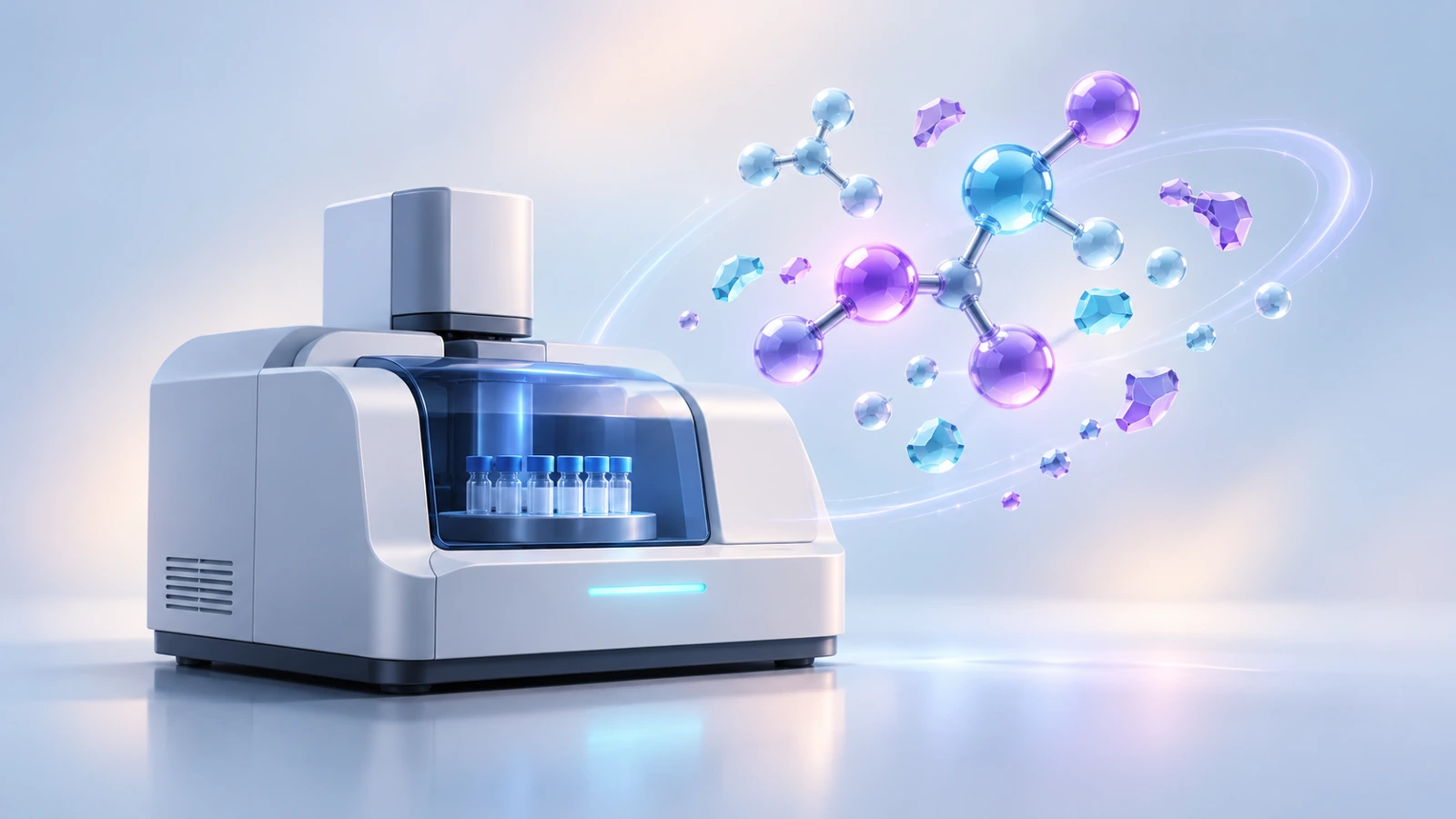
Mass spectrometry is one of the workhorse techniques of modern chemistry. A sample is broken into charged fragments, those fragments are measured by their mass-to-charge ratio, and the resulting pattern — a spectrum — acts as a fingerprint that can identify the molecule the sample came from. In tandem mass spectrometry, known as MS/MS, the process goes one step further: a fragment is isolated and broken apart again, producing a second spectrum that carries more structural information.
The technique is powerful, but interpreting the data is hard. A spectrum is a forest of peaks, and working out which molecule produced them requires comparing the pattern against reference libraries, reasoning about how a molecule might fragment, and checking whether a proposed structure fits the measured fragments. Experienced chemists do this well, but slowly. Automated tools exist, but they have limits — particularly when a compound is not in the reference library, or when the spectrum is noisy.
That is the gap DeepMind is trying to fill. Mass Spec Skills are not a new model. They are tools — a set of capabilities added to Gemini inside the Antigravity platform — that let the model clean up signals, search reference libraries, and check whether a proposed structure fits the measured fragments. The model still does the reasoning, but it now has instruments to work with rather than relying on its training data alone.
What DeepMind Announced
Google DeepMind released Mass Spec Skills for Antigravity on 25 November 2026. Antigravity is Google's AI platform for agentic work, and the addition of mass spectrometry tools turns it into something a working chemist can use on a real analytical problem. The tools handle three jobs: cleaning up the raw signal, searching reference libraries for matching spectra, and verifying that a proposed molecular structure is consistent with the fragments actually measured.
The announcement matters because it is a concrete example of a general-purpose AI model being given domain-specific tools and then tested on a domain-specific task. Much of the discussion about AI in science has been abstract — models can "help researchers" in a general sense. Mass Spec Skills is specific: here is a tool, here is a test, here are the numbers. That specificity makes the claims easier to assess, and the limitations easier to see.
DeepMind also opened applications for a higher usage tier offered to 10,000 scientists. That number is significant. It suggests the company is not treating this as a demo for a handful of collaborators, but as a tool it wants working scientists to use at scale. The application process also gives DeepMind a way to learn from real usage — which chemists use it, for what kinds of problems, and where it fails.
The Test: 100 Compounds, About 97% Exact Matches
The centrepiece of the announcement is a test. DeepMind took 100 compounds with public reference spectra — drawn from the Enamine REAL MS/MS collection hosted by MoNA, the MassBank of North America, with structures confirmed in PubChem — and asked each of three Gemini models to identify the exact molecule from the mass spectrometry data.
With the Mass Spec Skills tools and internet access, all three models performed at about the same level: Gemini 3.8 Flash, the lightweight model, Gemini 4 Argon, and Gemini 4 Carbon each identified the exact molecule in about 97% of attempts. That is a striking result, and it is striking in two ways. First, the accuracy is high — roughly 97 out of 100 compounds identified exactly. Second, the three models performed similarly despite being very different in size and cost. The lightweight Flash matched the larger Argon and Carbon, which suggests the tools, not the raw model, were doing much of the work.
The comparison with the models' performance without the skills makes that point even clearer. Without Mass Spec Skills, Flash missed more than three quarters of attempts. Argon and Carbon did better, but still missed roughly a quarter to a third. The gap between "with tools" and "without tools" is large for all three models, and largest for the smallest one. That is exactly what you would expect if the tools are supplying the domain knowledge the models lack on their own: the model that knows the least chemistry benefits the most from being given instruments.
DeepMind also reports an efficiency gain. The skills cut the number of tokens generated per attempt by nearly fourfold for Flash, by half for Argon, and by nearly one-fifth for Carbon. Tokens are the unit of work for a language model, and fewer tokens per attempt means lower cost and faster answers. The pattern makes sense: a model that can search a reference library and check a structure directly does not need to reason its way to the answer through long chains of text. It can look things up instead of working them out, and looking things up is cheaper.
How the Test Was Set Up
The details of DeepMind's test are worth a closer look, because they shape what the results mean. The 100 compounds came from the Enamine REAL MS/MS collection, hosted by MoNA, the MassBank of North America. Enamine REAL is a library of real, make-on-demand compounds, and the MS/MS collection holds reference spectra — measured fragmentation patterns — for those compounds. The structures were confirmed in PubChem, the public chemical database maintained by the US National Institutes of Health. Using public reference spectra matters: it means the test is, in principle, reproducible by anyone with access to the same collections.
The choice of a public collection is also a transparency choice. DeepMind could have tested on private compounds or proprietary spectra, which would have made the results impossible to check. By using public data, it has made it possible for independent researchers to run the same test, or a similar one, and see whether they get the same numbers. That is how scientific claims get checked, and it is a good sign that the test was designed this way.
There are still questions the test design does not answer. One hundred compounds is a small sample, and the compounds were drawn from a single collection. A different collection — different chemical classes, different molecular weights, different spectral quality — might give different results. The test also gave the models internet access, which means they could look up reference spectra directly. That is a fair reflection of how the tools would be used in practice, but it also means the 97% figure is a measure of the whole system — model plus tools plus internet — rather than of the model alone. That is the right thing to measure if the question is "does this tool help a chemist", but it is worth being clear about what was measured.
Why the Tools Matter More Than the Models
The most interesting finding in DeepMind's test is not the 97% figure. It is the fact that the smallest model matched the largest ones once both had tools. That result points to a shift in how AI capability is built. For the past few years, the dominant story has been scale: bigger models, more training data, more compute. Mass Spec Skills suggests a different story: give a model the right tools, and a small model can do work that previously required a large one.
This is not a new idea in principle. Humans work the same way. A chemist with a reference library and a good instrument outperforms a chemist working from memory, no matter how good that memory is. The tools extend the person's capability. What is new is that the same logic now applies to AI models, and that the gap between a small model with tools and a large model without them can be enormous — in this case, the difference between missing more than three quarters of attempts and getting about 97% right.
The token savings reinforce the point. A model that uses tools generates fewer tokens, which means it costs less to run. If a lightweight model with tools can match a flagship model on a specialised task, and do it at a quarter of the token cost, then the economics of deploying AI in science change. You do not need the biggest model for every job. You need the right tools for the job, and a model good enough to use them.
That has implications beyond chemistry. The same pattern — small model plus good tools outperforming a large model alone — could apply to any domain where the work depends on access to specialised data, instruments or verification methods. Law, medicine, engineering and finance all have their equivalents of a reference library. The question is whether the tool-building effort is worth it for each domain, and DeepMind's result suggests that for mass spectrometry, at least, it is.
What This Means for Working Chemists
For a working chemist, the practical question is not whether Gemini can identify 97% of a test set. It is whether Mass Spec Skills helps with the compounds they actually struggle with. The test used compounds with public reference spectra — molecules whose spectra are already in the library. Identifying those is a real task, and doing it quickly and accurately is valuable, but it is not the hardest task in the field. The hardest task is identifying a molecule that is not in any library: a new natural product, an unexpected reaction product, a metabolite nobody has seen before. DeepMind's test does not cover that case, and it would be a mistake to assume the 97% figure transfers to it.
What the tools do offer, even on the test's own terms, is speed and scale. A chemist who can run 100 identifications in the time it used to take to do ten can work through a backlog, screen more candidates, or check more hypotheses. The token savings matter here too: if each attempt costs less, more attempts become affordable, and a lab can use the tool routinely rather than reserving it for special cases.
The 10,000-scientist higher usage tier is relevant for the same reason. A tool that only a few people can use is a curiosity. A tool that 10,000 scientists can use is infrastructure. DeepMind's decision to open applications at that scale suggests it wants Mass Spec Skills to become part of how working chemists do their jobs, not just a research demonstration.
There is also a verification point that matters for real use. DeepMind says chemists remain responsible for reviewing candidates — the model proposes, the human checks. That is the right framing, and it is consistent with how AI tools should be deployed in science. A 97% success rate still means roughly 3 in 100 identifications are wrong, and in chemistry a wrong identification can waste weeks of work or, in a pharmaceutical or safety context, do real harm. The tool is a helper, not an oracle.
The Antigravity Connection
Mass Spec Skills sits inside Antigravity, Google's AI platform for agentic work, and that placement is worth understanding. Antigravity is designed around agents that can use tools, run tasks in the background, and work across applications. Adding mass spectrometry tools to that platform means a chemist could, in principle, ask an agent to identify a compound, search the literature for related work, and draft a summary — all in one workflow, with the mass spectrometry step handled by a specialised tool rather than by the model's general knowledge.
That integration is part of a broader trend. The major AI labs are all building platforms where general-purpose models are combined with domain-specific tools, and the tools are becoming the differentiator. A model on its own is a commodity. A model with the right tools for a specific job is a product. DeepMind's Mass Spec Skills is a clear example of that shift, and it is likely to be followed by similar tools for other scientific domains.
It is also worth noting the timing. The release comes as Google is adjusting its Gemini pricing — with Gemini 4 Argon and Carbon prices set to double from 1 December 2026, as we reported in our coverage of Gemini 4 pricing benchmarks. Tools that cut token usage, like Mass Spec Skills, become more valuable as the price per token rises. A fourfold token reduction for Flash is not just an efficiency gain; it is a cost saving that grows as prices go up. Readers following Anthropic's parallel work on model capabilities and limits may also want our explainer on Claude Fable 5.2, which sets out how another lab is drawing lines around what its models should do.
The Limits of the Evidence
The 97% figure deserves careful handling, because it is easy to overstate what it proves. Every number in DeepMind's announcement comes from DeepMind itself. There is no independent reproduction yet, and the test was designed by the same team that built the tools. That does not make the numbers wrong, but it does mean they should be treated as a claim to be verified rather than a settled fact.
The test design also has a specific limitation. All 100 compounds had public reference spectra, which means the correct answer was, in some sense, already in the library the tools could search. The test measured identification of known compounds, not discovery of new ones. That is a real and useful capability, but it is a narrower claim than "AI can identify molecules from mass spectra" in general. The harder problem — a compound with no reference spectrum, where the model must reason from first principles about how a structure would fragment — was not tested.
There is also a question about the 100 compounds themselves. A test of 100 items is small, and the compounds were drawn from a specific collection. Whether the results hold for a different set of compounds — different chemical classes, different complexity, different spectral quality — is not something this test can answer. DeepMind's numbers are a starting point, not a final verdict.
None of this diminishes the result. A fourfold token saving and a jump from missing more than three quarters of attempts to about 97% accuracy is a substantial improvement, and it is the kind of improvement that comes from giving a model the right tools rather than simply making it bigger. But the right response is curiosity and verification, not uncritical acceptance. Independent researchers will need to test Mass Spec Skills on their own compounds, with their own spectra, before the 97% figure can be treated as a general property of the tool rather than a property of one test.
What to Watch Next
The most important next step is independent testing. Once the higher usage tier opens to 10,000 scientists, researchers outside DeepMind will be able to try Mass Spec Skills on their own problems and report what they find. Those reports — especially the failures — will tell us more about the tool than DeepMind's own test can. A tool that works well on 100 library compounds and also works well on real-world unknowns is a different thing from a tool that only works on the first.
It is also worth watching whether DeepMind extends the approach to other analytical techniques. Mass spectrometry is one of several tools chemists use to identify molecules; nuclear magnetic resonance (NMR) spectroscopy, infrared spectroscopy and X-ray crystallography are others. If the "small model plus good tools" pattern works for mass spectrometry, it may work for those too, and the result could be a suite of AI tools that cover the full analytical workflow.
Finally, the token savings are worth watching as a signal. If tools that cut token usage by a factor of four become common, the economics of AI in science change in a way that favours specialised tools over general-purpose scale. That is a bet DeepMind seems to be making, and Mass Spec Skills is the first clear evidence of it. Whether the bet pays off will depend on what the 10,000 scientists who get access actually find.
What We Could Not Verify
- We could not verify DeepMind's accuracy figures independently, because no independent reproduction of the 100-compound test has been published; all figures are DeepMind's own.
- We could not verify how Mass Spec Skills performs on compounds without public reference spectra, because DeepMind's test used only compounds whose spectra were already in the reference collection.
- We could not verify the token-saving figures against independent measurements, because they come from DeepMind's own reporting and no third-party benchmark has been published.
- We could not verify the criteria for the higher usage tier offered to 10,000 scientists, or how applicants will be selected, because DeepMind has not published the selection details.
- We could not verify whether the roughly 97% figure holds across different chemical classes or spectral quality levels, because the test covered a single set of 100 compounds from one collection.
- We could not verify the exact launch date of the higher usage tier, because DeepMind has opened applications without publishing a start date.