Anthropic Office Tools Explained: Claude’s Push Into Docs, Sheets and Slides
Key Takeaways
- On 10 November 2026, Anthropic launched Claude Sheets and Claude Whiteboards in beta, made Claude Data generally available, and announced Claude Meetings, turning Claude into something close to a full office suite.
- The new tools join Claude Docs and Claude Slides, which arrived in September 2026, plus the existing Claude Design and Motion features.
- Sheets, Whiteboards and Data are included in all paid Claude plans with no separate price, but the free plan is not included, and Meetings is reported as Team and Enterprise only.
- Two days later, on 12 November, Anthropic launched Claude for Manufacturing, a plugin with 17 skills for factory office work such as quoting and quality investigations.
- The suite is built on a different idea from Microsoft 365 and Google Workspace: instead of an assistant bolted onto documents, the documents live inside the assistant.
- The tools are young, and the gaps matter: Sheets has only simple spreadsheet functionality for now, Meetings is still rolling out, and no pricing beyond the existing plans has been announced.
The Announcement in One Paragraph
On Tuesday 10 November 2026, at an event in San Francisco, Anthropic turned Claude into something closer to an office suite. The company launched Claude Sheets and Claude Whiteboards in beta, made Claude Data, formerly Claude Dashboards, generally available, announced Claude Meetings, and added interactive connectors that open full partner apps inside Claude. The aim, Anthropic says, is to keep documents, boards, sheets and dashboards inside Claude, where the assistant can follow changes live, instead of copying output into other tools.
The timing was not accidental. The same day, Anthropic formally began its IPO roadshow, pitching its investment case to institutional investors ahead of a planned listing on Nasdaq. Launching a direct challenge to Microsoft’s core business on the first day of a roadshow is a statement of confidence, and the market noticed: Microsoft shares fell more than 3 percent intraday before narrowing to a 2.2 percent decline at the close, according to market reporting of the day. A single day’s share move proves little, and it would be a mistake to read it as a verdict on the products, but the coincidence of the two events tells you how Anthropic wants to be seen: not as a chatbot company, but as a workplace company.
This article explains the whole suite, not just one tool. Claude Meetings has its own explainer on this site, and Meetings is one part of this push, not the whole of it. The sections below cover each tool, who can use it, what it can and cannot do, the manufacturing plugin that followed two days later, and how the suite compares with Microsoft 365, Google Workspace and OpenAI’s workplace tools.
What Launched on 10 November
The launch had four parts, and they are not all at the same stage. That is the single most important thing to understand about the announcement, because the headlines made it sound as if everything arrived at once.
Claude Sheets is a spreadsheet that Claude builds and edits with you. A team can ask it to build a campaign tracker or a hiring budget, and Claude will generate a working spreadsheet with multiple tabs, formulas, formatting and drop-down menus. Claude then edits directly in the cells alongside the team, and outlines each change so users can see what it did. Sheets is in beta on all paid plans, on web, desktop and mobile. Anthropic itself says Sheets has simple spreadsheet functionality for now, which is an unusually honest admission in a launch announcement, and it points users who need the full feature set to an export to Excel or CSV, to its Claude for Excel add-in, or to partner tools including Airtable, Asana, monday.com and Smartsheet.
Claude Whiteboards is a shared board where a team talks through a plan and Claude turns it into an organised visual workspace with a timeline, owners and dates. In a retrospective, Claude can group notes by theme and draft action items. When the brainstorm is done, Claude can turn the board into a document or a slide deck, or the board can move into Lucid, Miro or Vani by Zoho. Whiteboards is in beta on all paid plans, on web, desktop and mobile, and it also works inside Claude Meetings, so the board builds while people talk.
Claude Data is the new name for Claude Dashboards, which launched in beta in October. It connects to sources such as Snowflake and Salesforce, can use definitions certified by a data team, and builds dashboards, data stories or narrated short videos. Data is now generally available on paid plans, although certified queries and live sharing are still in beta, and it needs a data connector, such as a warehouse or CRM, to work. Its launch partners include Amplitude, Mixpanel, Omni, PostHog and Sigma.
Claude Meetings is the fourth part, and it is the one that needs the most careful reading. Anthropic’s own announcement lists it as coming soon, while TechCrunch, which was briefed by the company, reports that it is launching in beta on Team and Enterprise plans, starting with Google Meet. Our full explainer on Claude Meetings works through that split in detail. The short version is that both descriptions can be true at once: a beta for some customers and coming soon for everyone else. For the purposes of this article, Meetings is best understood as announced and rolling out to a limited audience, not as generally available.
Alongside the four tools, Anthropic announced interactive connectors that open the full version of partner apps inside Claude. The idea is that instead of Claude summarising what is in another app, the app itself opens beside the chat or full screen, and Claude edits in it. The launch partners named in the coverage include Adobe, Atlassian and HubSpot, with Box also mentioned, and the feature runs on MCP Apps, an open extension of the Model Context Protocol. The feature is in public preview.
The Tools That Were Already There
The 10 November launch looks sudden only if you miss what came before it. Anthropic has been building towards an office suite for more than a year, and the new tools sit on top of work that already existed.
In September 2025, Claude learned to create and edit Excel files, documents and decks, which users downloaded as files. That was the file era: Claude made the document, you took it away, and from there the work belonged to Excel, to your team, and to whoever had the latest copy. In September 2026, Claude Docs and Slides changed that, keeping documents and decks inside Claude so the assistant could keep working on them. The 10 November launch extends the same idea to spreadsheets, whiteboards and dashboards.
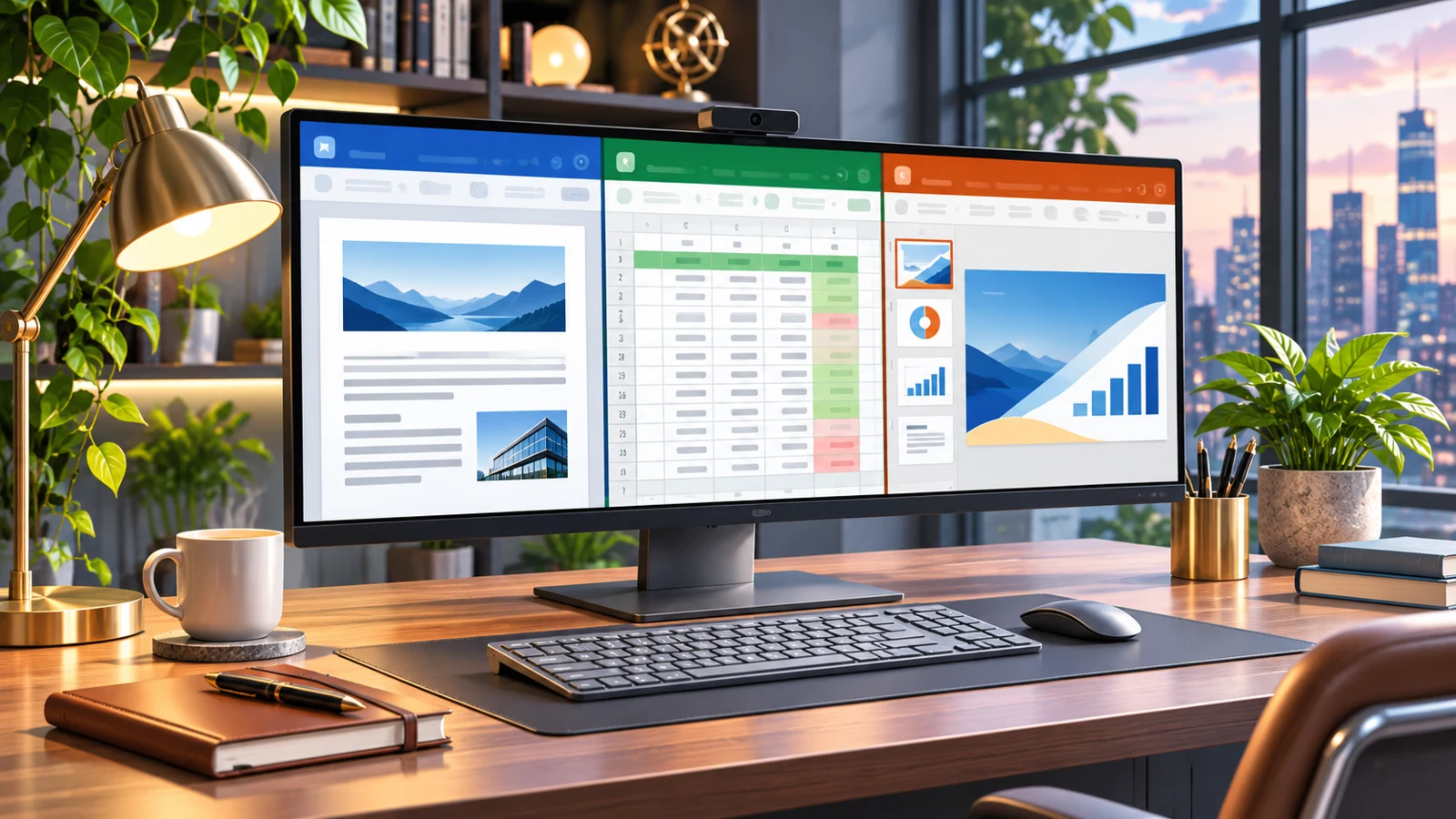
Claude Docs and Claude Slides therefore deserve a place in any description of the suite, even though they were not part of the November announcement. Docs is the word processor inside Claude, Slides is the presentation tool, and both keep their files inside Claude rather than handing you a download. They join Claude Design and Claude Motion, which already existed for visual and animated material. Together with the November additions, the full set is now recognisable as an office suite: documents, presentations, spreadsheets, whiteboards, dashboards, designs, animations and, soon, meetings, all inside Claude.
The suite is built on Artifacts, Anthropic’s graphical interfaces inside Claude, which first appeared two and a half years ago. The new releases are, in that sense, an extension of something Anthropic has been building for a while, not a sudden change of direction. That history matters when you judge how finished the tools are: the document and presentation tools have had two months of living inside Claude, the spreadsheet and whiteboard are brand new, and the meeting tool is still arriving.
Claude Sheets in Detail
Sheets is the tool Anthropic is most careful about, and the caution is revealing. A spreadsheet is the most demanding piece of office software to rebuild, because it is not one thing but many: a calculator, a database, a planning tool and a reporting tool, all in one grid. Anthropic’s own description is modest. Sheets has simple spreadsheet functionality, and the company is explicit that users who need the full feature set should export to Excel or CSV, use the Claude for Excel add-in, or move the work into a partner tool.
What Sheets does offer is the Claude way of working. You describe what you want in plain language, and Claude builds the spreadsheet: tabs, formulas, formatting, drop-down menus. Then Claude edits in the cells alongside you, outlining each change so you can see what it did. That is a different experience from opening a blank grid and building the structure yourself, and for the common cases, a campaign tracker, a hiring budget, a simple project plan, it may be faster. The question is what happens when the spreadsheet gets complicated: nested formulas, large datasets, pivot tables, macros. Anthropic has not claimed Sheets handles those, and the honest reading of the launch is that it does not yet.
Sheets is in beta on all paid plans, on web, desktop and mobile. It is not available on the free plan. On Team plans it is switched on by default. On Enterprise plans it starts switched off, and an administrator must turn it on. There is no separate price for Sheets: access follows the existing paid tiers, with no separate product SKU, which means you do not buy the spreadsheet, it shows up inside a subscription you already pay for.
There is also a compliance note worth stating. As a beta, Sheets does not support HIPAA, CMEK or zero data retention, according to launch coverage. That limits its use in healthcare and in organisations with strict data-handling requirements, and it is the kind of detail that matters more than any feature list when an IT department is deciding whether to switch a tool on.
Claude Whiteboards and Claude Data
Whiteboards is the most immediately understandable of the new tools. A team talks through a plan, and Claude turns the conversation into an organised board with a timeline, owners and dates. In a retrospective, Claude groups notes by theme and drafts action items. When the brainstorm ends, Claude can turn the board into a document or a slide deck, or the board can move into Lucid, Miro or Vani by Zoho. It can also leave Claude as a PNG image.
The interesting part of Whiteboards is not the board itself but the way it connects to the rest of the suite. Because it works inside Claude Meetings, the board builds while people talk, which is the clearest example of how the tools are designed to work together rather than separately. A brainstorm that ends with a board, a document and a deck, all produced from the same conversation, is a different workflow from a brainstorm that ends with a photograph of a whiteboard and a promise to write it up later.
Claude Data is the most enterprise-facing of the three. It is the renamed version of Claude Dashboards, which launched in beta in October, and it is the only one of the three that is generally available rather than in beta. It connects to data sources such as Snowflake and Salesforce, can use definitions certified by a data team, and builds dashboards, data stories or narrated short videos. Certified queries and live sharing are still in beta, and the tool needs a data connector, such as a warehouse or CRM, to work at all. Its launch partners include Amplitude, Mixpanel, Omni, PostHog and Sigma.
The plan details for Data differ slightly from the other two. Like Sheets and Whiteboards, Data is included in all paid Claude plans, and the free plan is not included. On Team plans it is switched on by default. On Enterprise plans, Data turns on by default on 19 November 2026, which is the only future date Anthropic has actually set in the announcement. That date is also the date Anthropic’s shares are scheduled to start trading on Nasdaq, which is a coincidence worth noting but not one to over-read.
Claude Meetings: One Part of the Push
Claude Meetings deserves a short section here, not because it is the most important tool, but because it is the one most likely to be misunderstood. The full detail is in our explainer on Claude Meetings, and this section is a summary of it.
Meetings lets a team add Claude to a video call as a visible participant, where it takes notes, drafts plans, answers questions in the meeting chat, and pulls figures from connected work apps. The difference from a conventional meeting assistant is that Claude is designed to produce work during the call, not just a summary afterwards. There are guardrails: Claude announces itself in the meeting chat, it will not join calls with external guests unless an admin authorises it, and it leaves automatically if an external guest joins.
The availability question is where the reporting splits. Anthropic’s own announcement lists Meetings as coming soon, while TechCrunch reports it is launching in beta on Team and Enterprise plans, starting with Google Meet. The most reasonable reading is that both are right: a beta for Team and Enterprise customers, and coming soon for everyone else. Anthropic has tested Meetings internally for about two months, and the assistant now joins nearly all of its meetings, according to a report citing an Anthropic executive. No pricing has been announced for Meetings specifically.
For readers who already use a meeting assistant, the comparison that matters is with tools such as Otter AI, which we have covered in our look at Otter AI, the meeting assistant changing how we work. Otter records and summarises. Claude Meetings is designed to draft the plan while the meeting is still happening. That is a bigger claim, and it is also the claim with the most to prove, because a plan drafted live is harder to check in the moment than a summary produced afterwards.
Claude for Manufacturing: The Plugin Two Days Later
Two days after the office suite launch, on 12 November 2026, Anthropic launched something that shows where the suite is heading next. Claude for Manufacturing is a plugin with 17 skills for the office work that surrounds factory work: quoting, quality investigations, production reporting, maintenance diagnosis, sourcing and design. It works from a manufacturer’s existing records and carries its work to employee review rather than operating production equipment.
The 17 skills span sales, quality, operations, supply chain, design and setup. For a new job, Claude can read a customer’s request, identify missing information, compare costs on similar jobs and prepare a quote for an estimator to review and release. For a quality failure, it can draft an investigation report. For a breakdown, it can prepare likely causes for a technician to investigate. The emphasis, in Anthropic’s own description, is on drafting for human review, not on deciding anything by itself.
The plugin connects to four systems manufacturers already use: Autodesk Fusion for designs, Infor for purchase orders and stock, Microsoft 365 for procedures, supplier emails and exported reports, and Oracle NetSuite for orders, inventory, production steps and job costs. Manufacturers can also use the plugin with systems that have no connector by saving regular exports to Microsoft 365, so Claude can work from the files. Infor released its own companion plugin, Infor Industry AI for Claude, on the same day.
Three limits are stated explicitly by Anthropic and are worth repeating. Claude for Manufacturing does not operate equipment. It does not write to systems of record. And it does not run production control. For equipment operation, Anthropic is separately developing a research preview called the Model Hardware Standard, which gives programmable physical devices a standard way to describe measurements, settings and safety limits. The manufacturing plugin is an AI layer for plant-office work, not a control system for the plant floor.
The plugin is available to install on Team and Enterprise plans, where an administrator installs it and a user with access can initiate setup. The announcement does not mention a price. Anthropic has scheduled a technical webinar on the plugin for 17 November at 11 a.m. Eastern time, and says more manufacturing skills are planned.
One figure in the launch deserves a careful note. Anthropic cites a 2025 Manufacturing Leadership Council survey in which 79 percent of responding manufacturers included manually entered data among their manufacturing data sources. That figure describes the problem, not the plugin’s result: it says nothing about how much time the plugin saves or how many errors remain when records are messy or drawings are out of date. No independent measurement of the plugin’s results exists yet.
The manufacturing launch also signals a strategy. Business Insider, reporting the launch, described it as one of several industry-specific releases, alongside Claude offerings for healthcare, financial services, legal and government. The office suite is the general platform, and the plugins are the specialised versions built on top of it. If that pattern holds, more industry plugins are likely to follow.
How It Compares: Microsoft, Google and OpenAI
Anthropic is entering crowded territory, and the launch coverage is frank about that. Microsoft 365 Copilot has been in workplaces for longer than any of these tools, Google’s Gemini is embedded across Google Workspace, and OpenAI unveiled a series of workplace tools a few weeks before Anthropic’s announcement, allowing users to collaborate with ChatGPT to visualise company information and create presentations. Our guide to ChatGPT, Claude and Gemini compared puts the three assistants side by side, and the comparison is now a comparison of office suites as much as of chatbots.
What is different about Anthropic’s approach is the direction of the integration. Microsoft and Google put an assistant inside suites that people already live in. Anthropic is putting the suite inside the assistant. The documents, boards, sheets and dashboards live in Claude, and the assistant follows changes live. That is a bet on the quality of the assistant rather than on the size of the installed base, and it is a harder bet to win, because switching costs are real: organisations have years of files, habits and integrations in Microsoft 365 and Google Workspace, and a better assistant is not by itself a reason to move all of it.
The counter-argument is that the work itself is moving. If the assistant is where plans get drafted, budgets get built and dashboards get made, then the files will follow the work rather than the other way round. That is Anthropic’s bet, and the interactive connectors are part of it: if partner apps such as Adobe, Atlassian and HubSpot open inside Claude, then the user does not have to choose between Claude and the tools they already use, because the tools come inside Claude. Whether that works in practice depends on how well the integrations behave, and the launch coverage does not yet show that.
There is also a question the launch raises but does not answer: accuracy. A spreadsheet built by an assistant is useful only if the formulas are right. A dashboard built by an assistant is useful only if the data is right. A plan drafted during a meeting is useful only if the figures pulled from connected apps are the right figures. Anthropic has not published accuracy figures for the new tools, and the launch reporting does not include independent testing. Organisations that switch them on will be doing their own testing, whether they plan to or not.
Microsoft’s own position is worth noting for balance. The company is not standing still: our report on Microsoft staff pushback against the AI push shows a company under internal pressure over its AI strategy, and the 12 November Microsoft 365 outage, which disrupted Outlook and Teams for thousands of users, was a reminder that the incumbent’s reliability is also under scrutiny. Anthropic’s challenge arrives at a moment when Microsoft is dealing with both. But an outage and a staff debate are not the same as a lost market, and Microsoft’s installed base remains enormous.
Who Gets What, and What It Costs
The plan details are specific, and they are worth stating exactly because they determine who can use what today.
Sheets, Whiteboards and Data are included in all paid Claude plans, on the web, desktop and mobile apps, wherever Claude is available. The free plan is not included. There is no separate price for any of the three. On Team plans, all three are switched on by default. On Enterprise plans, Sheets and Whiteboards start switched off, and Claude Data turns on by default on 19 November 2026.
Claude Meetings is for Team and Enterprise only, according to the launch reporting. It works with Google Meet at launch. No pricing has been announced for Meetings specifically, and the announcement does not say whether it will carry an additional charge or be included in the Team and Enterprise plans. That is a gap worth flagging: a feature that joins your meetings and accesses your connected apps is a feature whose price and whose data handling deserve a clear statement before organisations switch it on.
Claude for Manufacturing is available on Team and Enterprise plans, installed by an administrator. No price has been announced for it either.
Two things follow from those details. The first is that the office suite is, for now, a paid-product story. Free users get none of it, and Pro users get Sheets, Whiteboards and Data but not Meetings or the manufacturing plugin. The second is that the cost question is unresolved in a specific way: the tools are included in existing plans, so there is no new bill to pay today, but Anthropic has not said whether that will remain true as the tools mature, or whether the more specialised pieces will eventually carry their own price.
What to Watch Next
Four things will settle whether the Anthropic office tools matter.
The first is the rollout. When Meetings moves from coming soon and a Team and Enterprise beta to something a Pro user can switch on, and when it supports video platforms beyond Google Meet, the suite becomes a real alternative for smaller teams. Until then it is an enterprise story.
The second is depth. Sheets is the test case: if Anthropic closes the gap between simple spreadsheet functionality and the full feature set that finance and operations teams need, Sheets becomes a genuine Excel alternative. If it stays simple, it remains a tool for quick trackers and budgets, and the serious work stays in Excel. The same question applies to Whiteboards and Data, in their own ways.
The third is the connectors. Interactive connectors are the least visible part of the launch and the most important for the long term. If partner apps open inside Claude and Claude edits in them reliably, the suite becomes a place where work happens rather than a place where work is drafted. If the integrations are shallow or unreliable, the suite is a set of drafting tools with export buttons, and the work still happens elsewhere.
The fourth is the industry plugins. Claude for Manufacturing shows the pattern: a general suite plus specialised plugins for specific kinds of work. If the healthcare, financial services, legal and government offerings follow the same pattern, Anthropic will have built a platform rather than a product. That is a bigger ambition, and it is also a harder one to execute, because each industry has its own systems, regulations and habits.
The launch itself is already a statement of intent. Anthropic wants Claude to be where your work happens, not just where you ask questions about it. Whether teams accept that invitation will depend less on the announcement and more on what happens in the first real spreadsheets, boards and meetings where Claude is doing the work.
What We Could Not Verify
- Whether Claude Meetings is live in beta for Team and Enterprise customers today, or still coming soon for all users. Anthropic’s own announcement says coming soon; TechCrunch reports a beta. We have not verified the status against a live Team or Enterprise account.
- No pricing has been announced for Claude Meetings or for Claude for Manufacturing, and we could not verify whether either will carry an additional charge.
- Anthropic has not published accuracy figures for the new tools, and we found no independent testing of Sheets, Whiteboards, Data or Meetings.
- The date for wider availability of Meetings beyond Team and Enterprise, and for support beyond Google Meet, has not been announced.
- Whether Microsoft’s share price move on 10 November was caused by the Anthropic launch. The shares fell that day, but many factors move a share price, and the launch is only one of them.
- The full list of interactive connector partners, and how deeply each partner app integrates with Claude. The launch coverage names Adobe, Atlassian, HubSpot and Box, but does not show the integrations working in practice.
Sources
- Anthropic, “More ways to work with Claude: Sheets, Whiteboards, and Interactive Connectors,” 10 November 2026: https://claude.com/resources/articles/more-ways-to-work-with-claude-sheets-whiteboards-and-interactive-connectors
- TechCrunch, “Anthropic launches Claude Meetings to turn workplace discussions into plans and tasks,” 10 November 2026: https://techcrunch.com/2026/11/10/anthropic-launches-claude-meetings-to-turn-workplace-discussions-into-plans-and-tasks/
- The Verge, “Anthropic has its own AI-powered office suite now,” 10 November 2026
- WebProNews, “Anthropic Builds an Office Suite Inside Claude, Starting With Sheets and Whiteboards,” 11 November 2026: https://www.webpronews.com/anthropic-claude-sheets-whiteboards-data-interactive-connectors/
- Anthropic, “Introducing Claude for Manufacturing,” 12 November 2026
- Unite.AI, “Anthropic Launches Claude for Manufacturing With 17 Workflow Skills,” 12 November 2026: https://www.unite.ai/anthropic-launches-claude-for-manufacturing-with-17-workflow-skills/
- Dataconomy, “Anthropic Launches Claude Manufacturing Plugin With 17 AI Skills,” 13 November 2026: https://dataconomy.com/2026/11/13/anthropic-launches-claude-manufacturing-plugin-with-17-ai/