FinSight Physical AI Fund: $100M Bet on Robots and Science
Key Takeaways
- The FinSight Physical AI Fund is a $100 million vehicle targeting companies building AI systems that act in the physical world.
- It will back a concentrated portfolio of 10 to 12 companies across robotics, AI for science, foundation models, and hardware and infrastructure.
- FinSight calls physical AI the “third structural wave” of AI, after perception AI and generative AI.
- The fund’s thesis rests on a labour shortage the firm says policy alone cannot fix, citing UN projections of a 342 million contraction in working-age populations by 2050.
- Despite the “index” label, this is a concentrated venture vehicle — a very different risk profile from a diversified public-market index fund.
Physical AI has become the venture theme of the moment, and FinSight Ventures just packaged it into a fund. On October 28, 2026, the San Francisco-based firm announced the FinSight Physical AI Index Fund, a $100 million vehicle dedicated exclusively to AI systems that interact with the physical world. It is the firm’s second thematic index fund, following a $50 million generative-AI index fund last year, and the first institutional vehicle dedicated exclusively to the physical AI segment, according to the announcement.
The fund targets a concentrated portfolio of 10 to 12 leading companies across four segments: robotics, AI for science, the foundation layer, and hardware and infrastructure — with an aggregate target capitalisation of $5.7 trillion by 2031. That last figure is a target, not a promise, and it says as much about the firm’s ambition as about the market. But the structure of the bet is what matters: few companies, one theme, and a decade-long horizon.
FinSight manages more than $1 billion in assets and counts 13 unicorns in its portfolio. Founded in 2004, it is extending a proven playbook — thematic “index” funds that concentrate on a wave — to the sector where capital is currently rushing fastest.
The third-wave thesis
Founder and general partner Alexey Garyunov frames physical AI as a structural shift, not a trend. “Physical AI is not a trend, but the third structural wave of artificial intelligence,” he said in the announcement. “Perception AI gave machines eyes and ears. Generative AI gave them language. Physical AI gives them agency in the real world. We are now at the same inflection point that defined OpenAI and Anthropic in 2019 — except what is being built is an order of magnitude larger.”
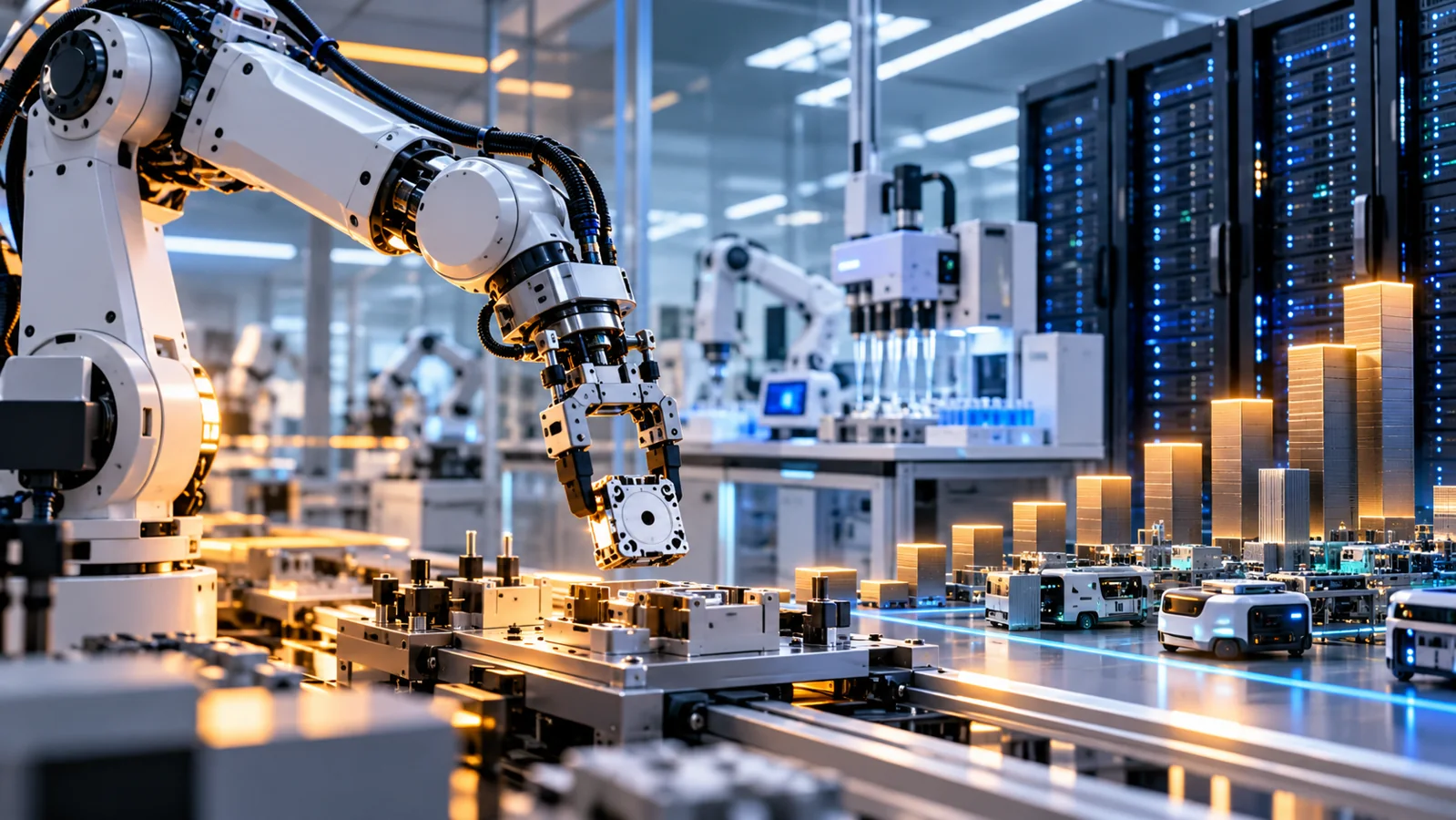
The framing is useful because it organises a sprawling field. Perception AI covers vision and sensing. Generative AI covers language and content. Physical AI covers systems that perceive, decide, and act in the real world — robots in warehouses and factories, autonomous vehicles, laboratory automation, and the models and hardware that power them. The fund’s four segments map that stack: robots at the top, AI for science as an application layer, foundation models as the intelligence layer, and hardware and infrastructure as the base.
The investment thesis rests on demography. According to UN projections cited by the fund, the working-age population across East Asia, Europe, and the United States will contract by 342 million people by 2050 — a cohort representing approximately 55% of global GDP. Migration flows are slowing, and labour participation rates in advanced economies have reached their effective ceiling, the firm argues. The conclusion it draws is that machines must do more physical work, because there will be fewer human hands to do it.
What “index” really means here
The fund’s name deserves a careful read. In public markets, an index fund means broad diversification and low fees. This is neither. A concentrated portfolio of 10 to 12 private companies carries far more single-name risk than the label implies, and venture vehicles are illiquid by design — investors cannot sell out on a bad day.
What the “index” framing does signal is method. Rather than betting on one robotics company, FinSight is buying a basket across the stack, on the theory that the wave matters more than any single winner. That is a reasonable approach to a sector where it is genuinely unclear whether the value accrues to the robot makers, the model providers, or the chip companies. Spreading across all four segments hedges that uncertainty — while concentrating within each segment keeps the upside if the thesis is right.
The $5.7 trillion aggregate target capitalisation by 2031 should be read in the same spirit: it is the firm’s way of saying it expects its portfolio companies to become very large, not a forecast anyone should bank on. Venture targets are marketing as much as math.
Why now, and what could go wrong
The timing reflects a genuine inflection. Robots are moving from demos to deployments — in warehouses, on factory floors, and in logistics — and the models that control them are improving fast. Capital has noticed: robotics and physical AI funding has surged, and a dedicated institutional vehicle is both a symptom and an accelerant of that interest. Readers can see the deployment side in Otto and Sereact’s NVIDIA physical AI robots and in Bedrock Robotics’ $600 million round for autonomous excavators.
The risks are equally real. Physical AI is hard in ways software AI is not. Robots break, supply chains tangle, and safety regulation can slow deployments for years. A concentrated bet on 10 to 12 companies means a single failure hurts, and the sector’s history is full of robotics companies that raised heavily and shipped slowly. The fund’s decade-long horizon helps — physical AI will not be built in a year — but it also means investors are locked in while the thesis is tested.
There is also a competitive question. FinSight is not the only firm packaging physical AI exposure, and as more capital chases the same companies, entry prices rise. The fund’s edge, if it has one, lies in its existing portfolio and its ability to pick across the stack rather than follow the crowd into one hot subsector.
The bigger picture
For readers tracking AI’s direction, the FinSight fund is a useful marker. Money is a lagging indicator of belief: firms raise thematic funds after they are convinced, not before. A $100 million vehicle dedicated to physical AI, from a firm with a billion-plus in assets, says the sector has moved from interesting to investable in institutional eyes.
Whether it becomes the third wave Garyunov describes will depend on things no fund can control: whether robots get reliable and cheap enough for mass deployment, whether safety frameworks keep pace, and whether the labour shortage thesis plays out as projected. The fund is a bet that all three break in physical AI’s favour. The next few years will show whether that bet was early, right, or both.
Inside the four segments
The fund’s four segments deserve a closer look, because each carries a different risk. Robotics is the most visible: warehouse robots, logistics automation, and humanoids are moving from pilots to deployments, but hardware is capital-intensive and slow to scale. A robotics company can have working technology and still fail on manufacturing, servicing, or unit economics.
AI for science is the quietest segment and possibly the most consequential. Laboratory automation, drug discovery, and materials research are areas where AI can compress years of experimental work — and where customers are research institutions and pharmaceutical companies with deep budgets. The timelines are long, but the willingness to pay for a genuine breakthrough is high.
The foundation layer — the models themselves — is the most competitive segment. Foundation-model companies face enormous training costs and fast-moving benchmarks, and the field has already seen consolidation. Hardware and infrastructure, by contrast, is the picks-and-shovels play: chips, sensors, and the systems that let physical AI run at all. It is less glamorous than robots and less crowded than models, which is sometimes exactly where returns hide.
A basket across all four is FinSight’s answer to a hard question: nobody knows where the value will concentrate. If robots win, the fund holds robot makers. If models win, it holds model makers. If the money flows to infrastructure, it holds that too. Diversification across the stack does not remove risk, but it removes the need to guess the single winning layer correctly.
The concentration gamble
Concentration is the fund’s defining risk and its defining feature. Ten to twelve companies means each position matters enormously; one failure dents the fund, two reshape it. Venture funds accept this because their returns come from a few big winners, but investors should understand the shape of that bet: most of the fund’s outcome will be decided by one or two companies, and the rest is ballast.
Illiquidity compounds it. Unlike a public index fund, investors cannot exit when sentiment turns. Physical AI sentiment will turn at some point — hardware cycles always do — and the fund’s investors will ride through it. The decade-long horizon is honest about that, but honesty does not make illiquidity comfortable.
None of this makes the fund a bad idea. Concentrated thematic venture funds have produced some of the best returns in technology investing, precisely because they commit to a wave before it is obvious. But the “index” label should not soften the reality: this is a conviction bet on physical AI, sized at $100 million, with a small number of names. Investors who want that bet will find it well-formed. Investors who want diversification should look elsewhere.