Pangram AI Detector Review: How It Works, Who It Suits and What It Costs
A teacher opens a student essay that reads well, almost too well. Every sentence is smooth, every paragraph lands in the same rhythm, and nothing sounds like the student in the third row. Guessing is not fair to that student, and ignoring the doubt is not fair to the rest of the class. This is the moment AI detectors are built for, and the Pangram AI detector is a widely discussed option for handling it with evidence instead of instinct.
If you are still deciding whether detection belongs in your workflow, our AI Detector Guide 2026 covers the basics. This review looks at Pangram itself: what it does, how it works, who it suits, and what it costs.
What Is the Pangram AI Detector?
Pangram is an AI detection service from Pangram Labs, founded in Brooklyn, New York, in 2023 by AI researchers from Tesla and Google. It reads a piece of text and estimates whether a person wrote it, an AI model generated it, or AI assisted along the way. It is trained to spot writing from the major model families, including ChatGPT, Claude, Gemini, Llama, DeepSeek and Grok.
Text is the core, but not the whole product. Pangram also checks images for AI generation, and pairs text detection with plagiarism detection, so originality and authorship can be reviewed in one place. The real question is rarely just “was AI involved?” It is “can I trust where this work came from?”
How Pangram Works
According to the company, the Pangram AI detector’s model is built on millions of human and AI documents and analyzes text for traces of AI writing. When it finds them, it reports how much of the document it believes is AI generated or AI assisted. When it does not, the text is treated as human written.
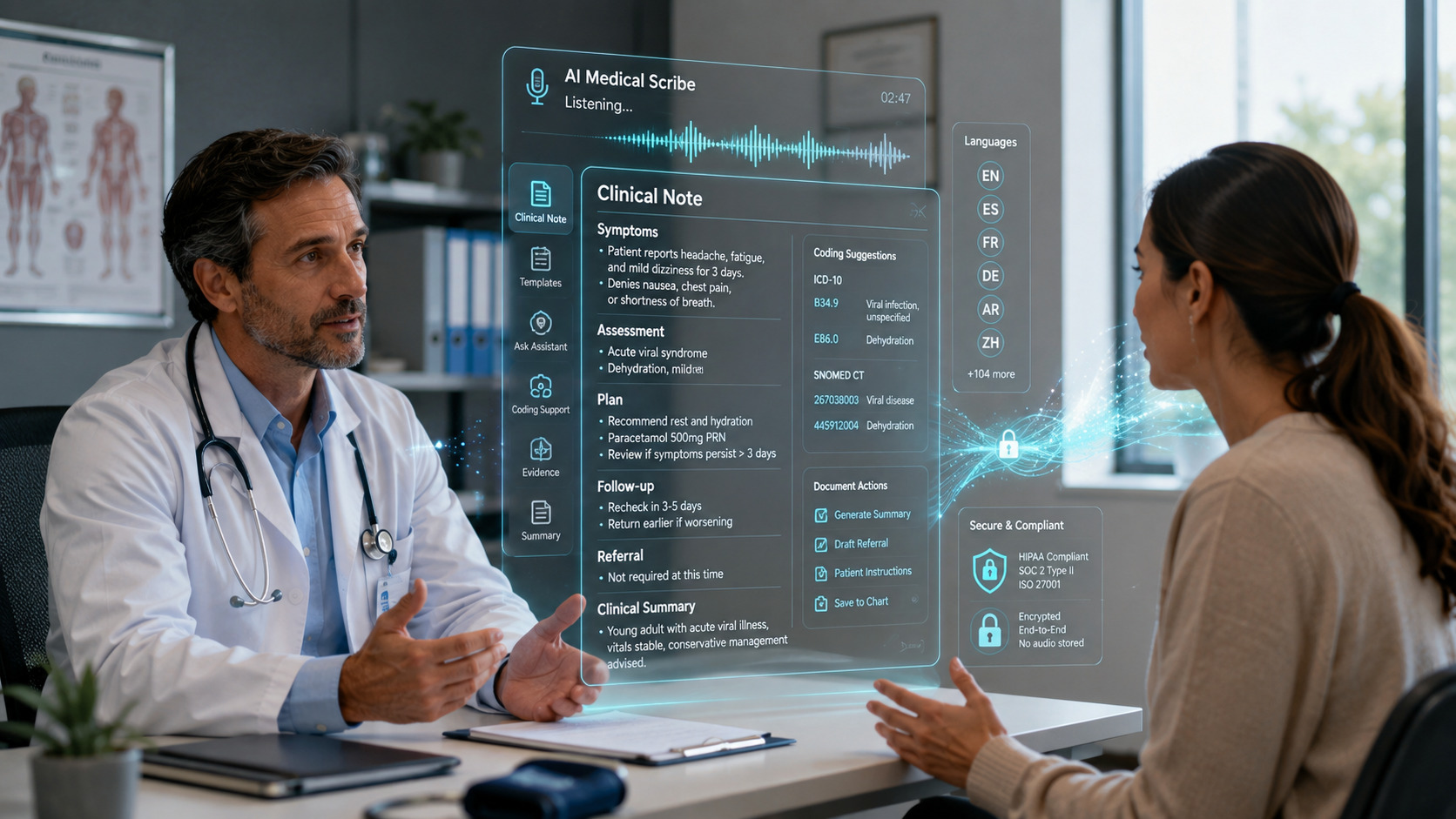
Two choices make the results easier to act on. First, it separates fully AI generated text from AI assisted text, which reflects how people write now: many drafts are human work that passed through an AI editor. Second, instead of one verdict on a whole document, it splits longer documents into sections and highlights the passages it flags, as PCWorld noted in its review. A teacher can ask about the flagged part, rather than arguing over a percentage.
The company says it benchmarks the detector against 26 AI models and retests on every major release, because a detector trained only on older models ages quickly.
Accuracy: What the Numbers Actually Say
Accuracy claims in this category are often loud and vague, so separate what Pangram says from what others have found. The following are the company’s own stated figures. Pangram says its detector is over 99 percent accurate, correctly identifies 99.6 percent of AI generated samples across the models it benchmarks, and has a false positive rate, human writing wrongly flagged as AI, of 1 in 10,000. It also says researchers at the University of Chicago and the University of Maryland have third party verified its results.
Independent research gives those claims some support. A University of Chicago Booth working paper from August 2025 found Pangram was the only detector tested that kept false positives at or below a strict 0.5 percent cap while still catching AI text reliably. We also examined this question in depth in our guide on whether AI detectors are accurate.
Even so, no detector is a courtroom. Edited, paraphrased or very short text is harder for every tool, and a score should start a conversation, not end one. Use Pangram as strong evidence inside a fair process, not as proof on its own.
Key Features Worth Knowing
The Pangram AI detector includes the following features:
- Text detection in many languages: Pangram lists detection in 24 languages, including English, Arabic, Spanish, French, German and Urdu.
- AI assistance detection: It distinguishes fully generated text from writing a person drafted and an AI polished.
- Image detection: Pangram can also check images for signs of AI generation.
- Plagiarism checking: Paid plans add similarity detection, so copied and AI written work are reviewed together.
- File uploads: Documents can be uploaded as PDF, DOCX or RTF, and scanned pages can be read with OCR, according to PCWorld’s review.
- Extensions, integrations and API: A Chrome extension, learning platform integrations such as Canvas, Blackboard and Google Classroom, and a developer API.
Who Pangram Is For
The Pangram AI detector‘s own site describes the tool as built for educators, publishers, admissions teams, legal teams and enterprise content reviewers. Teachers and universities use it to review student work. Publishers and content teams use it to screen submitted articles and freelance drafts before they go live. Businesses use it to check applications and reports where authorship matters.
If you only check the occasional paragraph, the free plan is probably enough. If reviewing other people’s writing is part of your weekly job, the paid plans and integrations are where the value sits.
Pangram Pricing
As listed in Pangram’s own subscription overview, the plans are:
- Free: up to 2,000 words per day, with no payment method needed.
- Individual: $20 per month, or $15 per month billed annually. It covers up to 300,000 words per month, plus plagiarism detection, the Chrome extension and automatic feed scanning.
- Professional: $65 per month, or $45 per month billed annually. Same features as Individual, with up to 1,500,000 words per month.
- Teams and Enterprise: group plans with seat management and shared visibility, plus options such as zero data retention on Enterprise.
- Developer: pay as you go API access at $0.05 per 100 words.
All paid seat plans include a 7 day free trial, according to Pangram.
How to Get a Fair, Useful Result
How you use a detector matters as much as which one you pick:
- Check a meaningful amount of text. Short snippets give any detector little to work with, so review full paragraphs or documents where you can.
- Read the flagged passages, not just the score. The highlighted sections tell you what to ask about. The percentage alone tells you very little.
- Pair the result with process evidence. Drafts, version history and a short conversation with the writer will confirm or clear most flags faster than a second scan.
- Apply one standard to everyone. Scanning every submission the same way is fairer than checking only work you already suspect.
- Tell people the tool is in use. Students and contributors who know work may be checked tend to write more honestly.
Should You Use the Pangram AI Detector?
If you review writing that other people submit, the Pangram AI detector is one of the strongest options available. Its appeal is not one headline number. It is the combination of passage level results, a clear split between generated and assisted text, plagiarism checking in the same place, and accuracy claims backed by published benchmarking and outside researchers. The free plan is enough to test it on your own documents before paying anything.
Go in with the right expectation and it earns its place: Pangram will not tell you with certainty who wrote a document, but it will show you, passage by passage, where AI was likely involved, and that is usually what you actually need.